By David Lawani, Abuja
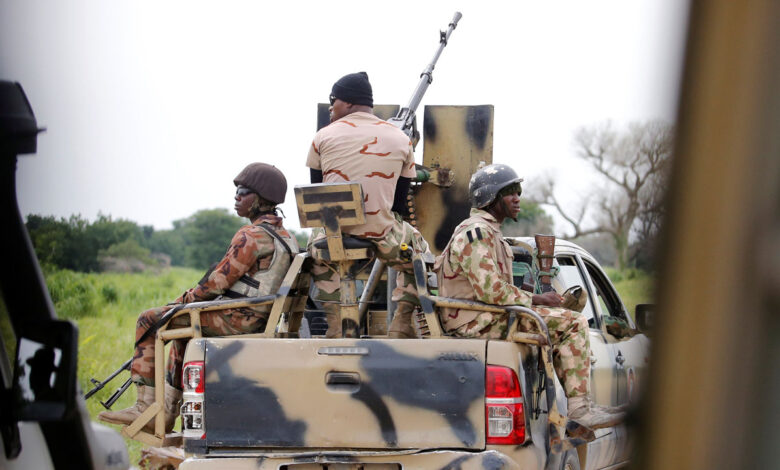
For the Nigerian soldier stationed in Sambisa Forest, patrolling villages in Zamfara or protecting oil facilities in the Niger Delta, danger is not an occasional encounter but a constant reality of service.
For many military families, birthdays, Christmas celebrations, wedding anniversaries and school events are often marked not by reunions but by phone calls from distant military formations and frontline operational bases.
Some soldiers return home carrying scars from battle. Some return with memories they struggle to forget. Others never return at all.
That reality has returned to the centre of national conversation following reports that the minimum monthly salary of some Nigerian soldiers has risen to about ₦100,000.
While many Nigerians welcomed the increase from the previous figure of about ₦49,000, others insist that the issue goes beyond figures on a salary scale.
The real question, they argue, is whether Nigeria is placing adequate value on the sacrifices made daily by those defending the country against insurgency, banditry, kidnapping and other violent crimes.
For more than 15 years, Nigerian troops have remained on almost permanent deployment across multiple theatres of operation.
They fight Boko Haram and ISWAP insurgents in the North-East, confront heavily armed bandits in the North-West, tackle communal violence in parts of the North-Central and protect critical national assets in the Niger Delta.
Across several parts of the country, they continue to support civil authorities in maintaining internal security.
Unlike many public servants, a soldier’s office may be a trench, a military convoy, a forest hideout, or an isolated forward operating base, all vulnerable to attack.
Their workplace is often measured not in comfort but in risk. The debate over welfare has therefore resonated far beyond military barracks and cantonments.
Executive Director of the Civil Society Legislative Advocacy Centre (CISLAC) and Head of Transparency International Nigeria, Auwal Musa Rafsanjani, believes the recent salary increase is an important acknowledgement that military welfare deserves urgent attention.
However, he insists that the conversation cannot end with a pay adjustment.
According to him, while doubling salaries in percentage terms may appear significant, the realities facing soldiers and their families require a broader, more comprehensive response.
“The critical question is not simply whether salaries have increased, but whether the increase is sufficient to guarantee a decent standard of living and sustain morale among troops operating under difficult conditions,” Rafsanjani said.
He argued that personnel deployed to active conflict zones deserve compensation that reflects the dangers associated with their assignments and the sacrifices demanded by military service.
According to him, soldiers should not have to choose between defending their country and providing adequately for their families.
“Personnel deployed to conflict areas deserve remuneration that reflects the risks they face daily and enables them to support their families adequately,” he said.
Rafsanjani warned against reducing military welfare to salaries alone.
He said discussions about welfare should include operational allowances, decent accommodation, life insurance, healthcare services, mental health support, and educational assistance for the children of serving personnel.
He also stressed the importance of prompt compensation for injured personnel and families of officers and soldiers killed in action.
“Motivation cannot be reduced to salaries alone. Welfare support, healthcare, insurance, accommodation and post-service care are equally important if morale and effectiveness are to be sustained,” he added.
The CISLAC boss further called for greater transparency in defence spending to ensure resources allocated to security directly improve the lives and welfare of frontline personnel.
According to him, Nigerians deserve assurances that substantial defence budgets translate into better welfare, improved training and enhanced operational capacity for troops.
President of the Young Ambassadors of Northern Nigeria, Ambassador Tijani Abdulmumin, was more direct in his assessment.
To him, the issue is not simply about economics. It is about fairness.
“How can a soldier survive on ₦100,000 a month while risking his life to defend the nation?” he asked.
Abdulmumin pointed to rising food prices, transportation costs, rent, school fees and healthcare expenses as evidence that military families continue to face enormous financial pressure.
He questioned how a soldier earning ₦100,000 monthly could comfortably support dependants while serving in difficult and dangerous environments.
“How much is a bag of rice today? How much is the rent? How much are school fees? How much does it cost to take care of a family while serving in some of the country’s most dangerous locations?” he asked.
According to him, soldiers deserve more than periodic praise and public commendation.
They deserve welfare packages that match the burden placed upon them. “Our soldiers stand on the front lines every day, sacrificing their comfort and, in many cases, their lives to protect Nigeria,” Abdulmumin said.
“They deserve fair pay, proper welfare, quality equipment and the dignity that comes with serving their country.”
He warned that prolonged financial hardship among security personnel could weaken morale and potentially affect operational effectiveness.
“This is not merely a salary debate. It is about national security, justice and the future of Nigeria,” he said.
For many analysts, the issue has evolved into a wider conversation about national priorities and public policy.
A nation often reveals what it values by how it treats those who defend it.
The widow of a fallen soldier waiting for benefits to be processed, the wounded serviceman rebuilding life after combat and the child waiting months to see a deployed parent all understand that reality.
Military service is unlike most professions. A teacher may leave work at the end of the day and return home. A banker closes business and reunites with family.
For many soldiers, however, deployment can mean months and sometimes years away from loved ones.
Some miss their children’s births. Others miss graduations, weddings and funerals. The emotional and psychological costs are rarely captured in salary structures.
Security experts argue that countries with effective military institutions understand the close relationship between welfare and operational performance.
Well-motivated troops are often more disciplined, more committed and more willing to undertake difficult assignments.
Conversely, poor welfare can affect morale and reduce retention of experienced personnel.
Many stakeholders believe military welfare should include affordable housing programmes, educational support for children, comprehensive health insurance and access to mental health services.
Others argue that families of fallen heroes should never be subjected to lengthy bureaucratic processes before receiving benefits.
There are also growing calls for improved retirement packages and better support for injured veterans as they adjust to life after active service.
The Federal Government has invested significantly in military hardware in recent years, including aircraft, armoured vehicles, surveillance systems and other combat equipment.
Those investments have attracted commendation from security experts and defence analysts.
However, many observers insist that equipment alone cannot win wars. The human factor remains critical.
Military strength depends not only on weapons but also on the motivation, welfare and professionalism of the men and women operating those systems.
Countries with strong military traditions understand this principle and complement defence procurement with robust welfare packages for personnel and their families.
Nigeria’s economic realities may differ from those of other countries, but many believe the underlying principle remains universal.
Those who risk their lives to defend the nation deserve compensation and support that reflect the burden they carry.
This is not an argument against remuneration for political office holders or senior public officials. Rather, it is a call for balance and priorities.
If salaries and allowances for elected and appointed officials can be reviewed periodically to reflect economic realities, many believe the welfare of soldiers deserves equal attention.
Security remains the foundation upon which every other sector depends. Without security, there can be no meaningful investment, agriculture, education, tourism or industrial growth.