The delay in passing the 2020 Electoral Amendment Bill has continued to elicit apprehension among stakeholders, Alex Emeje writes
Presenting the 2021 budget to the joint session of the National Assembly, the other day, the Chairman, Independent National Electoral Commission (INEC), Prof. Mahmud Yakubu, promised to work in synergy with the assembly to ensure the signing of the Electoral Amendment Bill before the first quarter of the 2021.
Before then, various groups and civil society organisations (CSO), have besieged the National Assembly on several occasions, demanding early passage of the electoral reform bill after the legislature failed to meet the March 2021 time-line and conclude the legislative process.
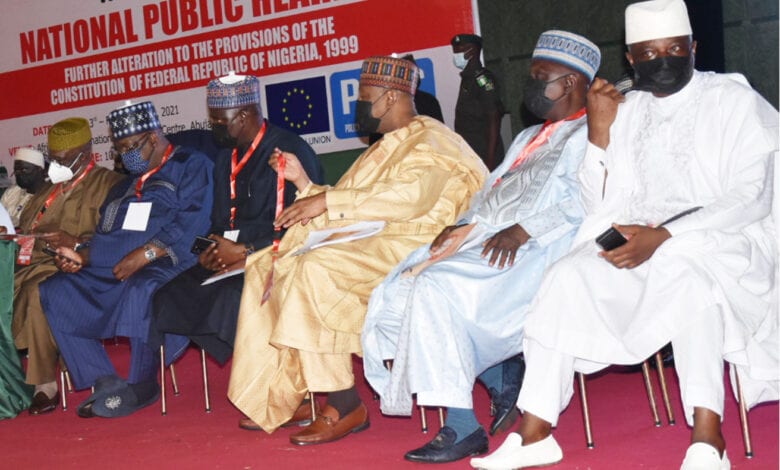
“Without anybody holding us responsible, we have achieved most of those things we set as target and electoral act amendment is one of them. By the grace of God, we will work hard to ensure it is passed before the second quarter of 2021 closes’’, the Senate President, Ahmed Lawal said, while declaring open the public hearing on the bill.
Apart from the plethora of protests to the National Assembly calling on the lawmakers to fast track the process of a national electoral legal framework to facilitate inclusiveness and openness in the elections, Nigerians are in a hurry to see the bill signed into law before the end of this second quarter.
The Electoral Act Amendment Bill has been at the centre of focus, which is why stakeholders are demanding a holistic overhaul of the country’s electoral system, following admitted flaws by many critical stakeholders.
For this group and a majority of Nigerians, the next constitution review exercise, traditional review and amendment of the Electoral Act, shortly after every election and voting season, are often significant and necessary periods to remove bottlenecks, past and perceived electoral flaws and thereafter introduce reforms that would then usher new developments, like the use of technology to reduce human involvement and lessen unnecessary burdens.
Aside from the provision of the bill which seeks to regulate the federal, states and area council elections, as well as control the restriction and qualification of candidates for election in the 1999 constitution as (amended), others are the provisions and introduction of Technology, E- Voting, E-collation, and transmission of results via electronic mechanism, the enthusiasm associated with the novel changes in the electoral process and system, will be further appreciated if the National Assembly lives up to the expectations of Nigerians by passing the bill in record time and urging the President to assent to it this time around.
This request has become appropriate following the growing concern among the electorate and other stakeholders over the fate of the country’s democracy, especially as the continuous delay in passing the Electoral Act Amendment Bill 2020 despite repeated assurances by Senate President that the piece of legislation would be passed in good time.
Recall that to avoid the pitfalls that frustrated the last efforts, the current National Assembly since last year begun another process to amend the electoral legal framework, as a result of which the bill was introduced in both chambers and had since December 2020 been subjected to public hearings, which provided an opportunity for citizens and stakeholders to make their inputs to the electoral reform process.
But the delay currently is creating tension, as Nigerians are worried because time is running out and since it is the amendment that will determine the next electoral process ahead of the 2023 general elections. In truth, the apprehension for a new electoral law is germane following the state of the nation. A new law which invariably will determine how the election will be conducted to choose a new leadership is sacrosanct in these challenging periods of the country’s life.
However, as Nigerians await new electoral reforms from the amendment of the Electoral Act, questions like, what becomes of the fate of the 2023 elections if new reforms are not introduced, considering that previous flawed processes require improvements?
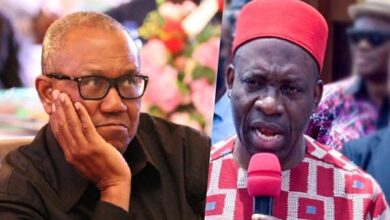
Nigeria at the crossroads – Former Minister Aduku
For a member of the Peoples’ Democratic Party (PDP) in Benue State, Matthew Inuwa, the present delay over the quick passage of the bill in the National Assembly is a ploy by the ruling All – Progressives Congress (APC) to frustrate the 2023 elections as they did in 2019.
Inuwa, a member of the Benue State House of Assembly, stated that the 2019 elections were not in any way an-election by any standard. “But we swallowed what we saw just to allow peace to reign in the country’’.
The lawmaker noted that if people were to go to courts, huge scenes would have been created in these hallowed chambers and the relative peace we are enjoying nowadays would have eluded us.
Also, a former member of the House of Representatives, Frank Ineke, expressed dismay that up till date, several attempts by the National Assembly to effect the amendment has not seen the light of the day. He, however, appealed for patience, saying it will be amended, and the president would assent to it before the 2023 elections.
An APC member in the House of Representatives, representing Dekina/Bassa federal constituencies, Hassan Abdullahi, also joined in the appeal for Nigerians to tarry awhile.
“All we can say is to appeal to Nigerians to exercise patience for the reform to be carried out’’, he said.
Abdullahi, however, noted that the process was not a rocket science, stating that “if a thorough work is done and the country has a credible election, the glory would not only be for President Buhari, APC, National Assembly but for Nigerians as a whole.
According to him, legislative work is not as easy as people think, adding that it requires brain work and in many instances research.
Even INEC also said it was anxious to know the legal framework that would govern the conduct of the 2023 general elections, the lawmaker added.
But at a public hearing on the electoral offences commission (Establishment) bill last month, the INEC chairman said the likely release of the 2023 polls’ timetable this November, would be determined by the new electoral law. He appealed to the National Assembly to expedite work on the bill.
“By the principle that established the commission, the 2023 general elections will hold on Saturday, February 18th. We hope to release the timetable for the general elections immediately after the Anambra governorship election, scheduled to hold on November 6, 2021”.
“To do so, there should be clarity and certainty about the electoral legal framework to govern the 2023 general elections.
“We are confident that the National Assembly will do the needful in earnest”, the INEC boss added.