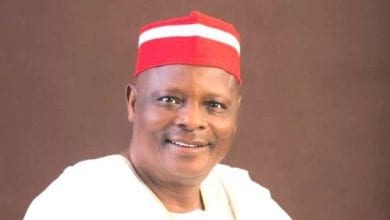
Senator Abdul Ningi, who represents Bauchi Central Senatorial District, has warned that many current members of the National Assembly may fail to secure re-election due to poor budget implementation and weak constituency impact. He argued that the failure to execute capital components of the 2024, 2025, and ongoing 2026 budgets has left lawmakers exposed to voter dissatisfaction. Ningi spoke on these issues during an appearance on Channels TV ‘Politics Today’, monitored by David Lawani
How did the Senate leadership’s meeting with the President go?
I was part of the delegation selected by the Senate for that engagement. It was a closed-door session in which we met with the President to discuss key national issues currently on the front burner. The meeting lasted for about an hour, during which we had frank and detailed exchanges. Afterwards, we returned to the Senate and briefed our colleagues on what transpired. It was not a casual visit—it was a focused discussion on matters affecting governance and the country’s direction.
There were reports that lawmakers requested automatic tickets. Did that come up?
No, that issue never came up. I cannot speak for what others may be discussing elsewhere, but that meeting wasn’t part of the agenda. The delegation itself was not partisan—it included members from different political parties, including myself from the PDP and leaders from the minority caucus. The matter of automatic tickets is internal to political parties, particularly the President’s party, so it was inappropriate for such a forum. We deliberately focused on broader national concerns rather than partisan interests.
Did you raise the issue of constituency projects with the President? What exactly did you tell him?
Yes, that was a major part of our discussion. We are concerned about the non-implementation of the capital components of the 2024 and 2025 budgets. Many constituency projects captured in those budgets have not been executed. In several cases, contractors had already mobilised to sites. They carried out work up to the required threshold—sometimes even exceeding the expected 30 per cent mobilisation benchmark—yet they were not paid. Some were not even given the initial mobilisation funds. This has created frustration among contractors and left many projects abandoned midway. We made it clear to the President that this situation is unprecedented compared to previous administrations, where budget implementation, despite challenges, was far more consistent.
What was the President’s reaction? Was he fully aware of the situation?
He acknowledged that the country is facing financial constraints, particularly in liquidity, but he appeared surprised by the scale and severity of the implementation gap we described. During the meeting, he even presented financial records, and we reviewed them together. From that interaction, it became evident that while he understands the broader economic challenges, he may not have been fully briefed on how deeply the problem has affected constituency projects. He may need to reassess the performance of those responsible for translating budget approvals into actual project execution.
A lawmaker was recently attacked in his constituency. Does this reflect dissatisfaction and poor performance? Are lawmakers’ re-election chances at risk?
Lawmakers are currently in a very difficult and complex situation. At the national level, we work closely with the executive, often making compromises to support governance. However, the actual implementation of projects—what constituents see and feel—is lacking. At the same time, more funds are being allocated to state governments than in previous administrations, in some cases significantly more. The irony is that even when governors execute projects in our constituencies, lawmakers cannot claim credit for them. Governors often present such projects as purely state initiatives. So, lawmakers are caught in between—unable to point to federal projects and unable to take credit for state ones. This disconnect creates frustration among constituents and makes lawmakers vulnerable politically.
Have you ever seen budget implementation this poor in your time in the National Assembly?
Honestly, no. This level of non-implementation is concerning and hard to justify. We are approaching another election cycle, and many lawmakers—especially first-time members—have nothing tangible to present to their constituents. About 80 per cent of the National Assembly consists of relatively new members, many of whom depend on constituency projects to demonstrate performance. Without implementation, they cannot show evidence of their work. This puts them in a very precarious position politically. It also creates tension with governors and constituents, both of whom are asking legitimate questions about what lawmakers have delivered.
So fundamentally, are lawmakers now in trouble with their constituents due to poor delivery?
Yes, without any doubt. When there is little or no visible impact in constituencies, it naturally leads to dissatisfaction. Constituents measure performance based on what they can see—projects, interventions, and improvements in their daily lives. When those are missing, it becomes difficult for any lawmaker to defend their record.
Do you think this dissatisfaction will affect re-election outcomes?
Certainly. The lack of synergy between the federal and state levels has compounded the problem. In situations where cooperation exists and lawmakers align with governors’ projects, the political impact is less severe. But in many states, that synergy does not exist. As a result, lawmakers cannot effectively communicate achievements to their constituents. That gap in accountability and visibility will inevitably influence electoral outcomes.
You suggested suspending political activities. What led you to that position?
The primary responsibility of any government is the protection of lives and property, and that responsibility is currently under serious threat. Insecurity has increased over time, and we’re moving from bad to worse. As lawmakers, we must also take responsibility—we cannot continue to lament without taking decisive action. We have oversight functions over security agencies, yet we have not exercised them as effectively as we should. My suggestion to temporarily suspend political activities—whether for one or two months—is to allow the country to focus fully on addressing the security crisis. It is about prioritising national survival over political competition.
Would suspending politics not disrupt the electoral process? Are you proposing a constitutional amendment?
Not necessarily. The constitution remains supreme, but laws can be amended where necessary. If the current electoral timetable is contributing to instability or distraction, then it is reasonable to review it. Security should take precedence, and any adjustments required to support that goal should be considered carefully within the legal framework.
Did you raise the issue of insecurity during your meeting with the President?
We didn’t specifically address insecurity during that meeting because we had other pressing issues on the agenda. However, this remains a critical concern that needs urgent, sustained attention.
Do your colleagues support your proposal on suspending political activities?
Some of my colleagues understand and appreciate the reasoning behind it. The current electoral calendar leaves a long gap—almost ten months—between party primaries and the general elections. During that period, legislative activity tends to slow down significantly as politicians focus on campaigns. We need to rethink whether this structure serves the country well, especially in a time of serious security challenges.
Would you say Nigeria is at war?
I would not describe it as a formal state of war, but we are certainly facing a severe security crisis. The situation has deteriorated to the point where even senior military officers are being targeted. That is deeply concerning. If decisive action is not taken, there is a real risk that the country will slide into chaos. Addressing this requires collective responsibility from all arms of government, including the legislature.