By Seyi Odewale
Senior Nigerian advocates have waded into the debate over compulsory adult voting, blasting the proposal as unconstitutional and piling fresh pressure on House members already struggling to defend the bill.
Their sharply worded reactions yesterday warn that forcing citizens to the polls would violate fundamental rights and expose the legislature to litigation.
Human-rights lawyer, Femi Falana (SAN), condemned a House bill that would compel every eligible Nigerian to vote or face up to six months’ imprisonment or a ₦100,000 fine, branding the proposal both unconstitutional and impossible to enforce.
Another rights activist, Olisa Agbakoba (SAN), said he would prefer to go to jail for six months than obey the compulsory voting legislation being proposed by the House of Representatives.
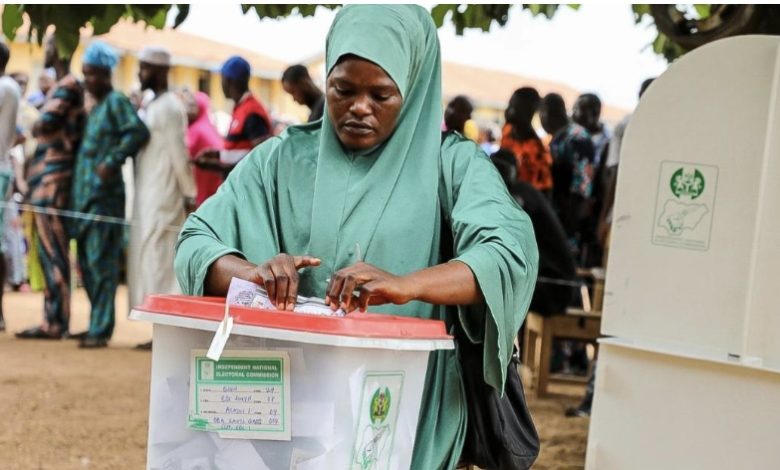
The legislation, sponsored by Speaker of the House of Representatives Tajudeen Abbas, aims to reverse chronic voter apathy by making the ballot a legal obligation.
The Independent National Electoral Commission would be required to forward the names of registered voters who fail to appear at polling units for prosecution.
In a statement yesterday, Falana said, “Compulsory voting is constitutionally invalid in every material particular. Sections 37, 38, 77(2), 135(5) and 178(5) of the 1999 Constitution guarantee privacy, freedom of conscience and the right to abstain.”
Falana invoked two landmark Supreme Court rulings to buttress his case.
The senior advocate argued, “In Medical and Dental Practitioners Disciplinary Tribunal v. Okonkwo (2001), the court upheld a patient’s right to refuse blood transfusion on religious grounds, declaring that the state may not coerce citizens into acts that violate their convictions.
“More recently, the apex court affirmed Muslim students’ right to wear hijab in public schools, reinforcing the protection of personal choice.
“These decisions underscore that the state cannot bully individuals into political participation any more than it can force them to accept medical treatment.”
Besides legal concerns, Falana called the scheme “unworkable in a nation of 95 million voters,” noting that even a 10 per cent abstention rate would leave courts grappling with almost 10 million cases.
Election observers warned that selective prosecution could also become a tool for political intimidation.
The lawyer urged lawmakers to abandon the bill and adopt key Justice Muhammad Uwais Electoral Reform Panel recommendations, including “Unbundling INEC into separate agencies for elections, constituency mapping and party regulation.
“Proportional representation to make parliamentary seats reflect actual vote shares. Resolving election petitions before inauguration to end the ‘governing while on trial’ anomaly. Creating an Electoral Offences Commission to tackle vote-buying and violence.
Speaker Abbas has referred the bill to the House Committee on Electoral Matters, which is expected to schedule public hearings in June.
Civil-society coalitions such as Transition Monitoring Group and Yiaga Africa have signalled opposition, echoing Falana’s position that mandatory voting violates fundamental rights and could overwhelm the justice system.
As plenary debates resume next month, it remains to be seen whether the National Assembly will heed those warnings or test the measure’s legality in court.
*I would rather spend six months in jail than obey such a law, says Agbakoba
Rights activists, Agbakoba said, would prefer going to jail for six months rather than obeying the compulsory voting legislation being proposed by the House of Representatives.
In an interview yesterday on Channels TV’s’ Politics Today’, Agbakoba said such legislation is unreasonable and unenforceable.
“I, Olisa Agbakoba, will not obey such a law. I will come under ‘conscientious objection’ against the law. Let me see who will force me to go and vote. I prefer to spend six months in prison than to be forced to vote,” he said.
Accessing Nigeria’s 26 years of unbroken democracy, Agbakoba said our current democratic process has not served the people’s interest, “only a few people in power are benefiting. It has not worked for the people”
He advocated a different political system against Western-style liberal democracy, “which works for them in the West but not us here. We have to think and embrace what works for us,” he said.