By Olusegun Olanrewaju, Babs Oyetoro
Controversy surrounding COVID-19 seems to be an unending one. Since hitting the global stage in 2019, the disease, that has so far killed millions of persons across the world, appears to be in the news always and, of course, for the wrong reasons.
Contestation about its place of origin, mode of contracting it, immunity and the nature of vaccines are among the disputations that have dog the virus which started in Wuhan, China two years ago.
Scientists and fifth column theorists have also argued on the veracity or otherwise of how information technology birthed the virus. The latest on the disease, which middle name seems to be controversy, is on the appropriateness of the AstraZeneca vaccine.
Already, no fewer than seven European countries have halted the use of the AstraZeneca vaccine. The countries comprise Austria, Denmark, Estonia, Lithuania, Norway, Iceland, Luxembourg, Latvia, Italy and Ireland. They ‘suspended’ the administration of the vaccine due to some reported deaths from blood clothing.
The development is coming even as Nigeria only penultimate Friday commenced the vaccination of the Astrazeneca drug. Nigeria took delivery of 3.924million doses of the Oxford/AstraZeneca vaccine on March 2.
Despite reports that some countries have halted the roll-out of the vaccine, President Muhammadu Buhari on Friday declared that Nigeria’ programme would continue, and officials are forging ahead.
Some governors too have keyed into the president’s position that the vaccination would continue as they took turns to take the jabs. President Buhari, Vice President Yemi Osinbajo, top government officials and some governors have received the vaccine.
Nigeria came under pressure to determine whether the reported side-effects of the vaccine was enough to ditch its vaccination project, which was firmed up with an official probe.
While virologists like Prof. Oyewole Tomori have allayed fears over the safety of the vaccine, the manufacturers of the vaccine warned that patients’ safety was their watchword.
On his part, the Secretary to the Government of the Federation (SGF), Boss Mustapha, had told the governors that the vaccine was safe for people older than 18 years.
Much fanfare and blitz heralded the roll-out of the AstraZeneca COVID-19 vaccine (ChAdOx1-S) in February, but the countries that have made a U-turn on its administration now cite the need for ‘precaution’ before taking their action. The federal authorities say they have yet to see any unusual reactions after the AstraZeneca vaccine. Minister of State for Health, Dr. Olorunimbe Mamora said suspending the vaccine would amount to ‘a fire brigade approach’.
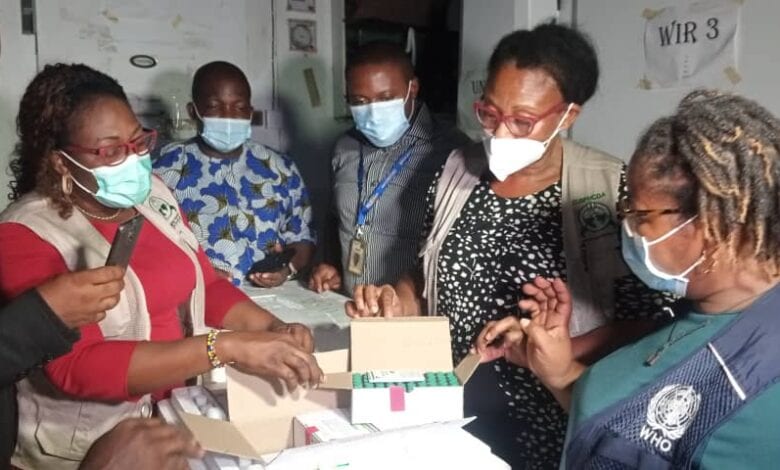
Meanwhile, Nigeria has continued to deploy the vaccine received from the Covax facility and the World Health Organisation (WHO).
A report on the British Broadcasting Corporation (BBC) suggested that there was no reason to stop using AstraZeneca.
Forbes Magazine also quoted experts who defended the ‘safety’ of the Covid-19 vaccine.
AstraZeneca said it was responding to the COVID-19 outbreak by way of a policy on the outbreak ‘’consistent with our values to follow the science, put patients first and do the right thing.’’
It added, “Our priorities are to ensure the continued supply of our medicines to patients and to safeguard their health.”
AstraZeneca’s vaccine was authorized for emergency use in the United Kingdom at the end of December, and in Argentina, the Dominican Republic, El Salvador, Mexico and Morocco early this year.
The final supply of the vaccine was a subject of contention to the approved countries as the health authorities said distribution was still subject to caveats.
AstraZeneca COVID-19 vaccines arrive Lagos
‘Millions of AstraZeneca vaccine
But Nigeria’s hunt to procure vaccines is not over yet. We have already started talking with other sources for vaccines rather late in the day. Other countries finished talking and paid months ago,” Tomori said.
Mamora said since Nigeria rolled out the vaccine last week, there had been no reported side effects. He added that, apart from being approved by WHO, the vaccine had been endorsed by the National Agency for Food, and Drug Administration and Control (NAFDAC)…
Meanwhile, the National Primary Healthcare Development Agency has downplayed reports about the side effects of the vaccine.
WHO’s Strategic Advisory Group of Experts on Immunization (SAGE) had issued what it called an interim recommendation for use of the Oxford/AstraZeneca COVID-19 vaccine (AZD1222) in February 2021.
Downplaying the issue of side effects, Tomori said those countries suspending the vaccine were only taking ‘precautionary measures’.
He stated, ‘’How many side effects have we recorded in Nigeria? We are talking of millions of people vaccinated in those countries. Nothing is clear about that yet.’’
The controversy over the administration of Covid-19 vaccines in Nigeria is coming in the wake of a spirited debate on whether the Federal Government should force Nigerians to take the vaccines.
The 35,000-member strong Nigerian Medical Association (NMA) is yet to officially comment on the controversy surrounding the vaccine.
According to a Catholic priest, Rev. Fr. Raphael Agbata, there are some theories and what you see on the social media may be true or false because people are having fears about the vaccine.
In Africa, South Africa may have been the first country to suspend the vaccine.
Meanwhile, the National Agency for Food and Drug Administration and Control (NAFDAC) has risen in support of the AstraZeneca vaccine.
Its Director-General, Prof. Mojisola Adeyeye, said the vaccine has no side effect.
The NAFDAC boss said the fear was unfounded because the countries that suspended the administration of the vaccine said they took the decision “as a precautionary measure”.
According to her, the agency thoroughly went through the application dossier of the vaccine before it was approved to be administered on Nigerians.
“When we got the dossier or the application package of the vaccine, we went through it line by line, but before we got the application itself, we went through other assessments.
“I am talking about their assessment report so that we are prepared and guided when we start our own and that was exactly what happened.
“We concluded based on quality, safety and efficacy because we have to depend on the report, this particular AstraZeneca vaccine, over 20,000 people were involved in phase three of the report.”
While insisting that the effectiveness of the vaccine outweigh the risk, she added that there was no medicine without its side effect.
Problem or panic?
Days after the Austrian authorities announced a stoppage of the use of ‘a batch’ of AstraZeneca vaccine, Danish health authorities said they had also ‘temporarily suspended’ the use of AstraZeneca’s COVID-19 vaccine for 14 days after some patients developed blood clots after receiving the jab.
The Denmark officials said the country’s decision to suspend the shots ‘for two weeks’ came after a 60-year old woman, who was given an AstraZeneca shot from the same batch that was used in Austria, formed a blood clot and died.
Earlier in Austria, a 49-year-old nurse had been reported dead from “severe blood coagulation problem” days after she received the shot.