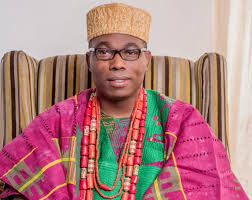
In this interview, Prince Adewole Adebayo, leader of the Social Democratic Party (SDP) and a prominent voice in opposition politics, discusses the ongoing wave of defections to the ruling All Progressives Congress (APC), the disconnect between politics and governance, and why Nigeria’s current challenges persist. He also addresses the shortcomings of the opposition, his party’s ideology, and the failure of leadership to meet citizens’ expectations
What do you think are the reasons for defection galore into the APC fold?
Let me register my condolences to the people of Benue State. It is sad to repeat it because I have had to say it on too many occasions. This is particularly sad. It is a clarion call to say that this comedy show we call politics has practical consequences and that people in leadership must be proactive. I hope that we don’t just mourn and wait and that the next one is not worse than this. This should be a turning point for the country, as human lives need not be wasted in such a manner. The causes are well known, they are preventable, and the solution is good governance. The so-called defections are sometimes just people coming out of the closet, claiming to be in opposition because they have been compulsorily retired into opposition—not by choice. When you choose to be in opposition by choice, you have access to the ruling party, but you just disagree with them. The reasons for this are well-articulated—it has to do with the interests of the Nigerian people. There is zero risk of you defecting unless those fundamental disagreements or problems have now been eliminated. Everybody in Nigeria knows that poverty is still there, that insecurity is still there, and that corruption and poor ethics still dominate our politics. Anything other than that, you will find out that people who miss the bus of the ruling party tend to wait at the bus stop of the opposition until the next bus comes—and then they hop along. There is nothing new. Many of them are being primed and kept waiting for the dramatisation of resurgence by the ruling party. They keep them somewhere so that when the time comes, they will use them to demoralise the opposition. That is why we are cautious about people who come to us claiming to be in opposition.
You sound like you have no intention of ever moving to another party, but we have seen politicians defect even as they claim that the problems they talked about are being addressed.
They don’t have any burden because they don’t have to believe in what they are saying. They say it for the moment. I joined the SDP when I was 19 years old in 1991, in the days leading to the late MKO Abiola. At that time, it was even the late Yar’Adua and the late Adamu Ciroma who were in the National Republican Convention. Abiola came, along with Atiku Abubakar and Kingibe, to run with him after he became chairman of the party. I joined because of the late Lateef Jakande in Lagos. I haven’t joined any other political party since that time. I don’t see any reason why I would join another one because the party is well-positioned to solve Nigeria’s problems. When the late Abiola came out with his ‘Farewell to Poverty’ in 1992, leading up to 1993, it remains valid today. If you pick Abiola’s programme and implement it, you’ll see none of the problems have been fixed—instead, more issues have been added. That was why, 30 years later, in 2023, I came with Farewell to Poverty and Insecurity. The guidelines are there. No change of government will solve the problems without a change of ideas, methodologies, and culture. The idea that someone can receive a call from the State House or anywhere, become enraptured by photography with the President, and then return saying they’ve had a new epiphany—that is their politics. If the President drops out tomorrow, they will also change their minds and go elsewhere. That’s not the kind of politics we want to play.
From the May 29 address by the President, do you see the mention of defections as a sign of political strength?
What is clear is—if one wants to be honest—you have to give President Tinubu an A1 in politics. The only problem with that A1 is that he tends to have F9 in governance. So, how is he going to leave a substantive legacy? That is the problem. The A1 in politics is that he knows the political class very well—he knows what moves and motivates them. He knows how to recruit them, sometimes retrench them, retire them, and re-engage them. But I wish he knew what the Nigerian people want: basic services, stability, and security. You don’t need many people to defect to your party. If you cannot save lives in Benue, Plateau, and many parts of the country, then you have failed. The problem with that speech is—forgetting that he was at the National Assembly in front of politicians—he was supposed to be giving an account to the Nigerian people. I’m not sure that Nigerians are as enamoured with the defections as the President appears to be. The politicians who are now waxing albums for the President, featuring the Senate President as the solo singer and singing the choruses—that music is only for their ears. The rumbling in the stomachs of Nigerians will not let them hear the music of the National Assembly. That podium belongs to the Nigerian people. It is their issues that ought to be reported there. The idea that we will assume the political fortune of the President, his party, and his co-travellers is the whole essence of the four-year term is most unfortunate. What you do with politics is compete well—and I respect that the President can compete well. But if you manage to get power somehow, controversially, at that moment, politics ends. Then, you serve the Nigerian people. You manage the diversity of the country. You obey the Constitution and ensure other arms of government do the same. You manage the economy—not by economising the truth, which is what they do. What we want to do differently is focus the entire politics on the welfare of the people. There will be less controversy if we address whether our people are hungry or not, whether they have access to good housing, and whether we’re investing in education and healthcare as we should. Do we have the basic infrastructure for modern business and governance? Can we even make a complete phone call without it dropping?
Aren’t you feeling like a lone voice since the opposition is in disarray? Are these principles supported by your party, even as it welcomes defectors?
These principles don’t just belong to me—they belong to the SDP. These are manifestos written when I was a teenager, and they belong to the Nigerian people. They are in Chapter 2 of the Nigerian Constitution. I might have been a good advocate, and I sincerely believe in them, but they belong to the party. Now, the party leadership has a dual role. They want those of us in the party to promote the ideology, and they also want to have an open-door policy. Among those coming in, some might have other intentions. They will discover that the SDP is well-rooted. If you’re looking for a getaway car or a quick escape, you’ll find that you’re detained in the SDP. You’ll be weighed down by the need to understand how the party and its organs work. Many have been impressed—and they are staying. Some who came for transactional purposes, trying to hijack a vehicle, discovered that the party was not a legitimate one. We believe many people in politics follow the bandwagon. If this lone voice continues to resonate, people will find that it is the right way. The house is already crowded on the government side—they don’t have a window to look elsewhere because all of Nigeria’s problems are assembled inside their party. Unless politics starts working for the ordinary person, there’s a limit to how many people want to turn into billionaires overnight. What we are doing is not saying everyone outside the party is unprincipled. We’re saying—when you come in, how you interact with us will show whether you’re here for principle or to destabilise. We have supreme confidence in the membership and leadership of our party—that they are ideologically rooted. If anyone comes into the party, they will either blend or move on.
The public appears fed up. The opposition is faltering, and the President can ignore you.
The assumption President Tinubu has is that people are marginal to politics—that if you capture institutions and politicians, there’s no opposition. But the real opposition is coming from the people. There’s a problem with turning career politicians into opposition figures. They only speak when they are dropped from ministerial lists or board appointments—then they remember to make noise so they can be brought back.
It’s like you are referring to a specific person
No, no. It’s a general culture that has been in place for ages, and that’s why you see many of them say, “I will never do this,” and then on the next page, they are doing it. The reason is that the real opposition is from the Nigerian people. The many problems the SDP has faced stem from our inability, thus far, to tap into the real opposition among the masses of the people. I will let you know that the country needs serious surgery—neurosurgery, in particular—to solve the problems we currently face. To do that, the first thing a surgeon does is sanitise himself because if you don’t, you will infect the patient. If we don’t sanitise the opposition first—to know who is actually in the opposition and who is in opposition by convenience—then we are not ready. Not everyone who calls himself an opposition figure today wakes up in the morning and says a prayer to remain in opposition. If we do that and allow the party to belong to the Nigerian people, not seeking big men with money to dominate the party, but instead letting the people contribute to it—that is what we are doing. Perhaps a lot of it is happening outside the press’s view. What we are trying to do is quite fundamental. When President Tinubu and all the paper castles he is building are blown away by the tide of time, he will realise—even in his old age—that he needs a government that works. When he is out of power, he will need a deepened democracy and the rule of law. What we are building requires time, and that’s why we tend to attract young people who are not desperate, who don’t want to be in power within two weeks, but who are ready to do the work—who are prepared to grind and build a structure.
What is your view about that memo from the Ministry of Agriculture asking staff to pray and fast for the following three Mondays—which makes people question the government’s ability to bring down the cost of food items?
It’s a bit of tragic comedy in the sense that the comedy part is that some people believe they can pray instead of going to the farm. I am a farmer. I pray after I have done all the necessary planting. It is a common phenomenon in Nigeria that we often seek consultation from God to do what we have refused to do for ourselves. As a religious society, we are taught that if you want your horse to be safe, tie it to a tree, pray, and God will answer your prayer. These are all part of the doctrinal confusion that you find in the Nigerian government. Everything they do—even the way the President selected his prayer warrior to be in charge of agriculture—you realise that he has given little thought. I can say it without any prejudice against him. I am convinced—scientifically—that President Tinubu’s mind was not on good governance when he was setting up his cabinet. He was focused on politics. It just happens that one or two of his cabinet members have been a lucky hit, but for the most part, you have a comedy show all through. He still has a chance, even now, to lean into his party. He should not look towards the SDP—we will never be helpful to him when it comes to working with him. He should look towards his party and many of the new friends he has made. Among them, he might find someone who can hold down a task. Take Wike, for instance. You know he can get the job done. Whether he sleeps at all, he still gets the job done and can make trouble tomorrow. Look at the gentleman in the Ministry of Interior—he appears to be working. You can look around. Nigeria is not short of talent. But what matters is that you are a public servant. You are using public resources and public time—and time is the most precious resource, one that we cannot replace or renew. So you must do what is right. That is why the office is for four years. He is at midterm now, and he is having a midterm crisis. He is not willing; he is not showing it. He is allowing hubris and some of the comedic adulation he gets to get in his way. Using his metric—”If I am not able to give you constant electricity in four years, then don’t vote for me next time”—now he is halfway there, and he is yet to have 10% of the job done.