By Olusegun Olanrewaju and Babs Oyetoro
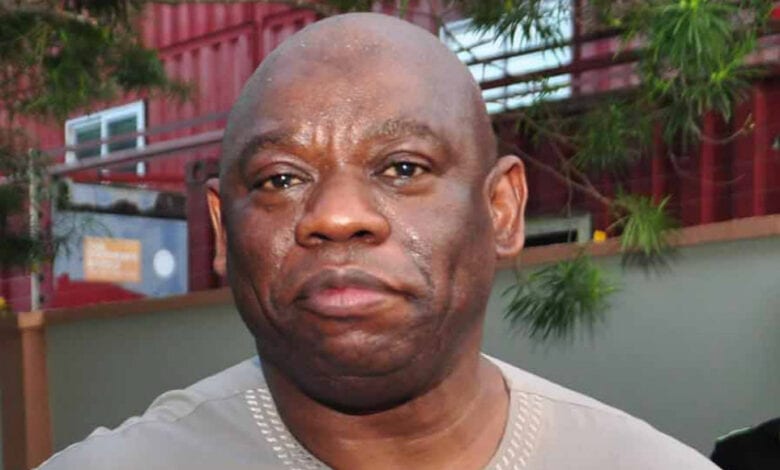
Scion of the MKO Abiola dynasty, Kola, has said that the naming of June 12 as Democracy Day represents the greatest honour given to his late father.
The declaration of the day as a public holiday for his father, Kola said, represented the highest regard for justice.
President Muhammadu Buhari had on June 6, 2018 directed that the nation’s Democracy Day be held on June 12 of every year, as against subsisting arrangement where the ceremony usually held on May 29.
The president also honoured MKO with the highest national honour, the Grand Commander of the Federal Republic (GCFR), usually awarded to past heads of state.
Buhari, who said he reached his decisions after ‘wide consultations’, also honoured Abiola’s running mate, Babagana Kingibe, and the late human rights activist, Chief Gani Fawehinmi, with the second highest national honour, the Grand Commander of the Niger (GCON).
“Now, justice has been done. Now MKO can rest in peace,’’ Kola stated, adding that his father had been a victim of ‘complex conspiracy’, especially by self-seeking associates who betrayed him in the immediate events trailing the widely-acclaimed June 12, 1993 presidential election.
He said, for 21 years, he had been ‘’silently fighting, kicking, lobbying, cajoling’’ to have the injustice meted to his father, family and Nigerians redressed.
‘June 12 sacrifice yet to yield political justice‘
Kola said he also carried the burden of a son and heir to have his late father’s memory honoured, memorialised and immortalised by a country he gave his all. For 21 years, he said his heart bled and was far from being fulfilled until he finally got the Buhari administration to honour the man “whose blood watered the tree of democracy we currently savour’’. Kola declared, “I wanted two things done: first, to have him honoured with the GCFR (Grand Commander of the Federal Republic), that is the highest award for presidents; then, to recognise June 12 as Democracy Day, a symbolic reminder of what that day means to Nigeria and Nigerians.
“I got the two and a third: A public apology from the government. Now, I can heave a sigh of happiness and relief.”
Narrating his experience to dismantle on the rough, tough road to justice for his father, he told the untold story of June 12; how MKO went into the June 12, 1993, presidential race; how and why he fell for Generals Ibrahim Babangida and Sani Abacha’s schemes; the annulment, the behind-the-scenes manoeuvres.
He also spoke on the June 12 struggle, the battle for de-annulment, the Epetedo declaration, Abiola’s four-year incarceration and his eventual death.
Kola also revealed the identities of those he called the betrayers of the June 12 struggle, many of them strutting the stage and calling themselves heroes of democracy and June 12 apostles, but in reality, were something else while ordinary Nigerians stood on the June 12 struggle.
Abiola’s victory, he said, cut across ethnic, religious and social divides and broke all barriers; a pan-Nigerian mandate.
His father’s victory, he added, was a truly unique experience for the nation
On the significance of the June 12, 1993 election annulment that gave rise to the democracy day, Kola went down the memory lane:
“It is a national date. That date signifies a lot of things that does not exist today. First, he had a Muslim-Muslim ticket, which meant that religious bigotry is out of the window. We had a South-West person and the country and people voted for him across ethnic groups.
“That date will always be relevant in this country as long as Nigeria remains one because it is the day the country came together as one tribe, irrespective of religion or ethnicity.
“My plea is that under the leadership of President Buhari, irrespective of where we are coming from, we must come together and stop all the killings and the ethnic division.’’
Maintaining that unlike some bootlickers, who masqueraded as activists and associates, he kept rejecting ministerial appointments, saying “on June 12, people voted for a man that represented a true detribalised Nigerian. That is the significance of why he got the GCFR, anyway.
“When I started this process and the Jonathan government felt they could name University of Lagos (UNILAG) after him, I told the government that MKO was not a South-Western man.
“Jonathan missed it because we already had Moshood Abiola Polytechnic in Ogun State and we have a stadium there named after him.
“My dad has always been an open book; what you see is what you get. He was extremely brilliant. He had a photographic memory and he never forgot anything, no matter how many years had passed. That was what endeared people to him and he had lots of friends.
“He and Olusegun Obasanjo came from Abeokuta and even attended the same school. For all that he did for individuals and for the country as a whole, Nigerians said thank you to him through that election.
“He didn’t get one single honour while he was alive, and Nigeria used that opportunity to say thank you.
“The second point is that, through that election, he united the country, and he proved that, irrespective of where you come from, you can see yourself as one.
“After my father died, I continued the struggle for June 12 to be officially recognised; I started with Baba (Obasanjo) but I knew that I would not get anything done.
“When former President Goodluck Jonathan came, I started again with him. Even after he had lost the election, I felt that it was one last thing he could do to engrave his name in the history books of Nigeria, but for his own reasons, we fell short at the very last minute.’’
On how he got Buhari’s attention to perfect the job, Kola said, “When I met with Buhari in Kaduna as President-elect, I told him what I would like and, as God would have it, he had the strength of character to do it.
“It is a discretionary and not a political thing. Such an action is taken at the discretion of the President. I wanted three things: for my father to be honoured with the GCFR, so that Nigeria would accept that he won the election because that title goes to Presidents only.
“The second issue was that I wanted June 12 to be declared Democracy Day and I got that. May 29 Democracy Day was a fake date; that was just Obasanjo trying to re-write history.
“One thing I didn’t ask for but got and I’m very grateful to the President and Vice President was the apology made to my family; that was the icing on the cake.
“Some say it was political, but anything about Abiola is political, and that is why it took so long for him to be recognised by giving him his due place in the history of Nigeria. We didn’t expect the apology and I am very grateful to the President”.
On MKO’s persona, Kola said Abiola “was the most detribalised person I know, and we were all brought up that way. He was a pioneer in every business he set up because he always believed in indigenous talent.”