

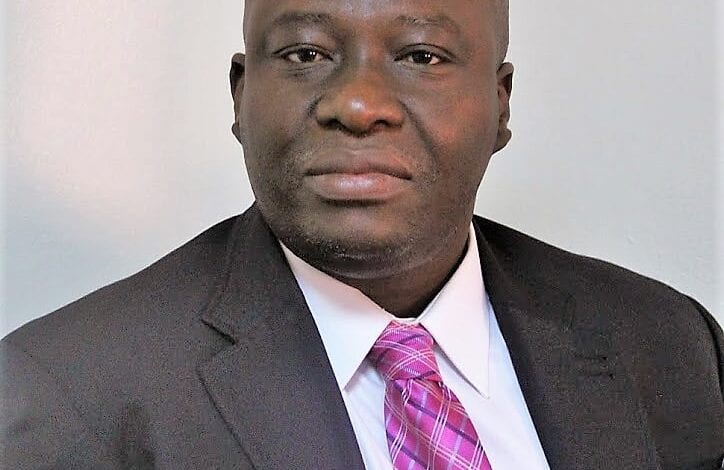
The immediate past Director-General of the National Broadcasting Commission (NBC), Dr. Armstrong Idachaba, speaks on Federal Government’s suspension of Twitter, among other social media issues in this interview Kassim Omomia, Andy Asemota and Alex Emeje
How would you describe the NBC and its roles in the establishing Act?
The agency called National Broadcasting Commission (NBC) was principally set up by the Act of Parliament No. 38 of 1992 to mark the deregulation of the broadcasting industry and consequently regulate or midwife private participation in broadcasting. Before then, broadcasting used to be an exclusive preserve of government and all that existed were strictly speaking government monopolies.
Since the deregulation, from just one or two federal government and regional broadcast stations, today we have about 600 broadcast stations. Like regulatory bodies all over the world, there are a lot of issues that the regulators must deal with: licensing for broadcast- frequency and spectrum allocations are principal. And we also have responsibility of guaranteeing fairness and balance in broadcasting and ensuring among other things that broadcasting promotes social, political and technological growth of the Nigerian society. So, basically these are functions of the commission and that is why the regulatory agency was principally set up?
Does NBC have any relationship with the Nigeria Communication Commission (NCC)?
Yes, we have to the extent that we are both government agencies in the information and communication sector. NCC is a parastatal in communication. In some countries, both agencies are merged as a single regulatory agency but in the many nations including the United Kingdom, there is a kind of differential where you have one body, strictly speaking, regulating broadcasting alone or telecommunications. But again, the functions are clear. We deal with broadcasting (radio and TV) dissemination of information that is electromagnetically driven that will also include cable television and satellite and, of course, the NCC deals with data and end-to-end telephone communications, that is basically the difference.
In that case, how did you get into the Twitter issue and online media regulation?
Well, in the act setting up the NBC, a part of its critical mandates is actually the regulation of broadcasting. Technological development and advancement have more or less fused telecom and broadcast services. Now, the essential differential is basically in broadcasting as you know, the critical element is the broadcast content. When telecom companies begin to also deliver or become vehicles for content dissemination, then they fall within the purview of a broadcaster.
As broadcast regulator, what we see over the years, all over the world, is the tendency for the telecoms regulators to basically look at licensing telecom operators, frequency allocation and for all intents and purposes, hardly do they really bother about contents that emanate on those platforms.
So, it is the responsibility of the broadcast content regulator to ensure the contents that come out of those platforms are all in tune with broadcasting code of any country.
It is to that extent that you find the NBC extending its control or regulatory mandate on issues of content that are emanating though from the platform that also borders on the well-being of the Nigerian society.
We have many online micro-bloggers allegedly spreading hate speech. What has the commission done to check such platforms considered a threat to the country? Why Twitter, why not others who have been there?
In many cases, the fact is technology has advanced the capacity for content dissemination generally. And more so that technology has created windows and lowered the windows and restrictions on entry into the principal highway of telecoms broadcasting.
The internet has become the major driver as you know, it is a globalized spectrum that cuts across boundaries but that has not erased the fact that every country has a jurisdictional responsibility to protect its own territorial space and that is why you would have seen over the period that between EU and America, efforts are increasing rapidly on how the technology of internet can also be regulated for the good of society.
Sometimes, a year or two ago, the American government, actually their parliament, had to summon Facebook, Google and even Twitter and other operating social media to render accounts.
Many countries have devised means of establishing regulations. Even of late, India, took steps on how social media space can be regulated. And that is because fluidity that has been allowed by the social media has often been abused by people who produce and disseminate contents on the social media to the extent that they have become hurtful to many nations and Nigeria is not in isolation.
Nigeria has also woken up to the sad reality that the social media may have come with the initial opportunities and benefits, but we have also continually seen evidence that it can also be used for terribly negative reasons. Like you rightly said, many of them spew unverified claims that are likely to divide the country, and, on many occasions, we see pictures, images and events that happened outside the Nigerian territorial space that have been fused or trans-imposed on the Nigerian consuming public as if they are genuine pictures. Many of them are manipulated; many lack in veracity and authenticity, yet the purveyors want to create fear and anger.
So, we have seen that there are people who are obviously committed to dismembering the Nigerian state and they are not hiding it. Sometimes, you see them in violent physical attacks, you see their rhetoric, you see them even attacking the apparatus of state, burning, and destroying public infrastructure and facilities and those people are occupying the larger social media space, that is why any responsible government should wake up to that reality. If you saw the statement of the minister of information, it merely said some of these contents that have been coming out from Twitter are actually targeted at dividing the country and that is why the government has to act.
Why did the government not tarry awhile before using the sledgehammer ?
Sledgehammer on the side of who?
It suspended operations of Twitter and we had the cases of Channels TV, Human Rights Radio (Berekette Family) not too long ago. The AIT has always been there.
You raised two issues, I think I should look at them separately and link them together. First of all, the suspension of Twitter was the decision of the Federal Government. It was announced by the Minister of Information and Culture himself. And if you have followed it, you will discover that government is quite united in that position because over and over, the government complained that many tweets are hurtful and injurious to the Nigerian state.
Lamentations, regrets as Nigerians mark Democracy Day
Two, Channels TV, yes. We have had cause to sanction the organisation. I do not think we have suspended it in recent times. We only said that by what it did, it was liable to suspension. The organisation has tendered its apology. Fine. There is no suspension yet. We left it at the level of fine.
On Brekete Family (Human Rights Radio), if you followed the statement by NBC, we stated they have been serial violators of the broadcasting code. He (affected manager) has been cautioned, warned, trained, and retrained at the cost of the commission for him to do what is ethically correct. So, when you have that kind of a client, that has become exceedingly difficult to obey simple operational code of ethics, then you need to ask him to sanitize himself. And that is what we did, we just asked him to go off for 30 days and we said we hope he will use that period to correct himself and reinvent the station for good.
What has been the benefits of the sanction?
You mean Brekete Family? Let me tell you what I have seen over the years as a regulator. There is human tendency to resist control. I have seen over time, especially in this area, immediately they are punished or sanctioned, some of them start to commit the same breaches.
So, I think, I have professional indiscipline among the crop within the broadcast ecology and that is not good for the profession. Any credible profession is driven by professional discipline. If you are discipline, you cannot be repeating the same problem over and over. Why do you have to be cautioned and fined?
There is something wrong. After all, sanctions are supposed to create some kind of restrain. So, if you do not exercise that restrain, it means you are hell bent on breaking law and order.
In broadcasting, it is dangerous because any misapplication of broadcast formality will get to harm the society. We hope genuinely that broadcasting will become a bit more professional, a bit more self-regulatory in terms of examining what they intend to do. Is it nice, it is fair, rather than raise an alarm and politicise the issue and say that somebody is after you when, in actual fact, you know you have committed the deed and as we have seen in recent times, they even go as far as to offer unreserved apology and still claimed that they are been hunted.
Is the NBC influenced directly by its parent ministry and the information minister?
In the brief discussion we have had, does it appear that NBC is an agency that is being teleguided? Certainly not. NBC is a body set up by the law. It is the only body recognised to regulate the broadcast industry, not even the ministry. The ministry acts at the level of policy. So, the instrumentality and the implementation of the broadcasting law is in the domain of NBC. Yes, the minister has policy oversight, and he may say he wants to propagate development. Our intention to have digital transmission is not because of what people perceive. The minister may say we want more educational programming in Nigeria, more health programme and how do we go about it? But he does not interfere in terms of the mandate of the commission.
What mechanism is in place to monitor, essentially those who are in the new media?
This is a brilliant question because a lot of people do not understand the dynamics in media monitoring. You know, the media impact the generality of the public and speak to people at different levels. So, most of the time, what the regulator does is to rely on complaints from the public and that is what happens.
Hate speech, for instance, is targeted at group of people who will say, for instance, my tribe is being attacked; my morality has been assaulted, you know; I have morality issues, that is way it goes most times. Mothers complain to the regulators. Some advertisements you think are healthy may compel some women group to complain that the adverts demean womanhood, or they are a threat to children.
So, that is the way it goes. We get most of our feedback from people who are affected by broadcast content. Then, we have officials that are employed across the country, who are also monitoring out there to ensure broadcast contents fit into the ethics of the profession. And we have technology to our advantage, even when we are not watching, we can record a programme. We can programme our equipment in such a way that they can also playback what we find offensive. And then we review the materials.
Are you comfortable with the reactions of Nigerians to the ban of Twitter in the country?
When you say Nigerians, you must be specific.
We mean that segment of Nigerians who are opposed to the ban. What is your take on their reactions?
I must say equally large numbers of Nigerians are bothered and disturbed by the excesses of social media. A lot, perhaps much more Nigerians are beginning to say the social media is more of negative impact than a blessing because of what it has done to the country. You must visit the social media to see the conversations of our youths in this country. The level of hatred and fault lines that are spewed on the social media. Just post something on any subject, and you will be shocked. Based on your name, someone from a different tribe will rain insult on you and your parents. People profile others just on the basis of their names. They are not even patient enough to get into the main argument, and immediately an issue is raised, it is polarized, all kinds of ethnic misinterpretation are imputed into it on the social media. People do not discuss, there is no engagement and because it is quick, smart and accessible, illogical contributions are then easily put forward.
I told one of my directors recently, that the social media put everybody in classroom, whether you are sane or insane. It pushes everybody into the same class whether you have the mentality of a professor or a farmer; you are all expected to come up and discuss topical national issues.
So, you know it is obviously a foundation for crisis. Although some people have specialized groups where they can engage in meaningful discussions. That is using it positively, but there is that mad open station where everybody is free to incite and abuse.
Does the commission not think that it has violated the rights of Nigerians by suspending Twitter and how do you react to AIT’s threat to sue NBC?
AIT said we suspended Twitter and that they want to sue the Federal Government? From my discussion with you, do you still believe that NBC suspended Twitter? Let me help. NBC issued a circular to broadcasters to say they should comply with FG’s order, meaning that the Federal Government says that Twitter is persona non-grata. It will be very unpatriotic for anybody and an affront against the government for people to continue to patronise Twitter. It is simple. And we do not have two countries in one. So, if government says this is the direction, then every obedient person must follow.
So, if anybody wants to challenge government, that person is exclusively challenging the power of government, but we also wish them luck in court.
How do you intend to regulate and sanction those who are deploying the social media for anti-social behaviour?
First of all, I always believe that the media can make or mar a country and the technology of social media communication is a double edge sword.
Now, the way forward will be for the people who patronise the social media to interrogate their conscience and decide their purpose of joining the social media. Is it for good or for bad? If you want to use it for bad intention, know that it would attract negative consequences. Wrong use of social media can lead to deaths, violence, confusion, and anarchy.
You can also use social media positively. Indeed, you can use both the social media and traditional media to promote national unity, social cohesion, and economic development.
So, it is time for us as people in Nigeria to use the media to narrow our differences and not to widen them as we are doing.
That is why I said every country should begin to bother about how the social media can be used for good. I think that is the issue in Nigeria. You know, anybody operating in the country must realise that the medium should be used for the good of the country and its people, not to create half-truth, misleading stories, increase tension and create divisiveness that will lead to breakdown of law and order.
What are the sanctions for any Nigerian arrested for violating federal government’s ban on Twitter?
Well, I think the Attorney-General of the Federation said they will be prosecuted. And there are sanctions in the broadcasting code. If anyone violates any provisions of the code, there are sanctions.
What will be the implications for individuals who violate the suspension?
That will be within the prosecutorial power of the AGF.
So far, how many licenses have you issued?
We are proud to say between 1992 and now, following deregulation, we have about 600 broadcasting stations in the country. Four hundred radio and about 200 television stations.
How many more applications are you processing now?
Interesting, I am surprised we are having applications on daily basis in the recent past. You know the broadcast sector is classified along certain classes of operation. You find diverse interests in broadcasting; you find community radio, campus radio and you have those in commercial broadcasting and those who want to operate pay services or direct satellite broadcast. So, there are various classifications in broadcasting.
In terms of applications that are waiting, I told you that already, we have over 600 broadcast stations that are operating. In terms of applications, I can readily tell you we have about a 1,000 applications for both radio and TV licenses. However, some of them need to go through CAC clearance. Some people bring applications without necessary legal verification.
So, they must do company certification and probably set-up their shareholding which we also verify because we check the status of any applicant before we treat further. So, for that reason, we may have some people waiting on the line.
How much revenue has NBC generated in terms of applications and licenses issued?
Unfortunately, the broadcast sector is a sector where broadcasters are owing heavily in terms of license fees. If you remember, during, COVID- 19, perhaps the broadcast sector was the only one in the country that granted waiver, about 60 per cent of what they were owing. They were owing NBC over N2billion. You know, they are yet to pay despite the waiver.
Up till now?
Yes.
What is the exact amount owed now?
I need to get my finance man to get those figures.
What is government benefiting from the licenses you have issued?
Great question, NBC pays 30 per cent of any money that comes to it, and we do that consistently. We remit 30 per cent to government coffers.
How much has the commission remitted so far?
I cannot give that figure off-hand.
Idachaba granted this special interview a few hours before his removal.


