The Federal Government has approved the harmonisation of the mandates of the National Board for Technical Education (NBTE) and the Industrial Training Fund (ITF).
This development was contained in a statement issued on Wednesday by the Senior Special Assistant to the President on Media and Communications (Office of the Vice President), Stanley Nkwocha.
The statement disclosed that decision is part of efforts to strengthen technical skills development and support President Bola Tinubu’s industrialisation agenda.
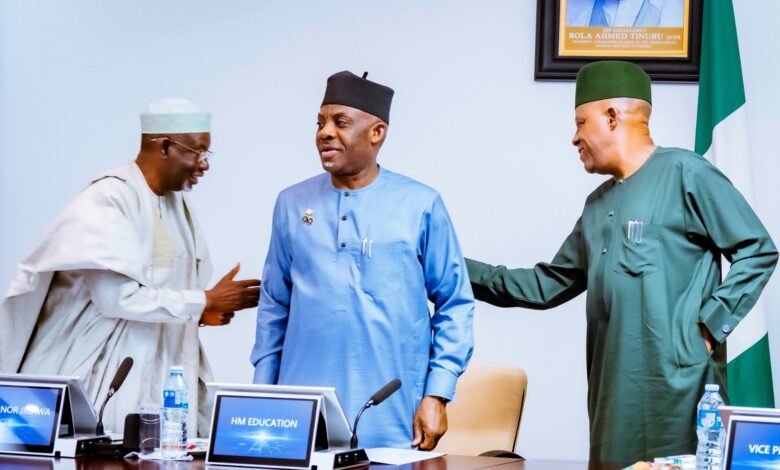
According to the statement, the decision was reached at the 9th meeting of the National Council on Skills (NCS), chaired by Vice President Kashim Shettima in Abuja on Tuesday.
The council also adopted the National Skills Observatory Platform as the country’s central framework for evidence-based skills planning and policymaking.
It further constituted a committee to review policy recommendations aimed at aligning Nigeria’s skills development strategy with its industrialisation objectives.
Speaking during the meeting, Vice President Shettima stressed the need to ensure that Nigeria’s training institutions produce graduates with skills that match the demands of industries.
He said the alignment of the mandates of NBTE and ITF is in line with President Tinubu’s Renewed Hope Agenda and is expected to strengthen the country’s workforce for economic growth.
Following the meeting, Minister of Education, Dr Tunji Alausa, said the council’s resolutions were designed to expand employment opportunities for Nigerian youths by improving the nation’s technical and vocational education system.
“The focus of the 9th National Council on Skills meeting is in line with President Bola Tinubu’s directive to create more employment opportunities for young Nigerians across different sectors of the economy. The council has been reinvigorated under this administration and is positioned to deliver greater results for the benefit of our youths,” Alausa said.
The minister explained that the meeting also reviewed ways to streamline the National Skills Qualification Framework, strengthen the roles of awarding bodies and sector skills councils, and improve coordination across the country’s skills development ecosystem.
He added that discussions were held on the proposed partnership between the Aliko Dangote Skills Acquisition Centre in Kano and the Kano State Government, which is expected to pave the way for the eventual takeover of the facility by the Aliko Dangote Foundation.
Also speaking, Minister of State for Industry, Trade and Investment, John Enoh, said the Tinubu administration was prioritising vocational education and specialised skills training as part of its broader industrialisation strategy.
“Industrialisation cannot succeed without a skilled workforce. The Federal Government is therefore committed to revitalising the skills sector through vocational and technical training that equips young Nigerians with the competencies required by industry,” Enoh said.
He noted that the administration’s Special Skills Programme would play a significant role in preparing the country’s workforce for emerging economic opportunities.
Jigawa State Governor, Umar Namadi, described the national skills initiative as one of the most impactful programmes introduced in recent years, saying it would enhance youth empowerment and economic development.
He also highlighted ongoing skills acquisition programmes in Jigawa State and commended the Federal Government for creating an enabling environment that allows states to expand opportunities for young people through vocational training.
The National Council on Skills is responsible for coordinating Nigeria’s skills development policies to ensure they respond to labour market demands and support the country’s industrial and economic growth objectives.