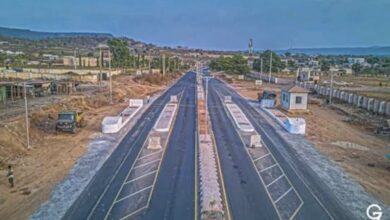
Ruga settlement: Wike progresses despite misrepresentation by pro-poor advocates


The Ruga settlement in the Wuye district of the Federal Capital Territory has been in the news lately over the demolition of shanties and other unapproved structures. In this piece, Ben Adoga states that while civil society organisation are harping on the demolition for recognition, the Minister of the FCT, Nyesom Wike, remains poised to keep the nation’s capital safe and befitting tops agenda
The settlement, Ruga, was demolished on November 5, 2024. Hundreds of shanties made from sacks, planks, and scrap roofing sheets along the rail corridor were pulled down and set ablaze to discourage the settlers from erecting further structures.
Removing Ruga and any other shanty settlement in the FCT is not new. Ruga alone, according to one of their leaders, Abba Garu, the last demolition was the 22nd experience. Other illegal settlements have been demolished over time because they are unlawful settlements on power and other utility lines, flood plains, green areas, or any other reason.
In the case of Ruga, the FCT Minister, Nyesom Wike, cited security concerns and the need to clear locations near the city centre of nuisance elements in his bid to make Abuja a befitting capital comparable to any other in the world.
The case of an estate in Sabo Lugbe, where the developers resisted the enforcement team, led to the Minister’s visit on October 22, which led to a verbal altercation between the Minister and one of the representatives when the Minister was trying to let them see why the structures would go.
The occupants said the local government authority duly allocated them the land. Those concerned were into mischief.
It is well-known that local government authorities or area council authorities in the case of the FCT, as well as local chiefs, have no powers or rights over FCT land, except the Minister of the FCT, who acts in a delegated capacity for the President as the de jure Governor-General of the FCT.
However, when these issues became prevalent years back, a window period was created for all local titles to be migrated and captured into the unified Abuja Geographic Information System, AGIS. Without this, such lands are presumed vacant and available for allocation.
The estate land in question was duly allocated to the Presidential Guards Brigade, who met stiff resistance from the estate developers when they wanted to develop their property. The Nigerian Army naturally can forcefully enter and take over what belongs to them, but as a law-abiding organisation, contacted the constituted authority, which is the FCT Administration, that allocated them the property. Using their agency, the FCT Department of Development Control, the FCT Administration had to enforce the removal of structures to give way to the development for which they allocated the space.
Demolition of illegal structures started with Nasir el-Rufai, who was Minister of the FCT from 2003 to 2007. Only Aliyu Modibbo Umar, whom I was Minister from 2007 to 2008, stayed for this very brief period of one year and did not embark on any demolition.
Subsequent ministers of the FCT have always demolished illegal structures and shanties or cleared the way for infrastructure. Wike’s demolition cannot be exceptional. It has become a norm to demolish the FCT, or else it will not be inhabitable.
Most demolitions, incidentally, apart from that of the then Minister, Nasir el-Rufai, took place when Comrade Ikharo chaired the city sanitation task force. But not for those clean-ups, perhaps Abuja would have returned to the el-Rufai era when the entire FCT degenerated into a massive slum of unplanned structures, street, and roadside markets with buildings on infrastructure lines. At the same time, shanks and shanties were erected close to parts of the city centre.
In all these eras of demolition, there was no outcry by civil society groups like the one happening now. There is a sudden realisation that these poor Nigerians must be allowed to constitute security risks, take over other people’s property, and occupy because they can’t afford rented apartments in planned locations.
While civil society groups mobilised the settlers to demonstrate and demand that Mr. President remove Wike as FCT Minister, they played on Nigerians’ emotions that Wike had caused women and children to sleep in the cold.
Wike had earlier explained that the site was close to the rail corridor, adding that their occupation of the area could pose security threats to residents using the Abuja Metro Line.
“You know we have had incidents of the rail tracks being vandalised. As such, demolishing the illegal structures would improve security on the rail corridor,” Wike insisted.
Ibrahim Yusuf, Secretary of the illegal settlers, said they have nowhere to go, adding that housing in the FCT was beyond their reach.
Yusuf said they have been living in that settlement for more than 20 years, adding that the community had been demolished more than 22 times, but they always returned and rebuilt.
He said most were artisans and needed more resources to rent decent homes in the city.
Unlike when the rights groups mobilised them to demand Wike’s removal from office, the remorseful leader stated, “We are, therefore, appealing to the FCTA to resettle us. Whatever conditions the administration will give us, we are ready.”
However, other Nigerians think differently. Apostle Chinedu Onwe, who describes himself as God’s Servant and public affairs analyst, said, “Truth be told, that environment called Ruga should not be allowed to stay with such a large number of unprofiled persons.
“That is a huge security threat. There is a rumor of terrorists migrating from the far north into the FCT; such a location can hibernate them. It’s too near a critical infrastructure like the railway line and terminal.
“In my opinion, allowing such a massive number of un-profiled persons is a security threat. The government should give them palliatives and arrange for them to return to various states of origin to continue their lives.
A social activist and writer, Comrade Lawrence Bajah, said, “The government has been treating these people with kid gloves. Why is anybody talking about compensation in the first place? As a normal person, if I take over any location that does not belong to me, it will be a matter of months before I am kicked out. Why, then, should some people come and take over a location not allocated to them and claim that they have been there for long? It becomes an issue of entitlement and rights.
“These people constitute a nuisance, yet they demand compensation. Those civil society groups sympathising with them are simply trying to get noticed. I can’t see a lawyer worth his onions put up flimsy arguments that those who illegally occupy some other’s property should be completed.”
However, Deji Adeyanju, lawyer and rights activist who claims that Ruga settlers are his clients, thinks differently.
He said, “There are conditions precedent before ejection. The government should not just eject; the people must be compensated. A lot of damage was done, in millions of Naira, and the government has not complied with the conditions precedent in the Land Use Act, which talks about relocating people.
“We concede that the FCDA, FCTA, or even the Minister of the FCT, Nyesom Wike, has the power, for developmental purposes and in the public interest and not in the interest of friends, to allocate land, an overriding public interest for developmental purposes, not to take land from people and allocate the same land to private individuals that are what we have been seeing him do. Those concerned should challenge all these acts ultra vires with power.”
Confronted that Ruga was never allocated to the present occupants to warrant the call for compensation, Adeyanju said, “The issue of Ruga is slightly different. The occupants are not contesting ownership.
“Section 14 of the 1999 Constitution says the government’s responsibility is the protection of lives and property and that sovereignty belongs to the people, whereby the government derives its powers. So, the government exists because of the people.
“Possession in terms of the law; they have been living in that place, we know how land ownership can be established, long possession, apart from ancestral heritage. They don’t want any confrontation with the government.
“However, Wike must be commended. He has visited the community and assured them he will look into their plight. All fingers are crossed now, waiting for what the government will do. There has already been a meeting between the community and government, headed by the Director of Development Control. Let’s wait for the outcome. I hope everything will be resolved amicably.
“In all, compensation must be made because government must take care of citizens. Paying competition and relocating them is our demand, but we only want to say or do things that will jeopardize the entire process since talks are ongoing.
Another advocate, Martins Vincent Otse, also known as Very Dark Man, went to the location one late evening with cameras to show how women and children were sleeping in the cold and how women were cooking in the open.
He was, however, criticised for not going there with a single blanket to provide succour in terms of clothing for any child to cover.
Critics said the move by VDM was to paint Wike black in people’s eyes.
Musa Lawal, a resident of the area, said, “The freest of society does not allow lawlessness in spite of their freedom advocacy. To be pro-poor is not to condone insecurity or undermine the sanity of society in the name of people with low incomes.
In the weeks ahead, we can expect more muddling while the Minister of the FCT waits for the report of the committee set up to deal with the issue of Ruga settlers, but one thing is certain: blackmail against Wike will not work.