Government must earn citizens’ trust to win security war- Shehu, retired NAF officer

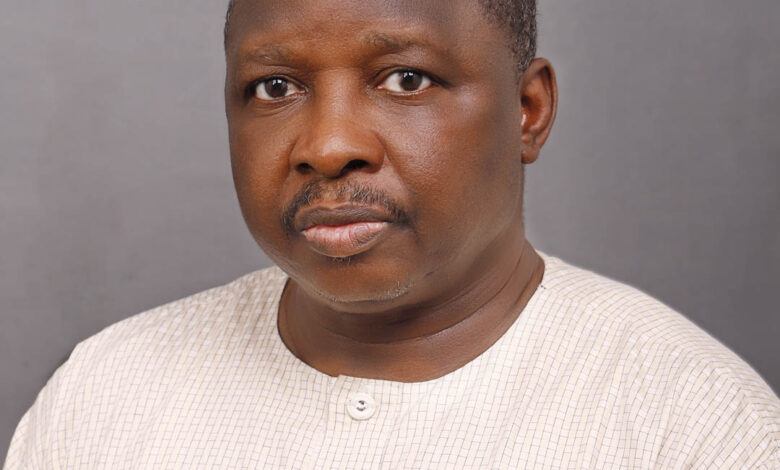
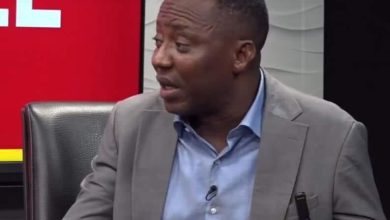
A retired Nigerian Air Force officer and security analyst, Group Captain Sadeeq Shehu, has warned that Nigeria may continue to struggle against terrorism, banditry and kidnappings unless government rebuilds public trust and strengthens security institutions. Speaking on Channels Television’s Politics Today, Shehu said citizens would willingly volunteer intelligence if they were confident their identities and lives would be protected. He also cautioned against spreading unverified information during rescue operations, stressing that misinformation could compromise security missions and endanger victims. David Lawani monitored the interview
Nigeria appears to be facing an increasingly dangerous security situation. Did you ever imagine that insecurity, which escalated in the North-East, North-Central and South-East, would spread this rapidly to the South-West?
There is some surprise about that. Initially, we tended to regionalise insecurity to the northern part of the country due to several indices. But we should realise that when pressure becomes too much in one part of the country, the bad guys are also likely to move to areas where they think they can get shelter. In that regard, it is not surprising that what we once thought was a North-West or North-Central problem is gradually becoming a national one.
So what does this mean? It means security concerns, everybody. When the security situation affects one part of the country, there is no way every other part will remain completely shielded from it. Even at the international level, you see concerted efforts against terrorism. Even countries not directly experiencing terrorism contribute to the fight because, in one way or another, they will eventually be affected. Even if attacks do not happen on your territory, your people may travel elsewhere and become victims. That is what we have seen.
From your assessment, does it appear that the security forces are losing the fight against insurgency and terrorism?
Counter-terrorism or counter-insurgency operations are not sprint races; they are marathons. Along the way, although citizens naturally want to see continuous success, there will periodically be setbacks. What is important, however, is ensuring that the successes outweigh the reversals and that the number of setbacks is reduced. Unfortunately, it appears that Boko Haram in the North-East, or ISWAP as we know them, have become more emboldened. Also, in the hinterlands of the North-Central, North-West and now South-West, we are seeing other related criminal activities. Opinions differ on this. Some people believe these groups are also terrorists, while others think Boko Haram elements are simply spreading into those areas. In my view, we are facing a different kind of threat there. It is an entirely different group we are dealing with today.
Do you see similarities between the Oyo incident and the attacks on the Chibok and Dapchi schoolgirls? What does the pattern suggest to you, and which groups typically operate in this manner?
Well, just like the military is an international profession where officers learn from one another, insurgent and terrorist groups also share tactics, skills and operational methods. You can see Nigerian officers going for courses in China and adopting some Chinese military practices. Unfortunately, insurgents do the same thing. Even if one group is religiously motivated and another is purely criminal, they can still cooperate. As far back as 2012, when I was in Mali, there were reports that Boko Haram fighters from Nigeria travelled there to support insurgents. When Boko Haram started, they did not know how to manufacture IEDs. It was ISIS and ISWAP that helped teach them those methods. So, operational tactics can move across borders. These groups maintain loose cooperation. They may not share the same ideology or ultimate objective. Some want territory, some are driven by extremist ideology, while others are purely criminal and motivated by money. But when they interact, they exchange tactics, skills and operational methods. That is why you see similar patterns across different groups.
How does difficult terrain, such as the Sambisa Forest and other remote environments, provide cover for terrorists and bandits?
Such ungovernable terrain greatly helps insurgents. Thick forests and seasonal rivers create major obstacles. Sometimes, when rivers overflow, even our own security forces cannot reach those areas. Terrain is one of the biggest challenges in the fight against bandits and Boko Haram. The locals themselves understand the terrain very well. They know the seasonal changes. In some hinterland areas of Niger State, for example, locals will tell you that during the rainy season, when rivers are swollen, they experience some relief from attacks. But as soon as the rivers dry up during the dry season, attacks increase again. So terrain complicates military operations despite the mobility assets available to the armed forces. In many cases, those assets are insufficient to reach the deep hinterlands. Above all, as I pointed out earlier, people often talk about technology. Technology has its place, but when you are dealing with thick forests and inaccessible terrain, the most effective deterrent is the constant presence of security personnel. Sometimes you go to villages, and there are no police stations within hundreds of kilometres. The bandits know they can attack such places freely because support will take a long time to arrive. That is why terrain, mobility and inadequate deployment all combine to create serious security gaps. But after 15 or 16 years of this crisis, we must ask ourselves: what exactly is the long-term solution?
How important is rapid response time in addressing insecurity across large and difficult terrains?
Response time is absolutely critical.
Given Nigeria’s vast landmass and difficult terrain, covering large areas during emergencies requires enormous effort, doesn’t it?
Yes, it does, both in terms of equipment and personnel. As we speak today, I do not think the total number of security personnel in Nigeria is up to one million. Yet we are talking about securing a country of over 200 million people. We have long understood that we are understaffed. For over 15 years, we have been saying we do not have enough soldiers, policemen or auxiliary personnel, yet very little has been done about it. Periodically, the Army announces plans to recruit 10,000 personnel, but the scale of the challenge requires something much bigger.
The Federal Government recently announced the deployment of 1,000 forest guards to Oyo State, similar to the earlier announcement in Kwara State. Why do these decisions often come only after attacks have occurred?
With due respect to Mr President, announcing the deployment of 1,000 forest guards after an incident has happened is a knee-jerk approach. What we need is a comprehensive and proactive strategy. Nobody disputes the fact that Nigeria lacks sufficient security personnel. Even before this administration came into office, everybody, including ordinary commercial drivers, agreed that we did not have enough soldiers or policemen. So why is it that in a country of over 200 million people, where a significant percentage are of military age, and many are unemployed, we are not recruiting aggressively in line with the security realities?
Do inadequate personnel numbers also contribute to inefficiency within the security system? And what role can technology realistically play? Do we even have satellite capability for real-time surveillance?
We do not have that kind of satellite capability. Even the Americans were sharing satellite imagery with Nigeria until around 2017, when they stopped for their own reasons. Perhaps they have resumed now, but the point is that we should start with simple, practical things. If soldiers and police officers cannot communicate securely and instead rely on ordinary phone lines, we already have a major problem. While technology is important, we must admit that we are not yet a highly advanced technological society. So we should first focus on ensuring that units are connected via secure communication systems. We saw what happened in the unfortunate case of the general who was later killed after communication lines were compromised. These are practical issues we should address before talking about sophisticated satellite systems. What matters most to the ordinary man in Zamfara, Adamawa or Oyo State is simple. If there is danger in his community, there should be a police station, a military base, or a civil defence unit within two or three kilometres that can respond quickly. Once that is lacking, people will abandon their farms, homes and livelihoods out of fear. Our older generation of military officers often remind us that when previous crises emerged, Nigeria expanded military recruitment massively within a short period. Why are we not doing that now? With due respect to the President, during the campaign period there were statements about empowering millions of Nigerians. Yet today, after becoming President, we still wait for attacks before deploying forest guards. That approach will not work. What we need after 16 years of insecurity is proper planning and auditing. Audit is not just about money. It is also about equipment and workforce. If a senator overseeing defence visits a battalion in Monguno, he should know whether the battalion is operating at full strength or is under-equipped. What should be the optimal size of our military and police? That is the real question. We should have a rolling yearly recruitment and expansion plan rather than reacting only after attacks occur.
Why does government appear able to implement tax reforms quickly, yet struggle to make drastic security reforms?
It is simply a matter of political will. Under a democracy, the President is the Commander-in-Chief, but legislators also share responsibility. I listened to Senator Oshiomhole and others, and what shocked me was the realisation that proper oversight of defence spending may not have really happened over the years.
Would you describe that as a failure on the part of lawmakers?
Yes, it is. As a retired military officer, I see that these debates show our democracy is still maturing. In advanced democracies, legislatures actively scrutinise defence funding and security operations. Oversight is not necessarily about accusing agencies of wrongdoing. It is about efficiency and ensuring resources are properly utilised. Of course, there are operational secrets that legislators cannot demand publicly. You cannot ask a commander during an ongoing rescue mission exactly how many troops he has deployed. That would compromise operational security. However, legislators can legitimately ask broader questions about workforce, mobility assets, communication equipment and readiness. Those are valid oversight responsibilities.
Why are hostage rescue and recovery operations often so complicated?
Hostage rescue operations are among the most difficult and complex military operations anywhere in the world. Once kidnappers take victims into locations they control, especially when children and women are involved, rescue becomes extremely delicate. The primary objective is not killing the kidnappers; it is rescuing the hostages alive and safely. If possible, the criminals can then be arrested or neutralised afterwards. These operations require more than bravery or force. They demand careful analysis from multiple perspectives. The presence of children alone complicates matters because kidnappers know security forces will be cautious. That is why governments sometimes negotiate. Negotiation can buy time, provide intelligence opportunities and create room for strategic planning. Security forces must determine where the victims are being held, whether they are together or separated, whether the terrain is open or enclosed, and the behavioural history of the kidnappers involved. Some groups are extremely brutal and could begin killing victims immediately if pressured recklessly.
Some terrorist groups have already begun making demands. How should government approach negotiations in such situations?
In negotiations, professional negotiators usually start with low-hanging fruit. For example, if very young children or pregnant women are among the hostages, negotiators may seek their release first in exchange for food, medicine or humanitarian supplies. The circumstances determine the strategy. You must understand where the victims are being kept, whether they are in open terrain, and the character of the kidnappers involved. However, I commend the government for refusing to pay ransom. There are concessions the government can consider, such as humanitarian support, but demands for ammunition or huge sums of money should never be accepted because that would only encourage more kidnappings.
In the age of social media, how can citizens balance the need for information with the need to protect ongoing rescue operations and the lives of hostages?