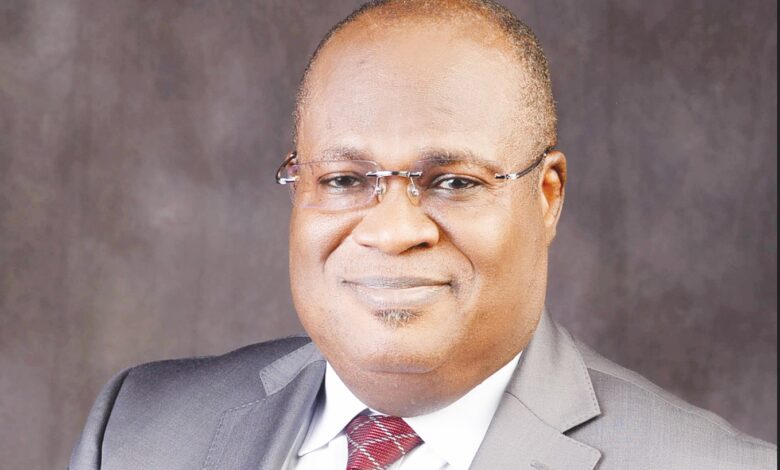
By Olusegun Olanrewaju
When he was named to head the National Health Insurance Scheme (NHIS) as the Executive Secretary/Chief Executive Officer (CEO), Prof. Mohammed Nasir Sambo knew he had a whole lot of challenges to confront.
Before his appointment, he was the Provost of the College of Medicine, Kaduna State University (KADSU). Sambo, a professor of health policy and management, however, was well informed that he had the requisite knowledge and arsenal to employ his enviable academic and operational background to bear in turning around the fortunes of health care financing in the country.
A 1993 graduate of Medicine from the University of Jos (Unijos), the distinguished Fellow of the West African College of Physicians (2003), where he was the best candidate in the final fellowship examination, quick set in place mechanisms to bring the benefits of health care insurance to the doorsteps of the common Nigerian.
Having spent a sizable proportion of his public service career in the academic wing, he is now being thrust forward to practicalise much of what he had learnt and taught.
Sambo had before the NHIS appointment, held the positions of deputy dean, faculty of medicine, and head, department of community medicine, both at the Ahmadu Bello University (ABU), Zaria, Kaduna State.
Not that he was new to the new system, having also spent some prominent time in the schemes in the formative years.
He had served in the NHIS and attained the level of assistant director/zonal coordinator in the South West Zone.
He was also the assistant general manager and head of the HMO Division at the NHIS Headquarters in Abuja.
That was before his secondment to the National Primary Healthcare Development Agency (NPHCDA), where he became the assistant director/zonal co-ordinator, North West Zone of the agency.
And has also served as a member of the Ministerial Technical Working Group that developed the National Healthcare Financing Policy, a framework that largely facilitated the formal flag-off of NHIS in June 2005 by President Olusegun Obasanjo, he was also a member of the Ministerial Technical Working Groups for the Public-Private Partnership Policy on Health, the National Health Strategic Development Plan, and on National Health Policy.
Sambo’s scholarly distinction attracted national and international institutions, which engaged him as a Consultant or Resource People for strategic activities, such as the Health Sector Reform Agenda of the Federal Ministry of Health, Blueprint for Accelerating PHC Implementation in Nigeria, National Strategic Framework Development Committee of NACA and the National Health Council of Nigeria.
He also worked on several projects with the United Nations Development Programme (UNDP), United Nations International Children’s Emergency Fund (UNICEF), United Nations Population Fund (UNFPA), Department for International Development (DFID), British Council, and German Technical Cooperation Agency (GTZ).
An examiner, former head of quality assurance, faculty of community health, and member of the accreditation team of the West African College of Physicians, Sambo also holds the impressive distinction of being a Visiting Scholar at the University of Aberdeen, Scotland, United Kingdom.
A citation on the reformer goes thus: “Under the wings of his academic mentorship, the Executive Secretary of NHIS has nurtured into full bloom several candidates for Fellowships, Post Graduate qualifications in Public Health and Field Epidemiology and Ph.D.
A recipient of the VC’s Award at ABU Zaria, he also holds a Master’s degree in International Affairs and Diplomacy.
Sambo’s remarkable scholarship has resulted in the publication of over 70 of his scholarly articles in reputable Peer Review Journals, nationally and internationally.”
A summary of our subject’s achievements in the NHIS has been attested to by professionals in the industry. For example, a stakeholder in Nigeria’s Health Management Organisation (HMO) and managing director, Ultimate Health Management Services, Lekan Ewenla, says Sambo has envisioned a country where health insurance is accessible to every citizen.
Speaking on the challenges currently confronting the NHIS, Ewenla says: “I think I should commend the patriotism, commitment, and passion of the Executive Secretary of NHIS, Prof. Muhammad Sambo, for his efforts at changing the game plan and converting all the identified challenges affecting the smooth driving of health insurance programme from inception till date to solutions.
“All the challenges we identified in the past have been systematically converted to solutions by the incumbent ES. Those challenges, with the deployment of the ICT platform, will completely fizzle out. This is because majorly, what was affecting the operation of the health insurance programme was systemic and capacity of personnel, but he has addressed the systemic issue with the ICT platform.
“He has also addressed the issue of the capacity of personnel by enhancing the capacity of existing and newly recruited staff in the agency. He has completely restructured the operational framework of the scheme.”
Ewenla further attests: “I can confirm to you that there are minimal challenges in the health insurance programme, because the major issue has been addressed. The only challenge that we have now is the passage of that bill, and once it is done, it changes the narration completely.
On the acceptability of NHIS by Nigerians, he says, “Acceptability would follow the passage of the law, because the moment that law is passed, the platform to create awareness for everyone to begin to appreciate and understand the importance of health insurance programmes would be vigorously launched.
“I am saying this because I know what the government is doing. I am not just running an HMO, I am on the governing council of NHIS, and as a council member, I have seen health insurance programmes being driven for the organised private sector.
As to whether people consider HMOs an elitist programme, the MD says, “HMO is an acronym for the private investors in the health insurance ecosystem. Health Maintenance Organisations are registered companies licensed by the regulator to drive health insurance for Nigerians.
“HMOs are like banks licensed by the Central Bank to anchor deposits for Nigerians. So, the HMOs by law is recognised as the body that drives health insurance schemes for Nigerians, and the requirements for their setting up are well spelt out.
“Globally, it is no longer government’s business to do business; hence, the global direction or global approach to development is for governments of all nations to create the enabling environment for the private sector to drive the economy while the government regulates. The HMOs are licensed and regulated by the NHIS.
“No matter how rich one is, one can’t deposit in the Central Bank. The HMOs are the drivers of health insurance programmes, the NHIS is the regulator and the health care providers are the service providers. We want to implore Nigerians to begin to take their well-being seriously because sickness does not give notice.
“Nigerians must learn to provide for their wellbeing by enrolling in the health insurance programme. This is just to prepare the minds of Nigerians towards the passage of that bill because the moment it is passed, it becomes mandatory for everyone to be enrolled on the health insurance programme.”
As per the relationship between the Federal Government agencies in boosting healthcare in Nigeria, he notes, “I want to emphasise that this government, irrespective of whatever challenges bedevilling the country at the moment, ranging from insecurity to the economic situation, has been assiduously working to enhance the well-being of Nigerians.
I can’t guarantee Dybala’s stay at Juve next season – Allegri
“I would like to put it on record that this is the first time we have government to government agencies collaboration in health care. Since the health insurance policy was introduced in 2005, it has been driven manually.
“We have been clamouring for the automation of the National Health Insurance Scheme (NHIS) since inception. However, in the last year, this administration encouraged NHIS to partner with the National Identity Management Commission (NIMC), and as I speak today, with minimal cost implications to NHIS, that project has been achieved.
“NHIS will be launching its ICT platform any moment from now. That implies that the data on NHIS systems can be used for any purpose, because of the partnership with NIMC. Indeed, the capacity of what is being worked on is robust to cover the entire population in the West African region.
Sambo has focused on partnership as a vehicle to improve the health care system in the country.
“The partnership has translated into the creation of a robust ICT platform for NHIS so that data of Nigerians already enrolled on NHIS programme can easily be uploaded. In addition, with this data, names of Nigerians already on the NHIS programme will align with the names being captured by NIMC.
“The implication is that there would be transparency and no duplication of identity on the health insurance programme, although, we have not recorded any form of manipulation of the process.
“The only challenge was that it was formerly being driven manually. The other form of challenge that we may identify is a situation where an applicant’s name might not be captured correctly. However, with the ICT platform being deployed as we speak today, it complies with the NIN being done across the country. Whatever data we have on the NHIS platform is the data of individuals you see everywhere.”
Perhaps, for the first time in the history of this country, NHIS as a regulator of health insurance programmes says it would be mirroring the operations of the HMOs and health care providers directly.
According to Ewenla, “The issue of health maintenance organisations not paying the health care facilities as and when due is going to be eliminated.
Also, issues of health care providers not treating clients the way they are supposed to be treated are going to be a thing of the past.
“The non-confirmation of payment by providers is also going to be a thing of the past. As we speak today, that programme is being driven manually and we have situations where HMOs could have paid hospitals but such hospitals may find it difficult to identify who has paid and what was paid. At the end of the day, hospitals would keep writing NHIS that someone is indebted to a tune of a certain amount. That process would be eliminated with this automation.
“From the communication platforms of the HMOs serves to monitor the response time by the HMOs in giving approvals to the health care providers. If it is declined, the reasons must be well spelt out. So, they are equally coming up with a very robust call centre such that they know what is going on across the nation concerning the health insurance programme.”
Meanwhile, the Federal Government has been commended for enhancing the operations of health insurance.
And also for the records, this is the first time in this country that the government would be looking at health care services from a demand and supply perspective. Before now, the government has been focusing simply on supply.
But with the directive of the United Nations, the government of all nations is now looking at addressing health care services from demand and supply and that was why the introduction of mandatory health insurance became fundamental across all nations that are members of the United Nations.