Big Interviews
Nigeria abandoned economic planning long ago; we must return to strategic thinking- Falae


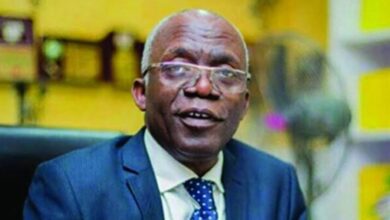
A former Secretary to the Military Government, Oba Olu Falae, has said Nigeria’s economy is gradually heading in the right direction under President Bola Tinubu, praising the administration’s courage in removing fuel subsidy and unifying the exchange rate. However, he warned that the reforms came without adequate cushioning measures for citizens, thereby deepening hardship. Speaking on Insiders Sources, a Channels Television programme monitored by David Lawani, Falae also lamented the collapse of national planning and the monetisation of Nigerian politics.
Looking at Nigeria’s current situation, do you believe the country is moving toward the greatness many Nigerians once envisioned?
Well, if you look back from Independence till now, the first question is whether Nigeria has ever truly been on course. We gained Independence in 1960, and barely two years later, the Federal Government orchestrated the crisis in the South-West and declared a state of emergency. Since then, instability has trailed this country from one crisis to another. We witnessed repeated military interventions, one after the other. So, in reality, Nigeria has never consistently stayed on course since Independence. One major and unfortunate development is that Nigeria no longer plans its economy. We now operate from day to day. In the past, if you had a five-year or ten-year plan, you knew the resources available and what needed to be achieved. But when there is no plan, every revenue appears like surplus money, and the government can then spend recklessly on white elephant projects that bring little or no benefit to the people. We have abandoned planning, and that is very unfortunate. However, since President Tinubu took office, he has demonstrated unusual courage in taking decisions that many of his predecessors avoided. For example, ending fuel subsidy and unifying the exchange rate. Any country operating multiple exchange rates is not serious. Those policies initially created serious hardship for many people, but I do not doubt that, in the medium term, Nigerians will begin to see the benefits. Even now, foreign investment has increased because investors know they can bring money into the country and take it out without exchange rate difficulties. They also know the exchange rate system will be relatively stable. Instability is one of the biggest factors that scares investors away. So, these reforms have brought relative stability, which is good for the economy. But, as I said earlier, if I were in his position, there are one or two things I would have done before implementing those policies, mainly to cushion the negative effects on ordinary Nigerians. All in all, I think he has done very well in taking those bold decisions.
What is your assessment of the government’s economic policies so far?
As I said earlier, the major drawback now is that the resources being generated are not being deployed within a disciplined national planning framework. If you have a proper national plan, of course, adjustments can still be made, but even those adjustments must follow agreed procedures and processes. There will be order and direction. Right now, however, it appears people have access to money for pet projects everywhere. If we had a national plan, we would achieve much more for the economy than we are doing presently. For instance, one of the central objectives of any national plan should be employment generation. Every project should answer the question: how many jobs will this create? But there is no formal planning anymore. I strongly believe Nigeria should return to national economic planning. I am not necessarily saying there must be a Directorate of Planning, but even global corporations and multinational companies operate strategic plans spanning 10 years or more. As a nation, Nigeria too must have clear strategic plans guiding development.
You mentioned cushioning measures earlier. What specific palliatives do you think should have been put in place before the fuel subsidy was removed?
If I were going to remove the fuel subsidy, I would have first done a lot to make alternative energy sources available to Nigerians, not only solar but also gas. That would increase energy supply nationwide and naturally reduce dependence on petrol. People who find petrol expensive could then conveniently switch to cheaper alternatives. That is an important step I would have taken. Secondly, I fully support the unification of exchange rates. It is a good policy. But our people often do not believe that good policies can survive in the long term. So, before implementing it, I would have built a very strong foreign reserve position. I would have floated domestic dollar bonds and raised about four to five billion dollars, particularly from Nigerians in the diaspora. If Nigeria already had about $20 billion or more in reserves before unifying the exchange rate, then when people rushed to exchange for foreign currency after the policy announcement, the government would have been able to meet demand immediately. After one or two months, the panic would naturally subside, and the pressure on the naira would reduce significantly. Those are some of the things I believe could have been done to reduce the negative impact of the reforms.
At your age, many people still marvel at how mentally sharp and physically active you remain. What has helped you maintain your health and vitality over the years?
Well, I think it is largely the grace of God. That is why the title of my book is Triumphs of Life: Grace Over All Challenges and Difficulties. Good health is perhaps the greatest gift God gives to mankind, and if you receive such a precious gift, you have a duty to protect and manage it properly. For example, if someone drinks two bottles of whisky every day, eats excessive amounts of red meat, and refuses to rest properly, over time, they will undermine their own health. But if God gives you good health and you manage it sensibly, eating moderately and living reasonably, the tendency is that you will live long and remain healthy. There is really nothing extraordinary that I do. I maintain consistent healthy habits. I have a farm which I started in 1985, and I still visit it regularly. I was there just last week. I may not physically work on the farm, but I walk around extensively to inspect activities. Walking is a very good form of exercise, especially when done consistently over many years. Another important lesson I learnt came during my mid-career years when I suddenly began feeling unwell. I underwent several medical tests in Lagos, but doctors could not identify any serious problem. Then my late boss, Mr I.J. Eyibio, advised me to visit a diagnostic centre in London. I went there and spent several hours undergoing tests. At the end of the day, the physician looked at the results and told me, “Young man, nothing is wrong with you. You need rest.” He asked if I usually went on holidays, and I told him I never did. He then said, “Now I know why you feel sick. You think you are young and strong, but you must never miss your holidays.” That advice changed my life. Since then, I have never missed my annual leave. No matter how busy I was, I always took at least one month off every year. To ensure proper rest, I often travelled abroad with my wife and children, sometimes staying quietly in a small village in England where nobody could disturb me. During that period, I focused on being a husband to my wife and a father to my children. The rest of the year, I belonged to Nigeria.
You were deeply involved in Nigeria’s transition politics during the Gen. Ibrahim Babangida era and later contested for the presidency. Looking back now, do you think things would have turned out differently if you had joined the PDP instead of the APP?
As a reminder, I have been involved in presidential politics since the 1990s. After leaving the Babangida administration, I immediately went into politics. I travelled extensively across the country, opened offices in virtually every state at the time, appointed liaison officers, and built structures in many wards nationwide. During that process, I built strong friendships with prominent politicians, including the late Solomon Lar, Bala Takaya, Abubakar Rimi, and Sule Lamido, among others. After my release from detention, some PDP leaders published newspaper advertisements welcoming me back and inviting me to join their platform. They even sent delegations asking me to become their presidential candidate. However, my political base was rooted in Afenifere, and Afenifere had already decided to align with the APP. I could not abandon Afenifere and move into the PDP alone. Once a general loses his army, he becomes an ordinary person. That was why I remained with Afenifere and joined the APP. Ironically, many PDP leaders were my friends and respected me greatly. But destiny is destiny. What will be, will be. I fought my corner strongly. Since then, no one has successfully contested as the joint candidate of two major political parties the way I did. I still believe I won that election. But clearly, the military establishment wanted one of their own to succeed them. Even though I had worked closely with military governments for years, there was a prevailing mindset that only an ex-military officer should take over power. At one point, I was told some people feared that Afenifere might influence me to probe military leaders and jail them. That made me very sad because anyone who truly knew me understood I am a principled person. Once I take a position, I stand by it even if I am left alone. Babangida and Obasanjo both knew that about me. But eventually, they did what they did and declared Obasanjo the winner of the election.
You described that election as fraudulent. Do you think electoral manipulation remains one of the major problems in Nigerian politics today, and how can the country overcome it?
Unfortunately, Africa has made some unfortunate contributions to modern political science, especially the concepts of one-party states and life presidents. Both ideas reflect a deep reluctance to embrace genuine political competition. When you operate a one-party system, there is no real competition. It is almost like a monarchy. In Africa, opposition politicians are often treated as enemies rather than competitors. Just yesterday, I watched on television the British Prime Minister and opposition leaders interacting cordially while visiting the House of Lords. They disagreed politically but still related as friends. Here in Nigeria, if someone from the opposition is seen talking to a ruling party member, people immediately accuse him of betrayal. I hope that over time, our political culture will mature to the point where politics becomes an exchange of ideas rather than warfare. Democracy should allow disagreement without hostility. Another disturbing trend today is that politicians no longer focus on issues. During my own presidential campaign in 1999, I travelled around the country with detailed brochures and carefully segmented campaigns. I studied the priorities of different regions and articulated practical programmes tailored to their needs. The response was massive. In Jos, the crowd was so large that it took me almost 4 hours to get from the airport to town. In Kano, they even brought a camel to the side of my aircraft so I could ride into the city. The journey from the airport took nearly three hours because of the massive turnout. That was issue-based politics. Today, however, politics is dominated by money. Many politicians no longer bother to produce manifestos. In fact, if you ask some politicians about their party’s manifesto today, many cannot explain it. Now the emphasis is on distributing billions to buy votes and influence. That is very unfortunate because it means only the super-rich can aspire to high office. As a civil servant, I was never wealthy. When I contested, I organised a fundraising dinner at Eko Le Meridien and raised about N860 million. Apart from about N10million of my own money, that was all I spent on the election. To my knowledge, no one has repeated that model since then. Ideas and programmes, not money, should drive politics. As long as money remains the main determinant of electoral success, Nigeria may continue producing leaders who are not necessarily the most competent or visionary.
Political parties rarely debate manifestos or policy alternatives anymore. Everything appears centred on grabbing power. What do you think is the way forward, and how would you assess the opposition today?
One important lesson I learnt in politics is that once many people decide to run for public office, they suddenly become extremely unreasonable. Ego takes over completely. Nobody wants to step down for another person. Let me give you an example. During the SDP era, from 1990 to 1992, several of us from the South-West were aspiring to become presidential candidates. General Adebayo invited us to his house in Ikeja to persuade us to agree on one consensus candidate. Nobody agreed. Every aspirant wanted to contest. Eventually, we agreed that all of us would participate in the first stage of the primaries, and whoever received the most votes would emerge as the candidate. Everyone accepted the arrangement initially. After the election, I received about 4,300 votes, while the next candidate received around 2,000. We were supposed to reconvene at General Adebayo’s house afterwards with our results. But surprisingly, nobody showed up again because personal ambition had taken over. That experience taught me how difficult it is to build Consensus in politics once ambition and ego become dominant.
What is your view on the growing use of ‘consensus candidates’ in political parties?
Genuine democracy must be practised both within political parties and within the country itself. Consensus should never become a permanent policy. It may occasionally be useful under special circumstances, but generally, there should always be open competition. Whenever parties say they want Consensus, it is often simply another name for imposition. Party leaders go to a ward, announce that a particular person is the leadership’s preferred candidate, and then ask members to approve it. That is not Consensus. It is an imposition. I strongly believe parties should allow democracy to flourish in their internal deliberations and decision-making processes. If a party cannot practise democracy internally, it cannot genuinely govern democratically. Unfortunately, many party leaders prefer situations in which they personally control members’ political futures. That is why they promote consensus arrangements. In our own time, we practised open voting. People physically queued behind candidates. Even then, some manipulation remained. In certain places, if they were counting votes for Olu Falae, they might count from one to ten, then suddenly return to three, so the figures never increased properly. But even with those irregularities, it was still far better than what many now describe as consensus politics.