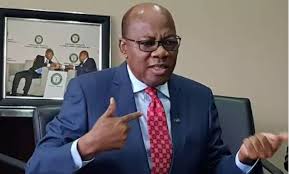
Constitutional lawyer and former President of the Nigerian Bar Association, Dr Olisa Agbakoba (SAN), has said that only President Bola Tinubu has the capacity to drive the process of drafting a new constitution for Nigeria. Speaking on Channels Television’s Politics Today, Agbakoba noted that the process should not take more than six months and stressed that devolving powers to sub-national governments is vital to reducing poverty and boosting economic growth. David Lawani monitored the interview
What did you make of the change of guard by the President?
I am not an expert in military affairs, but based on what they have said, the key point is that these positions have a two-year tenure. When that tenure is not respected, it demotivates officers waiting behind. The military felt the President’s decision was correct and timely. Whether a coup rumour triggered it, I wouldn’t know. But I agree with the expert’s opinion that it was a good move, as the service regulation clearly provides for a two-year tenure.
What do you see in the body language of the President, considering he has no military background, yet takes such bold steps?
It shows you have a President who is willing to take tough decisions. We know President Tinubu is like that; he’s bold, even though some of his choices may not have immediate positive consequences. Former President Buhari, by contrast, allowed his service chiefs to remain far longer than they should have. Tinubu has again made a decisive move. But the big question remains: will this decision improve Nigeria’s security situation? That’s what we need to see.
During the military era, rumours of coups were deadly. Some people were jailed or forced into exile. We don’t want to see coups again. Isn’t that a dangerous setback?
If there was a rumour and the intelligence reached the President, it was sensible for him to act as he did. It’s always wise to make a decision that won’t compromise the country’s security. Whether there was a coup rumour or simply the expiration of tenure, the President has acted. What matters now is the outcome: will this decision make Nigeria safer? If the killings across the country reduce, then kudos to him.
You have often said Nigeria’s path to progress lies not in economic theory but in restructuring — what you called “devolution to solution.” Why?
Nigeria’s pathway to light is not in economic thinking alone but in a total restructuring of power and governance. I’ve always said we must replace the 1999 Constitution with a new one, devolve key powers to states and local governments, and practice true fiscal federalism where no central control suffocates development. If states control their resources and manage their affairs, Nigeria could unlock between ₦12 trillion and ₦25 trillion in new annual revenue opportunities. Some people argue that constitutional reform is not our problem, that they want food on the table. I understand that sentiment. But we must confront the root cause. Before addressing that, let me commend Omoyele Sowore. When I was still active, he was one of my strongest commanders in the street protests. I’m happy he has remained consistent. We must appreciate such courage because it sustains our democracy. Now, to the real issue, Nigeria’s problem is foundational. We’ve spent 25 years talking about constitutional amendments without progress. That’s why the country is in such bad shape. It’s like a 50-storey building with a faulty foundation. The engineers have warned that unless you bring it down and rebuild, it will collapse. That’s the metaphor for Nigeria. No amount of amendment can fix this Constitution. Until we fix the foundation—the political structure—nothing else will work. Abuja has too much power. My local government in Onitsha has none. Nobody wants to be a local government chairman because all power is at the centre. Everyone wants to be a governor or President. That’s why the country is stagnant. Most states are bankrupt, surviving only on money printed by the Central Bank. They can’t pay salaries without Abuja’s allocation. That’s not federalism. If we genuinely want prosperity, we must devolve powers to states and local governments. That’s the only way forward.
Is it a brand-new constitution you’re proposing, or another round of amendments, what some call “panel-beating”?
I don’t see any reason why a new constitution should be difficult. When you say there’s a structural problem, it means the foundation is weak. The current Constitution doesn’t empower states to function optimally. The late Bola Ige once asked two profound questions: Do we really want to remain one country called Nigeria? If yes, what kind of arrangement suits us? These questions remain unanswered almost 30 years later. Nigeria is a diverse nation, with over 300 ethnic groups and many languages, yet we run an over-centralised presidential system. The governors aren’t even honest chief security officers. When Rotimi Amaechi was governor of Rivers State, he was once blocked from entering Government House by federal security agents. That tells you the system is broken. So yes, we need a brand-new constitution that reflects true federalism, not another cosmetic amendment.
Who should draft this new Constitution, and how should the process start?
Before drafting, we must first define who we are and where we want to go. Should the National Assembly handle it? Maybe. But they’ve already spent too much time with little to show for it. National confabs haven’t worked either; we’ve had several under Obasanjo, Babangida, Abacha, and Jonathan, all of which have produced nothing. So, the only person who can drive this process is the President. During the campaigns, Peter Obi, Atiku Abubakar, and Bola Tinubu all made devolution of powers a central issue. Now that Tinubu is in office, he can and should lead this process. Under Section 5 of the Constitution, he has the executive authority to do so. After all, he has already demonstrated bold leadership by granting the local government’s financial autonomy. If we couldn’t achieve anything in 25 years through the legislature or conferences, the President should now intervene — just as he decisively removed the service chiefs.
You have called the 1999 Constitution an irredeemable document. If Tinubu activates your proposal, won’t there be political pushback?
Why should there be? He’s acting in Nigeria’s interest. He won’t do it alone; there will be collaboration with the National Assembly and civil society. The real problem is the current constitutional arrangement. If President Tinubu produces a constitution that devolves power transparently from the presidency to the governors and down to the 774 local governments, it will strengthen the country, not weaken it.
Do you think a Nigerian President would ever willingly reduce his own powers?
Why not? Every politician wants to win elections. If the President delivers a constitution that empowers people, reduces poverty, and creates jobs, he’ll become even more popular. That’s the easiest way to win. You don’t need ballot snatching or rigging; give people what they want, and they’ll support you. If Tinubu implements this, he’ll eradicate poverty, create wealth, strengthen the federation, and improve security. It will elevate his profile globally. The National Assembly must also accelerate the process. We can’t keep wasting decades debating the same thing. We’ve held over six constitutional conferences without results. Perhaps it’s time to consider a referendum. Nigerians don’t care about big grammar; they care about how the Constitution impacts their lives.
Won’t a new constitution affect the National Assembly? Will lawmakers willingly participate in their own reformation?
Not necessarily. The Constitution itself provides the mechanism for amendment and replacement. The National Assembly can invoke the relevant sections, collate materials from past conferences, and, with support from the states, present a new draft for a referendum. That’s all it takes. It doesn’t destroy the system; it renews it. The tragedy is that we’ve never applied these provisions with the urgency they deserve.
State policing sounds good in theory. How do you prevent it from becoming an ethnic militia or a political weapon for governors?
That’s where constitutional safeguards come in. The new Constitution must establish what Professor Walde called “limited government.” The judiciary today has a level of autonomy; we can extend that model. We must insulate key institutions, such as INEC, the Accountant-General’s Office, and state police, from executive control by providing them with independent funding. Abuse is possible, yes, but the solution is to build a system that limits arbitrary power. The National Assembly is spending too much time avoiding these critical reforms, and it’s choking the country.
You have identified potential economic gains of up to ₦35 trillion annually if your restructuring plan works. What are the immediate steps Nigeria must take?
First, we must adopt a brand-new constitution, not keep patching this one. It can be done within six months. Second, devolve power and resources to states and local governments so they can drive development. Third, restructure the oil and gas sector. Right now, Nigeria practices what I call “contract oil.” The International Oil Companies control production, and we get little benefit. Let’s follow the Saudi model; they control the entire value chain and reap the profits. If we do the same, trillions will flow into our economy.