EFCC, ICPC should scrutinise institutions over loan mismanagement- Sawyerr, NELFUND MD

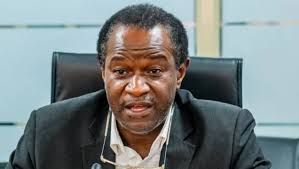
The Managing Director of the Nigerian Education Loan Fund (NELFUND), Mr Akintunde Sawyerr, has urged anti-corruption agencies to investigate emerging irregularities in the administration of student loans by some tertiary institutions. In this interview on Channels TV’ Politics Today’ monitored by David Lawani, NELFUND’s MD said, without accusing any particular institution, several complaints from students, ranging from delayed refunds to double payments, deserve closer scrutiny to safeguard the integrity of the loan scheme.
What is the upkeep loan about?
In our first operational year, we opened the system for student applications. NELFUND’s structure is clear: we commit to paying 80 per cent of institutional fees directly to the schools, ensuring students are not denied access because of financial barriers. In addition to tuition, we provide a monthly upkeep allowance of ₦20,000 to support the student’s basic living needs for one full academic session. Now, because we commenced operations in the middle of the academic year, many students applied mid-session. For instance, if a student applied when only three months remained before the end of the session, we could only legitimately pay upkeep for those three months. However, once the session closes and the student applies for a new session, the system, if left unchecked, would keep paying upkeep uninterrupted into the next session. This creates a doubling effect: the student receives upkeep for the tail end of one session and immediately continues into the following one within the same calendar year. Over time, the same student could appear to be receiving upkeep continuously, even though only one session has elapsed. That becomes difficult to justify, both ethically and financially. For that reason, our updated guidelines state that students who apply late in a session will not receive overlapping upkeep payments when they apply for the next session. This prevents unintended double payments and keeps the system sustainable for everyone.
What happens to students who already applied under the previous structure? And this also depends on schools uploading their calendars accurately. How is this handled?
Students who applied earlier and had their institutional fees fully funded remain entitled to the upkeep payments already received. Even though the dashboard may show a monthly schedule—January 20k, February 20k, all the way to December —they are only liable to repay the actual amounts disbursed, not the entire schedule displayed. Once the academic session ends, upkeep ends as well. The amount paid during that session is what the student owes NELFUND. When a new session begins, it becomes an entirely new calculation. To ensure this works smoothly, we now expect institutions to promptly upload accurate academic calendars. This is necessary for us to correlate session start dates, end dates, tuition timelines, and upkeep eligibility. Accurate calendars help NELFUND avoid paying beyond the legitimate academic period and ensure the system processes each student’s loan cycle correctly.
How about student data uploads by institutions?
If by ‘upload’ you mean student data for the new academic session, institutions mainly send us the updated list of enrolled students. This is different from the academic calendar itself. Since this is the first time we are transitioning the loan programme from one academic year to another, we invested significant effort in training the ICT units of institutions on how to handle this data transition. In any academic transition, changes are inevitable: graduates exit, new students enter, and continuing students’ progress to higher levels. These changes have direct implications for loan eligibility, tuition amounts, and disbursement cycles. Accurate uploads are therefore crucial to ensure the system remains reliable and functional for every student.
How is NELFUND handling these loans when schools are on strike?
It is essential to separate mandates. The education sector is overseen by the Hon. Minister of Education, Dr Tunji Alausa. It is his responsibility to resolve issues that lead to strikes. NELFUND’s mandate is strictly to provide loans to students in public tertiary institutions to ensure financial challenges do not disrupt their education. However, if institutions are shut down due to strikes and learning has stopped, that falls outside our authority. Our job is to ensure access to education, not to manage industrial disputes. In collective governance, every institution has its designated responsibility.
If you are giving funding every month and a strike occurs, does the funding stop?
Absolutely. Disbursement must stop. If a strike lasts three months or longer, NELFUND cannot continue paying upkeep during periods when no academic activity is taking place. Loans are meant to fund education—not periods of inactivity. Continuing to pay during a strike would not be in the student’s best interest, because it is ultimately a loan, and students would still be required to repay it later.
How about students in private schools? Parents of such students also need loans. What is the plan for them?
The enabling law that established NELFUND restricts loan access to students in federal and state-owned institutions. Although the President has expressed interest in extending the programme to private institutions in the future, several constraints exist. First, we do not have unlimited funds. We must prioritise students in public institutions who are more likely to be financially vulnerable. Second, private institutions operate as profit-driven enterprises. They must remain viable on their own. Yet globally, public and private institutions coexist and play essential roles. For now, however, NELFUND cannot extend loans to private-school students unless the law changes.
This student loan system is new. How do you ensure there are no double payments? And why did ICPC say it would investigate institutions that receive NELFUND funds?
Students apply for loans, and while processing is ongoing, some pay out of pocket to meet school deadlines, such as course registration. When NELFUND eventually pays those fees directly to the school, the school receives a double payment: one from the student and one from NELFUND.
This raises the question: Who refunds the student?
Some schools refund quickly, some refund partially, and others delay. Refunds require verifying student details, confirming account numbers, and processing bank transactions, all of which incur charges. This can create confusion for both institutions and students. Some students have complained of receiving less than they paid, experiencing deductions they cannot explain, or not receiving refunds at all. Naturally, these complaints attract the attention of anti-corruption agencies. ICPC’s move to investigate is appropriate. Their job is to ask questions. If institutions have acted transparently, they have nothing to fear. But if irregularities exist, then accountability is necessary.
When exactly are institutions supposed to refund these funds?
Refunds should be immediate, but institutions differ. Some refund promptly, while others struggle because refunds are not part of their regular operations. Banks also deduct charges for every transfer. When there are large batches of students, the administrative load can become overwhelming. Some institutions may even inadvertently over-deduct. Given these complications and the volume of student complaints, anti-corruption agencies are right to look into the matter. As long as institutions answer questions honestly and their processes are clean, the matter ends there. The priority is to ensure that students are not placed at a disadvantage.