Quality political leadership in Nigeria has been on the slide – APC chieftain

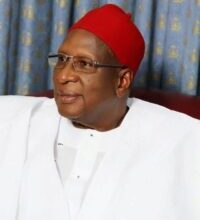
A chieftain of the All Progressives Congress (APC) in Kwara, Akogun Iyiola Oyedepo has advocated leadership mentoring to prepare leaders for politics and good governance in the country.
Oyedepo made the call on Friday in Ilorin while speaking at the opening of a three-month political dialogue for young politicians in Kwara.
The political dialogue/training was organised by the Nations Leadership Institute, Ilorin.
Oyedepo, who is also the President of the institute, said dialogue was his gift to young politicians in the state to mark his 67th birthday anniversary.
He lamented that lack of preparing leaders that can provide good governance was the bane of the state and Nigeria.
The training, which is free, has 50 participants drawn from the 16 local government areas of the state.
According to Oyedepo, in politics there should be mentors that would train young politicians.
“In some other climes there are mentors and there are mentees. In the politics of the 4th Republic starting from 1999, who can we regard as our mentors in politics?
“Apart from the first generation of Nigerian political leaders raised under colonialism and actively operated the political system in the pee-independence and immediate post-independence Nigeria; quality political leadership of the country has been on the slide.
“The first Republic leaders still remain the doyen of effective patriotic leadership in the history of Nigeria. From 1966 to date, in the country; the leadership recruitment has always been sadly wrong,” Oyedepo said.
He lamented that the people trained to keep the territorial integrity of the country, without appropriate training and struggle, entered into the arena of governance.
“By the time they left the saddle after 30 years, had killed democracy, desecrated on the hallow seat of power; pulled off their uniform to continue to be in power and created civilian replica of themselves.
“96 per cent of the politicians that started the 4th republic in 1999 were infants at independence. Many of these leaders were born in 1960 or so soon thereafter.
“From 1960 to 1999, a period of 39 years, these categories of politicians lived only for four years (1979-1983) under democracy,” he said.
Oyedepo added that the need for such political leaders informed the dialogue for young minds.
“This really is our own humble contribution to a political revolution of this time.
“There are revolutions or change brought about with the violent use of guns, cutlass, cudgel, guns, mortals, etc. That is a bloody revolution.
“The revolution of dialogue for upward movement is of the heart and it is more effective and enduring. And in any case every political action must have some theoretical foundation,” he added.
Oyedepo noted as unfortunate the provision of Section 130 (1) (d) of the 1999 Constitution that limited the qualification for elective offices did not matter as they may not have time to study notable politicians.
“They may have read and heard fairy stories about Ahmadu Bello, the Sardauna of Sokoto, Nnamdi Azikwe, Obafemi Awolowo, etc; they did not learn anything under their feet.
“Now this weekly political dialogue comes to the rescue. We are to prepare people so that they will be prepared for high offices by the electorate,” he said.
Oyedepo said as a political scientist with 32 years in active politics, he has studied all the notable political leaders in Kwara.
“In the politics of Kwara State, I have read, had personal contacts or even operated with many limelight political leaders like Chief Josiah Olawoyin, Sule Maito, Dr Abubakar Olusola Saraki, Chief Cornelius Olatunji Adebayo and former governor Mohammed Alabi Lawal.
“I studied all these political titans politically, even more than their biological children politicians or their well-known political associates.
“I have discovered that leaders can be studied through their actions and inactions, speeches, programs, projects, biographies, autobiographies.
“Through all these, the legacies of leaders are established. I have been a great student of leaders within and outside Kwara State or even Nigeria.
“When leaders go and come and the situation of a political space remain the same, there is the need for dialogue or discourse; hence this weekly political dialogue,” Oyedepo said.
He said the purpose of the weekly dialogue was to institute a platform for discussion with the intention to produce agreement; take part in a discussion to resolve problems.
“This programme is to provide for understanding and not mere argument or even debate. It is not a monologue or mere teaching or lecturing where a teacher would pontificate on issues.
“This dialogue will question established thoughts, actions and customs so that there would be a shift in some ways we used to do things,” he added.
Oyedepo described Kwara as an artificial invention because it shared the same fate with Nigeria, adding “It is a mini Nigeria in terms of cultural, religious and ethnic diversities.
“God created in most cases same type of people in the same geographical space.
“For example in Nigeria, Yoruba are mainly located in the geographical space called South West, the Igbos in South East and the Hausa/Fulani in the North.
“That is the creation of God. Human wisdom, necessity, aggression or economic interests bring people of different tongues, level of development, culture and orientation together to share the same geographical space either called country or the state.
“A situation that brings these sometimes incompatible people together needs continuous dialogue, if they must live together in peace that must be beneficial to all,” he said.
According to him, Kwara as a heterogeneous society must be weaved and glued together for the development of the citizenry, hence the need for dialogue.
“People at all times must just continue to examine their relationships and continue to discuss how best they could continue to live together,” he added.
He said issues to discuss at the weekly dialogue include meaning and reasons for the weekly dialogue, making a career in politics, vision, mission and agenda in politics, political history of Kwara and equity, fairness and justice in the state.
Others were how to win elections, digital campaign, door to door campaign, organising town hall meetings, organising campaign rally, the use of media in politics: print, electronics and social media.
The dialogue will also discuss fund raising for political programmes, understanding the workings of political party, heroes and villains in politics, and dream Kwara.
Implications of ‘Not too young to run’, Nigerian youths, salient electoral issues in the 1999 Constitution and the Electoral Act would also be discussed during the dialogue.
“This dialogue will create integrity values. There will be a way of assessment which will lead to the issuance of a certificate of our Institute: Nations Leadership Institute (NLI),” he added.