By David Lawani, Abuja
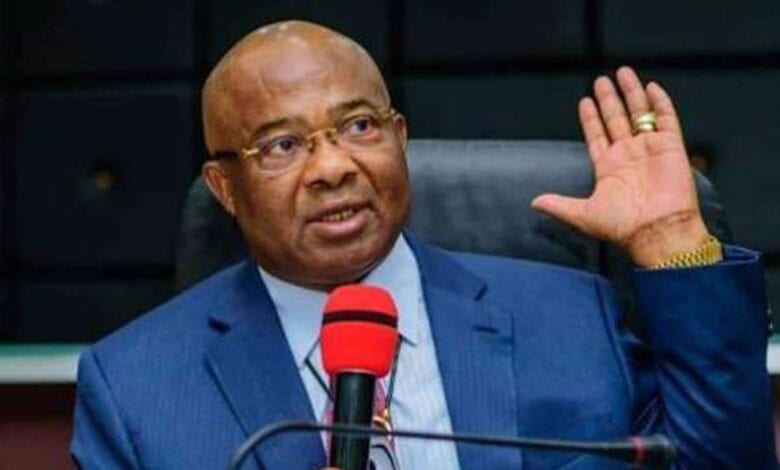
Imo State Governor, Hope Uzodimma, has declared that President Bola Tinubu dismantled Nigeria’s “largest organised corruption pipeline” through the removal of fuel subsidy and reforms in the foreign exchange market.
Uzodimma, who is Chairman of the Progressive Governors’ Forum, spoke in Abuja while addressing members of the diplomatic corps accredited to Nigeria.
According to him, the Tinubu administration inherited an economy weakened by subsidy fraud, multiple exchange rates, poor infrastructure and fiscal instability, but has since embarked on reforms that are already producing measurable gains.
“For decades, the petroleum subsidy regime in Nigeria functioned as the single largest organised corruption pipeline in our public finances,” Uzodimma declared.
The governor argued that subsidy removal and exchange rate reforms have significantly improved federal and state revenues, enabling governments to finance infrastructure and social investment projects without depending heavily on borrowing.
He highlighted projects such as the Lagos-Calabar Coastal Highway and the Sokoto-Badagry Superhighway, noting that they are already stimulating economic activity and attracting investment.
Uzodimma also stated that the unification of the foreign exchange market had restored investor confidence and reduced opportunities for arbitrage and speculative practices.
He disclosed that Nigeria’s foreign reserves rose from $32 billion in 2024 to $49.4 billion as of March 2026, while the gap between official and parallel market exchange rates had narrowed considerably.
“A country that continues to grow at four per cent despite global shocks is not merely surviving reforms; it is moving through them,” he said.
The governor further cited achievements in education, taxation, agriculture, technology and security reforms, including the disbursement of student loans to over 1.3 million beneficiaries.
While acknowledging that insecurity remains a challenge, Uzodimma maintained that the Federal Government was addressing the problem through expanded recruitment into security agencies and renewed collaboration with international partners.
He urged foreign governments and investors to align with the administration’s Renewed Hope agenda, which he described as a framework for economic stability, institutional reforms and long-term development.