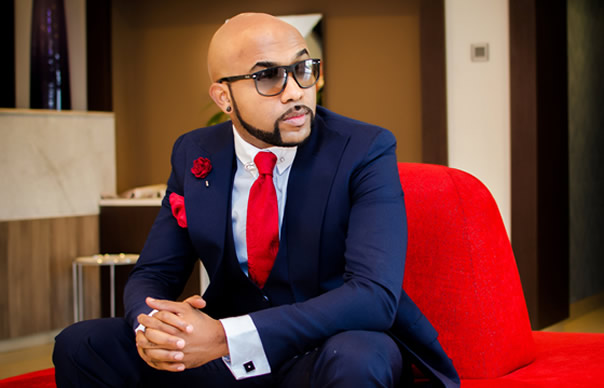
The celebrated Rhythm and Blues (R&B) crooner, Olubankole Wellington, was recently at the Peoples Democratic Party (PDP) national secretariat in Abuja to submit his Expression of Interest and nomination form to vie for a seat in the House of Representatives for the Eti-Osa Federal Constituency of Lagos State. He said young people should no longer sit on the fence and allow recycled political elites to take the stage, BEN OGBEMUDIA and TOMIWA OKUNADE recorded his interaction with journalists.
Why you are at the PDP Secretariat?
Some of you may know me as Banky W, I just finished submitting my expression of interest and nomination forms because I would like to contest the election on the platform of the PDP for the House of Representatives in Eti-Osa Federal Constituency of Lagos State.
How much of you do the people know?
Well, I am a media entrepreneur. I have been a musician, a filmmaker, an advertising practitioner for many years, and a restaurant business owner. I’m equally a servant in my church and I am a leader in my community and a philanthropist. Those are some of the things I do
What informed your decision to delve into partisan politics?
I am into politics because I have a genuine desire to serve. I think that for me, politics should be about servant leadership. It should be about people that recognise that there is a reason the government is called the public service. That means you are supposed to be the servant of the community. And the arena that God has opened for me, I have tried to serve my community and I serve young people. I have been a steppingstone to young people in various industries and I believe the greatest impact that we can have, is when we engage the political system and try to use the powers of that office for the benefit of the community. So, I am into politics to serve, I consider myself a builder and God has used me to build people in various sectors and I believe that by the grace of God if given the opportunity and the mandate of my constituency, he will use me as a stepping stone for others and the young people around Nigeria, so that is why I am going for politics.
What attracted you to the PDP when you know that the APC is popular in Lagos? And what has music got to do with politics?
Well, so what is the attraction of the PDP? I believe that with the PDP, there is a genuine intention to give young people a seat at the table. I believe that we have a chance to build a bridge between those who have been on the political terrain for many years and those of us who have been protesting from the side-lines and at the end of the day, if all we do is shout from the side-lines then we will never actually change anything or make an impact. But if impact is truly the goal, if making a difference in Nigeria is truly the goal, then we must engage Nigeria where it is and not where we hope that it should be. That has been my message to young people to say we can sit, complain and shout till kingdom come or we can say that the mainstream platform has not given us the chance to take part in the rebuilding and rescuing of our nation and I believe that the PDP is welcoming us with open hands and open doors, and it is an opportunity for us to come together to rebuild and rescue Nigeria. I am very grateful to the party for the warm reception, and I am very grateful for the opportunity to come and have a seat at the table I believe that by working together, God will help us to do what he has destined us to do. To your second question, what has music got to do with politics? I think part of the problem is that we have left politics to politicians. Some people in politics have never had to build a business. They’ve never provided jobs; they’ve never had to struggle to build a career. They have just been in the place of entitled politics because that is just what they do whereas I have had to build businesses. I know what young people go through to build a career, provide jobs for other young people, and try to make something for themselves and the people around them and the people that God brings to you. So, I think there needs to be a change or difference in the selection of people that we choose to enter the office. It should be people who have built something, and I have been fortunate enough to have been used by God to build things in music, food, film advertising, my spiritual work, and my community service. These are all the areas that I am extremely active in, and that should be the requirement for somebody who has experience across multiple sectors, who knows the pain of young people in Nigeria, who has experienced the pain himself and has learnt how to channel that pain into purposeful use. So, it is not so much about the fact that I am a musician, but it is about the fact that I have had to put my hands to the plough and make something of myself and others in this country. I think if we have more like minds, then it would mean a better day for our government, for our National Assembly, and our young people. I think the way to make it out of the mess that we are in this country is through innovation and reform.
2023: Endorsement of Sanwo-Olu is unfair, provocative to Muslims – MURIC
In 2019, you tested the waters, and you were unsuccessful. What went wrong then and what will you do differently to come out successful this time around?
You said 2019 was unsuccessful and I completely disagree. The reason I say that is that for us if you recall in 2019, I didn’t declare for office until three months before the Election Day, which is completely unheard of, it is insane. So, for us in 2019, it wasn’t about winning a seat. It was about planting a seed and I think we successfully did that because with what we did, we came third, but we won in areas as an independent candidate. We won some areas in our constituency, which was completely unheard of. We won in wards and polling units that were previously strongholds for either of the big two parties. At that time, it was about showing young people that this is something we must get involved in even though we are late into the race. Let us just plant a seed, let us just stick our toes in the waters. You know there are some things that you cannot learn unless you are in the trenches yourself. So, that was the entire goal of the 2019 campaign. It was to plant that seed. It was to get involved. It was to learn what it was and become a rallying point for the younger generation to see that this is something we must do. And now that we have planted that seed, it is about harvesting the seed and I believe that we will be successful this time because if you take what we did in 2019 and you take what the PDP did in 2019 in my constituency, we would have won decisively if we were working together at that time. Now we are working together, and I think that spells good for the Lagos PDP and the entire PDP, where young people are now seeing because of what we are doing maybe this is something that we can do
What are your chances against any candidate that the APC leader, Asiwaju Bola Tinubu may endorse in your constituency?
In a David and Goliath situation, I am more comfortable being a David. Yes, the stakes are high, but I do believe that what we may lack is money, we have emotion and the message. I think if Lagosians are truly happy with the way things are, then maybe we may not stand a chance. But somehow, I suspect that is not the case and that people are ready for something fresh, different, and unique. Something that speaks to the heart of someone, who wants to serve and who wants to see the nation better. So, I am content to stand on my own two feet with the support of the PDP and the support of our young people, and the support of my community. I am saying this because I know that we represent something different, and I think that is what my people have been waiting for. They are waiting for a representative, who truly cares about the communication and who has a track record of showing that. They are waiting for a representative who truly cares about Nigeria’s young people, who has a track record of being a stepping stone for those young people. They are waiting for a representative who is not there for selfish interests or ambition but is truly there to serve and help them. They are waiting for a representative, who will be transparent and accountable to them so that they will not only know what their representative is doing in Abuja but seeing what he is doing in the constituency. It will be the first time that the PDP will ever win this seat in Eti-Osa. Although it always seems impossible until it is done. I think that is what Nelson Mandela said. The people who change the world are the ones crazy enough to think that we can pull up Eti-Osa. I have a lot of people that are crazy about me so we will see what happens.
Police deny killing village head, two others in Ondo
Let me take you back to that event of EndSARS, will you encourage the people of your generation to come into politics?
I think it is important that you make a distinction because most of the young people that I know and got involved with throughout the protest were peaceful protesters. I think for a lot of the protesters, it was about speaking up against the oppression, being frustrated enough to stand, and speaking out for change. Having said that, my message to them now is that the truth of the matter is that we cannot protest about every problem in Nigeria. They are too many. If you play a Fela song today, a song that he wrote in the 1970s, it might sound like he wrote it last week because the issues are the same if not worse. Protests are necessary and I have been a part of many protests in Nigeria, but at the end of the day, we cannot protest about every problem. There are too many problems. It is not sustainable; we can’t do all that, so we must move from protest to power, and I think that is what we are trying to do now. That is what this campaign represents, it is the motivation and the encouragement those young people should understand that the same energy that we use, that same anger, frustration, feeling of despair, channel them now because what we can do is show people that those who are in power are no longer meant to be. I think that is the biggest statement any protest tries to make, and they should successfully do that. If we do that in 2023 and beyond, then it will be everyone that is given the honour to serve, to sit up and serve and listen to the voice of the people, and show empathy, competence, and character.