Six-year single-term proposal is distraction, kill demon of rigging elections- Adebayo

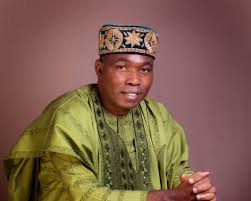
Presidential candidate of the Social Democratic Party, Prince Adewole Adebayo, has challenged the foundations of Nigeria’s political culture, arguing that the nation’s problems stem from poor governance, compromised elections, insecurity and a politics driven by money, ethnicity and religion. In this wide-ranging interview, he dismisses the proposed six-year single term, defends his party’s electoral prospects, criticises fuel subsidy removal and outlines his approach to tackling insecurity
The last time we spoke, there was still a rival group within the SDP promoting its own presidential candidate. What is the current situation, and has that issue been resolved?
We are not bothered about that. It is a normal feature of politics. If you recall, four years ago, a similar situation arose when some people floated Senator Hina, but it was eventually resolved in Lagos when Professor Hina publicly raised my hand and declared that the party had only one candidate. The burden is on INEC not to waste time on distractions but to follow the law. In politics, like in sports, there will always be people trying to pull you back, tug at your shirt or trip you up. It is a contact sport. We remain focused on the goal. My responsibility is to deliver on the mandate given to me by the party: to offer Nigerians an alternative perspective, raise expectations that things can improve, and ensure the implementation of Chapter Two of the Constitution, particularly the Fundamental Objectives and Directive Principles of State Policy. That means providing economic, security, and welfare solutions while positioning Nigeria to benefit from emerging opportunities in new industries, especially those driven by young people. Those are the issues we want to discuss. As far as the legal requirements for nomination are concerned, we have met all requirements. The responsibility now lies with INEC to conduct free, fair and credible elections. Our duty is to engage Nigerians so that political discourse focuses on ideas rather than internal party disputes, which never really end. What we need is a system where parties compete on ideas and the media provides equal opportunity for those ideas to be heard. Nigerians can then make informed choices. Unfortunately, during the last election, many people focused on issues such as the Muslim-Muslim ticket and other distractions rather than examining policy proposals. We warned that some of those proposals would create serious difficulties for the country, and today many of those concerns have become reality.
There is growing debate about the proposal for a single six-year tenure for elected executives. What is your assessment of the idea? Do you see it as a solution or a distraction?
It is a distraction. These are the kinds of conversations governments introduce as elections approach. It is like a football team protecting a one-goal lead with only a few minutes left on the clock. They keep the ball moving, kick it out of play, and do everything possible to run down the clock. Whether it is a six-year term or a four-year term is not the real issue. The real issue is whether the political system works. We need a system in which voters determine winners, INEC is transparent, and political parties produce fresh ideas and credible leaders. As we approach June 12, my focus is on ending the culture of rigged elections once and for all. Nigerians must be allowed to vote freely, and their votes must count. Once we achieve that, discussions about tenure length become secondary. What matters is what a leader does in office. The current four-year tenure, with the possibility of a second term, is adequate. What is important is ensuring that those who occupy public office get there through free, fair and credible elections. That is where our attention should be.
You present yourself as an ideological alternative to the APC and other major parties. Yet some observers still regard the SDP as electorally marginal. What gives you confidence that the party can win a presidential election?
If I wanted entertainment, I have many hobbies. Politics is not a hobby. It is about responding to the demands of the moment. My confidence is based on the expectation that Nigeria will eventually hold free, fair, and credible elections in which votes are neither bought nor manipulated. Only then will we know the true strength of political parties. The current system does not allow any honest person to confidently say election results fully reflect the will of the people. However, as we travel across the country, the demand for an alternative continues to grow. There is no aspect of national life where SDP’s ideas do not resonate with Nigerians. Our positions on security, the economy, infrastructure, welfare, democracy and ethics in governance are attracting increasing interest. The SDP has deep roots. It is part of the democratic tradition that gave rise to June 12. Our challenge has always been that we are an ethical party. We do not buy votes. We do not campaign on ethnicity or religion. If anyone comes to the SDP saying it is the turn of a particular ethnic group or religion, we will reject that immediately. We also refuse to accept money whose source cannot be defended. That discipline may appear to place us at a short-term disadvantage, but over time, systems built on corruption collapse under their own weight. As Nigerians increasingly focus on competence, integrity, ideas and character rather than money and political war chests, the SDP will become a stronger force. Good politics is the gateway to good governance, and good governance remains the only sustainable solution to Nigeria’s problems.
You were highly critical of the removal of fuel subsidy. If elected president, would you restore the subsidy?
No. The issue is more complex than simply bringing subsidy back. The removal of the subsidy was a mistake, but the government compounded it with other policy errors. During the last election cycle, we argued that Nigerians should not be misled by the subsidy debate for three reasons. First, what was described as subsidy was largely a pricing issue tied to products we were not producing domestically. The real problem was the failure to maintain and operate the country’s four refineries despite billions spent on turnaround maintenance. Our proposal had three components. First, ensure the refineries work. Second, reduce citizens’ dependence on petrol through efficient public transportation and other energy alternatives. Third, make Nigeria a net exporter of refined products and use the resulting gains to stabilise domestic prices. Our disagreement with the government was rooted in its failure to understand the multiplier effects of fuel pricing. Petrol prices affect both production costs and the cost of living. Once fuel prices rise sharply, inflation spreads across the economy. The government used the removal of subsidies as a justification for creating a new petroleum industry structure that benefits powerful interests while ordinary Nigerians bear the burden.
You have suggested that government bears responsibility for the current wave of kidnappings. Are you saying the authorities are responsible for the scale of insecurity we are witnessing?
Absolutely. Government is responsible for the kidnapping crisis. Unlike many commentators, I visit affected communities and speak directly with victims and residents. In many cases, communities report suspicious movements, receive threats and alert security agencies before attacks occur, yet little or nothing is done. There are three major reasons. First is official lethargy. Security in Nigeria is often defined as protecting the political elite rather than protecting citizens. Second, our intelligence agencies are highly capable, but intelligence is only useful when decision-makers act on it. Too often, those responsible for authorising action fail to respond. Third, our policing structure has been weakened. Functions that the police should handle have increasingly been transferred to the military, stretching security resources and weakening law enforcement. The most troubling aspect is that insecurity has become a lucrative enterprise for some within government circles through security votes and related expenditures. Meanwhile, many of the criminals involved gain very little compared to the enormous sums budgeted in the name of fighting insecurity. The terrorists and kidnappers are criminals who should face the full consequences of the law. My point is that government, through negligence and poor governance, has enabled conditions that allow them to thrive.
Having visited several states affected by violence, including Oyo and Plateau, would you negotiate with bandits if you were president?
No. There is no room for negotiating with criminality. You cannot share territorial sovereignty with bandits. These groups are not stronger than the Nigerian state. They have become emboldened because government has allowed them space to operate. The state possesses superior intelligence, firepower, and resources. The problem is not capacity; it is political will. Highly competent professionals staff our law enforcement agencies, but politics often overrides professionalism. Security institutions should serve the law, not the political interests of those in power. Under my administration, law enforcement agencies would operate independently within the framework of the law. Politicians would make policy and enact laws, not direct operational decisions. I want Nigerians to understand that no terrorist, bandit or kidnapper is capable of overwhelming the Nigerian state. The problem is that government has not prioritised citizen security. That is why Nigerians must make security a key voting issue. They should not vote based on ethnicity, religion or financial inducements. They should vote for leaders committed to protecting lives and fulfilling their constitutional responsibilities.
Some Nigerians may argue that these proposals sound good in theory but that governing is often far more difficult in practice. How do you respond?