Quite heart warming, the strife by the Nigerian government and the country’s monetary authorities, to fervently reverse Diaspora inflows from the largely “family support,” put at 70 per cent to investments, will offer opportunity to tap into this huge funds.
”We found that 70 per cent of the Diaspora inflows that come into Nigeria, however, goes into family support and only 30 per cent of the inflows go towards investments,” Vice President Yemi Osinbajo told a virtual conference with the theme: “The New CBN CX Policy and Positive Impact to Diaspora Investments in Nigeria”, organised by Fidelity Bank Plc, last weekend, in Lagos.
According to the Nigeria Diaspora Commission (NIDCOM), between 12 to 13 million Nigerians live in the Diaspora. This excludes those residing in African countries from which NIDCOM is still working to get the accurate data.
Reversing the Diaspora inflow into investments to reflate the economy, no doubt, will be in line with what has happened in countries like India, Pakistan, Mexico and Bangladesh which have been more investment focused with Diaspora inflows that have contributed significantly to their economic and industrial transformation.
“For several years, the remittances exceeded Nigeria’s oil revenue, translating, sometimes, as high as six per cent of GDP.
“The Office of the Vice President, in collaboration with several stakeholders, including the NIPC (Nigerian Investment Promotion Council), worked on a study in 2017 to help us better understand the potential of the Nigerians in Diaspora investment group.
“We found that many Nigerians, particularly first generation males, have a keen interest in the economy and, in fact, many investors do portfolio investments and are interested in venturing beyond the Lagos investment area,” Osinbajo reveals.
Stating that Nigerians in Diaspora were a formidable force with a ‘can-do’ spirit, he counsels them to focus more on specific investments opportunities, channelled through the right platforms.
“Nigerians in Diaspora should engage in more specific investments that promote investment opportunities led by the private sector.
“What they ask for from government is improvements in the enabling business environment and this administration’s efforts over the years, has been to improve the business environment.
“An initiative such as this webinar, driven by the private sector to attract investments from the Diaspora is one of the key things they asked for.
“So, we are delighted with the new CBN policy that makes it easier for Diaspora Nigerians, not just to transfer funds to Nigeria but, to have greater value over the funds that they transfer.
“I know when the data are released, we will see the impact that it has had on the Diaspora remittances from Nigerians to Nigeria,” Osinbajo quips…
Excitedly, Mrs Abike Dabiri-Erewa, chairperson/chief executive officer, Nigerians in Diaspora Commission (NIDCOM), said that the new CBN CX policy would greatly impact on the remittances of Nigerians in Diaspora to the country.
“I must say this is a policy that will positively impact Diaspora remittances into Nigeria.
“There are still some issues which we will continue to work out with the CBN, but the policy will change a lot of things as regards Diaspora remittances,” she said.
CBN Governor, Mr Godwin Emefiele, explains that the new FX policy was as a result of CBN’s plan to broaden the scope and scale of Diaspora inflows, adding that it would ensure proper channelling of Diaspora remittances, thereby eradicating informal channels which were fraud-prone.
“As we are aware, remittances from Nigerians living abroad has had significant benefits on domestic income, social welfare and economic growth in our country.
“Given the importance of Nigerians in the Diaspora, keeping significant engagements with them is vital towards maximising the gains, to further benefit them and improve the economy.
“Remittances are less volatile when compared to other forms of investments such as portfolio investments which could be prone to sudden reversals and are influenced by foreign forces,” he says.
Following the onset of COVID-19, Emefiele disclosed that emerging economies witnessed sudden reversals of over $100 billion worth of financial flows as investors retreated to seek safer havens assets, such as the United States treasury bill.
“Some analysts have expected a significant drop in remittances in emerging and frontier markets, as a result of the slow down of global growth during the first half of the year, which was not the case in countries such as Pakistan, Bangladesh, Mexico and India, where we saw a significant boost in Diaspora remittances,” he contends.
Says Emefiele: “The increased flow of remittances helped in mitigating the negative effects of the pandemic and the outflow in portfolio funds in the respective economies.
”At the CBN, we understand the ramification for foreign exchange rate stability, reserved recreation, job creation. poverty reduction and economic growth.
“As a result, our policy aim is to broaden the scope and scale of Diaspora inflows which ensures that those in Diaspora leverage formal channels in remitting funds rather than the informal channels that are more prone to frauds and poor safeguards for consumers who utilize these services.
“One of the key elements in the Sustainable Development Goals (SDGs) is to increase the volume of global remittances as a percentage of GDP, while reducing the cost of remittances.
“As a result of the pandemic, global remittance flows to developing countries is estimated to fall by 7.2 per cent to $508 billion in 2020 and a further 7.5 per cent to $470 billion in 2021.
“Irrespective of the global fall in remittances, however, they remain a stable source of financing in developing countries,” he noted.
The CBN governor posits: “According to the World Bank, flows to low and medium income countries reached a record high of $520 billion in 2019, this surpassed FDI flows of $537 billion and overseas remittance of about $166 billion.
“Consistent with the global trend, Nigerians aspire to ensure perimeter flows as World Bank’s records show that Nigeria’s $21 billion remittances was the 7th largest remittances in 2019.
“Notwithstanding the impact of the pandemic in 2020, Diaspora remittances maintained dominance over FDI.
“The efficiency of remittances, especially as provided by the international money transfers are critical to our aim of boosting the economy. Thus, we will continue to fine tune our policies to mitigate factors that affect the quality of service faced by customers when using IMTOs.
“If remittance infrastructure improves and the right policies are put in place, remittances will improve significantly, even though marred by irregularities.” Emefiele maintains.
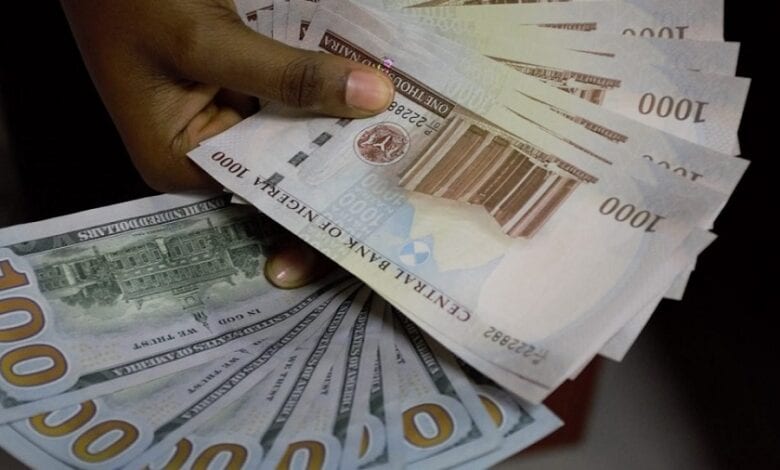
It will be foolhardy for Nigeria not to think about properly channelling its Diaspora inflow which according to PWC grew from $22 billion in 2017 to about $26 billion in 2019, said to be higher than what the country earns from oil. If inflows from unofficial channels are added, it’s possible that this may be close to $40 billion which could push it much higher than the current projected 6 percent of GDP.
The new policy by CBN to offer N5 per every dollar inflow into the country will encourage those in Diaspora to patronise formal sources and thereby put the monetary authorities and government in a better stead to harness this huge funds.
Many including this writer are of the view that rather than shopping for loans from China, Russia, US, UK and some other countries, Nigeria can mobilize Diaspora inflows to build some of its most potentially viable railway projects like the $11.5bn Lagos-Calabar Coastal Rail lines which is expected to link Benin City, Warri, Onitsha/Asaba, Yenagoa, Port Harcourt, Uyo and Calabar. The Coastal Railway is envisaged to later connect both the Western and Eastern rail lines so that cities like Akure, Ado Ekiti, Owerri, Wukari, Jalingo, Yola and many others can also be linked to offer businesses moving huge cargo and passengers a more viable alternative.
Properly harnessing Diaspora inflows into investments also offers Nigerians in Diaspora the opportunity to earn more from their funds rather than frittering it away providing largely family support which may yield little returns. Thanks a great deal to our Diaspora brothers and sisters that have over the years provided the much needed family support at a time many of our citizenry do not feel any impact of governance in their lives. But they are now being offered the platform to earn more by investing their funds and also provide the support for their families in a much bigger way.
Naira 4 Dollar scheme to enhance flexible, transparent diaspora remittances – Emefiele
Investment of Diaspora funds in building of massive infrastructure, industrial, IT and agriculture projects will highly reflate the economy, create thousands of jobs, take many young men and women off the streets and guarantee better socioeconomic life to the citizenry.
But then this process must be driven by a more disciplined and diligent political elite and a more prospective business class to inspire confidence amongst Diaspora Nigerians to make them willing to part with their funds. We must not give the impression that this move may end up replacing family alecs with artful public officials and dodgy businessmen in search of cheap funds.
Government also must genuinely show that it is interested in mobilizing funds to build quality infrastructure that can compete internationally. It must also demonstrate that the country is not only being retrieved from the pristine conditions of the early man but goaded along globally acceptable civilized conduct.
We need to get out of this bind and predilection to reinforce what’s now being perceived as a “cow economy”. At a time China is building a 600 kilometer per hour bullet train which will reduce the trip from Beijing to Shangai to three hours, it’s anomalous to be driving our trains on 70 kilometer per hour while making for human and animal traffic.
It’s really not rocket science to galvanize huge resources of our people located across the world to transform our dear country but they must get the picture that this is not another con game by a rudderless political elite angling to make mincemeat of their hard earned funds.
Iyare, an International Relations Analyst is also a Communications & Development Consultant