Nollywood style, format, different from western films – Ogunjiofor, actor


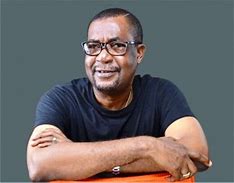
Popularly referred to as one of the fathers of Nollywood, Okey Ogunjiofor, who was part of the industry’s premier hit movie, ‘Living in Bondage’, and many others went underground for several years. He, however, resurfaced recently and shared his experience in this interview with PAUL UKPABIO
After a long while out of Nollywood, what prompted you into a comeback?
You see, after my pioneering efforts in Nollywood with “Living in Bondage”, “Circle of Doom”, “Nneka the pretty serpent”, Brotherhood of Darkness, and other hits, the whole world took notice of our industry. I felt that there was more we could do to deepen the acceptance of the phenomenon called Nollywood, but most of my colleagues were not getting it, especially those in the market. So, since then, Nollywood products have remained on the fringes of global distribution due to defects in the quality of our sounds and pictures occasioned by very low investments in films arising from fear of losing huge investments due to linear distribution. And everybody continued churning out low-budget films for fear of losing so much if the film failed to make it in the market. I couldn’t continue making films in the industry as it was. A situation where the DVD market is almost dead due to piracy and the cinemas replacing them was no different either. So, I felt that there must be a “new way” to survive in the industry, for Nollywood became stunted because the practitioners got so comfortable with individual small successes that no one was prepared to take the big risks required for our collective big successes. And I was determined to find that “new way” no matter how long it may take. The answer, therefore, was to make “Amina” show what is possible for all, a film that would make the world celebrate our products thereby opening up Nollywood for global investments. It was the quest to raise enough money to fund this “new way” that kept me away from mainstream filmmaking for 25 years. Now that I am back, there is a “new way” for all to follow.
In the last years, you have also been into this and that, tell us about the years after Nollywood?
During these years of my sabbatical to find the “new way” for our industry, I consulted for The Presidency of the Federal Republic of Nigeria and The Kennedy Centre Washington USA on gender-based research and programs for the empowerment of women and the girl child 1996 -1999. After that, in 2000 I produced Born to win film, a film on Bishop David Oyedepo’s book of the same title. By 2002 – 2005, I produced 86 episodes of Rough Edges soap opera series on 18 National television channels and cable television, then by 2007–2010, another 78 episodes of Cyberia soap series on 21 national televisions and pay-TV, and by 2011–2012, I produced 20 Episodes of Hope Avenue sitcom series. I also produced corporate documentary films for organisations such as CIBN 50yrs of banking in Nigeria 2013, Director of World Economic Forum (WEF) in Nigeria 2014. By 2009–2012, I founded and organized The African Audio-Visual Awards (TAVA) to mentor young filmmakers as well as midwife Nollywood products to global standards. I also produced and directed 5 episodes of the FCMB documentary series in 2019. Side by side the above productions within this period, I also found time to upgrade myself educationally, with a Bachelor of Science (B.Sc.) in Government and Public Administration from Imo State University, and UCLA (School of Theatre, Film and Television Studies) University of California, Los Angeles. I also hold many Master’s Class certificates and other international professional certificates. Due to my pedigree in Nollywood and sundry youth interventions, I was invited to be one of the Mentors and Resource Persons, to visiting German Youths in the “Go Africa Go German,” a German-African Scholarship Exchange program, a joint initiative of the Federal Government of Germany and the Federal Agency for Civic Education. I am a published author of many books: ”The Call, The Cross and The Crown, Vultures at twilight, The Legend of Queen Amina, and The Mystery of Salvation”. I am an audio-visual consultant to a few organizations, a youth mentor, event organizer, and preacher of the gospel around the world. I also sit on the board of many private organizations and industry associations.
Now let’s go back to early Nollywood, do you miss those days, if yes, then what are those things that you miss?
Outside the strength of our stories that seemed to connect with our global audience more then, I don’t think I miss much of early Nollywood. Yes, there is a sense of nostalgia whenever I remember those days of early Nollywood but then it is that of pain and loss, of being used repeatedly, of opportunities missed and gains squandered. Nollywood used to be Surulere, Idumota, Eweka Road, Onitsha, and then it is today global.
Can Nollywood’s success be ascribed to individuals who started it or should it be classified as a phenomenon that had to be?
Nollywood is a product of providence, a phenomenon that began with a divine intervention that has continued to evolve through divine guidance and intervention. Yes, the glory should go to God even though the credit should be given to those God used to start it and all those who have continued to contribute towards the deepening of this phenomenal brand.
What do you consider the successes that Nollywood has made over the years and what do you consider as its failures?
Osimhen, Dennis‘ll be greatly missed in Cameroon, Eguavoen bemoans
There is a combination of factors that have endeared Nollywood to the world, which is why they are taking notice of what we are doing. The ability of Africans to evolve a new format for filmmaking through digital cameras, creating an industry out of it away from western-style and format remains the major success story of Nollywood. Nevertheless, in the beginning, Nollywood lacked acceptance and recognition, everyone tried to kill it at its inception; no one gave it a chance globally.
There was no government support locally, and even the supposed distributors in the various markets became the pirates of the films they were distributing. Although digital filmmaking started in Nigeria then, nobody was there to take ownership and tell our story to the world. Older filmmakers criticised our industry and called it nonsense but later they joined the nonsense. Foreign groups derogatorily called us Nollywood – “Nothing near the Wood”. While some local journalists praised the feat, others took us to the cleaners rather than comparing our experiment, especially quality-wise with the more established Hollywood and Bollywood film industries. But here we are still today by the grace of God, and by the prolific nature of Nigerians who are “never-say-die” people, changing the narratives about Africa, rewriting the history and what you would call negative prejudices that the world has always had about Africa, above all creating massive employment that grows African economies. But our major failure has been the inability of the practitioners to take deliberate steps, make the sacrifices needed to deepen the practice, and expand the ecosystem to attract global investments.
Your latest work Amina is a hit already, what can you say about it?
I thank God for the success story of Amina. The main reason for making “AMINA” was to re-define Nollywood preparatory for the investor’s market going forward just as “Living in Bondage” was the re-definition of film practice in the past. The aim was to make a film that would make the world celebrate Nollywood products instead of just tolerating them. I am glad that “AMINA did not just achieve this purpose, but has surpassed our expectations when it rose to become the only Nollywood film from inception till date to make the list of top ten on Netflix globally.
Do you think that Amina as a 2021 movie has received the massive publicity it ought to receive considering its success so far?
No, I don’t think AMINA has received enough ownership from the Federal Government of Nigeria, or enough publicity as it ought to from the media, considering its success story not only for Nollywood but for Nigeria and Africa at large. But I must thank the few broadcast houses and online media organizations that have extended their goodwill to celebrate this feat with us.
What do you think is the key factor that has made Amina to be accepted so far globally?
Amina is an indigenous African story told by Africans to the world not only to entertain Nollywood’s growing global audience but to demonstrate that the African film industry has come of age and that given enough resources African filmmakers can hold their own in the global arena.
The concept of Amina centred on the fact that since ancient civilization in Africa, women have ruled on the continent. From Queen Nefertiti of Egypt (1292 BC), Makeba, Queen of Sheba (960 BC), and Empress Candence of Ethiopia (323 BC). Later, we had Queen Amina of Zazzau (c. 1533 – 1633), Queen Anna Nzinga of Angola (c. 1583 – 1663) and Yaa Asentewa of Ashanti Kingdom of Ghana (c.1830-1921), Queen Sarraounia Mangou of Niger (19th Century), Ranavalona of Madagascar, Beatrice of the Congo, to name a few.
But despite the exploits of these great women in Africa, inequality, discrimination against women’s rights, and other gender-based prejudices persist. Not only in Africa but the world over. Amina’s film raises an important question on why there are not many female leaders in the world today when history is full of women who have excelled as leaders.