State police alone cannot solve Nigeria’s security crisis – Owoseni, ex-Lagos CP

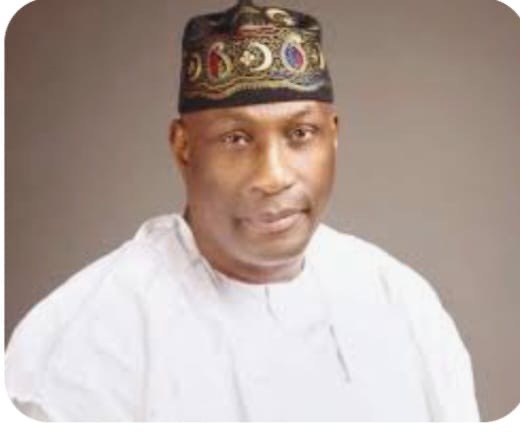
A former Lagos State Commissioner of Police, Fatai Owoseni, believes Nigeria possesses the manpower, expertise and institutional capacity to tackle insecurity but lacks the political will, motivation and accountability needed to make the system work. Drawing from decades of policing experience, including service on United Nations and African Union missions, Owoseni argues that crime persists because the country’s security architecture is poorly managed. Speaking on Channels Television’s Insider Sources, he outlined practical reforms needed to strengthen policing and improve governance. David Lawani monitored the interview
Considering Nigeria’s current realities, how do you assess the country’s prospects?
I will start on a sad note because we have all the potential to have moved beyond where we are today. We should not even be lamenting the way we currently do. It is sad because almost every day we are confronted with one crisis or another. In Oyo State, where I come from, we still have children and teachers being held captive by terrorists. The question is: do we not have what it takes to address these challenges? Are we overwhelmed? Nigeria has enormous potential. Our security agencies possess tremendous capabilities. I have served on United Nations assignments alongside personnel from different countries, and in virtually all those operations, Nigerian security personnel, including the military, ranked among the very best. When you look at diplomacy and other sectors, Nigerians have continued to excel. The Nigeria Police and the military have performed remarkably wherever they have served.
Why have we not translated those successes into building a better Nigeria and creating the ideal society we all desire?
Despite our challenges, I remain hopeful. Nigeria has what it takes to lead Africa. Nigeria has what it takes to compete with any nation in the world. I believe the international community understands this, which is why many Western countries remain cautious and strategic in their dealings with Nigeria, including the nature of their interventions. People often say the future looks bleak. I do not want to subscribe to that narrative. In 2015, during preparations for the elections that brought in the late President Muhammadu Buhari, I was Commissioner of Police in charge of Operations at Force Headquarters. I wrote the operational order and participated in several engagements involving the international community. I remember a conversation with former United States Ambassador John Campbell. He remarked that Nigeria was on the brink of collapse. Yet somehow, fate has always helped us. We did not collapse then, and I do not believe we will collapse now. Today, when you interact with people, some ask whether the 2027 election will even take place or whether Nigeria will remain united. My answer is that Nigeria possesses the capacity to overcome its challenges. I remain one of those who are hopeful and convinced that this country has a bright future. We need to make certain adjustments. Many people blame leadership, and rightly so. Leadership accounts for perhaps 50 per cent of the problem. But the people themselves also bear some responsibility. By “the people,” I particularly mean the elite, although ordinary citizens are not entirely exempt. As the Yoruba would say, many of our people have become those who continue to celebrate individuals who have failed them. Elections approach, and people still hail politicians who have looted public resources. Individuals who once had no known means of livelihood suddenly occupy public office, amass wealth, and return every four years asking for votes, often distributing food and token gifts. Yet we applaud them. We have reached a point where citizens must be ready to take responsibility. We should stop discussing bad leadership in isolation. Every country eventually gets the kind of leaders its people are prepared to tolerate. If Nigerians rise collectively and say, “Enough is enough; you can no longer deceive us,” the world will follow our example. That is my perspective.
To what extent should ordinary Nigerians be held responsible for supporting and celebrating politicians with questionable records?
Poverty has been weaponised. We were not like this, especially in the South-West. We used to rise to occasions and defend what was right. There was a time, immediately after colonial rule, when anyone who engaged in wrongdoing would be ostracised. People would openly discourage others from associating with such individuals.
Where did we get it wrong?
One of the reasons some of us joined the political process as technocrats was because we had seen enough. Having travelled widely and witnessed what people endure, we felt we should become part of the system and help change it. Despite the frustrations and intrigues, we should not abandon the truth. The Yoruba are known for standing for truth and justice. Unfortunately, we now have a situation where people exchange their votes for bags of semovita and other temporary benefits. How long will such food last? We keep reminding our people that if someone sells property to contest an election, that person is making an investment and will eventually return to recover it with interest. Members of the National Assembly have often been challenged by their constituents, who complain that they return only after elections. Once elected, many disappear until another election cycle arrives. Our people have been conditioned to accept crumbs. The situation reminds one of the popular story often attributed to Adolf Hitler, in which a bird had all its feathers plucked out and later returned because grain was thrown before it. That is what many politicians have turned citizens into.
Should we continue like this?
Certainly not. What is even more disturbing is that some of those accepting these inducements have become relatively comfortable themselves. Some have trained their children abroad, live in good neighbourhoods and run successful businesses, yet they still participate in this cycle. Poverty is not always about lack of food. Sometimes it is a mindset. When people say there is poverty in Nigeria, I often remind them that many are still able to feed. Some people define poverty as no longer being able to maintain a lifestyle they once enjoyed. For instance, someone who previously stopped at a beer parlour every evening for two bottles of beer and pepper soup may now afford only one bottle and immediately conclude that poverty has arrived. Beyond that, many public servants do not truly earn what they are paid because the system does not encourage productivity. In our public service, people arrive at work around 9 a.m., and by noon, many are already leaving to attend to personal business. Visit most government offices, and you will observe it. In other countries, people earn their salaries through hard work. We should be discussing a performance-based reward system. People who work longer hours and produce results should be rewarded accordingly. It should not be a situation where everyone receives the same reward regardless of effort. In the police, we often saw situations where officers who risked their lives on operations received the same recognition as those who did nothing. Because of quota systems and other distortions, some people knew they would be promoted regardless of how hard they worked. Others attached themselves to politicians and their spouses, advancing through the ranks. Such realities create frustration. We must change them. These are some of the fundamental issues we need to confront if we are serious about national development.
You have had a distinguished career in public service and even ventured into politics at a point. What informed that decision, and how would you assess Oyo State’s development trajectory?
For Oyo State, I have always been part of the story. I completed my primary and secondary education in Ibadan before moving around the country during my career. Because of that background, I have closely followed Oyo State’s development over the years. When you look at Lagos State today, one reason it continues to make progress is that successive administrations have largely built on existing foundations. There is a plan and a sense of continuity. In the old days, Nigeria operated development plans that guided governance. Unfortunately, that culture has diminished in many places. In Oyo State, however, you can see a measure of progression, particularly in the Third and Fourth Republics. From the era of Chief Bola Ige, may his soul rest in peace, through the administrations of Lam Adesina, Rasheed Ladoja, who is now the Olubadan of Ibadan land, and the late Adebayo Alao-Akala, there has been a gradual evolution of governance. One thing that has become evident, especially under the current administration, is continuity. Governor Seyi Makinde has continued some of the initiatives inherited from previous administrations, including projects started by the late Governor Abiola Ajimobi. That continuity has helped Oyo State maintain a development trajectory. We often describe Oyo as the Pace Setter State, and rightly so. Yet there is still a lot more to be done. Oyo State is sitting on enormous wealth. Whether you talk about agriculture, mineral resources, commerce or human capital, the state possesses enough resources to become largely self-sustaining. Frankly, Oyo State should not have to depend excessively on allocations from Abuja. If Lagos State can generate the revenue it currently does, Oyo State also has the potential to generate comparable or even greater revenue. The resources are there. The opportunities are there. The current governor has made significant investments in infrastructure, and those efforts deserve recognition. However, I believe Oyo State can be taken even further. One of the reasons I considered entering politics after years as a technocrat was my conviction that governance can be improved when people with experience and integrity are involved. Since 2019, I have worked in different public service capacities and observed governance from various angles. I also had conversations with Governor Seyi Makinde and other leaders. I remember former Vice President Yemi Osinbajo making a very important point. He said that if everyone keeps saying politics is dirty and refuses to participate, then who will clean it up? That statement resonated with me. We need to give younger generations hope that leadership can still be driven by conscience, integrity and the fear of God. We need leaders who are genuinely committed to the greatest good for the greatest number of people. Oyo State has the capacity to become self-sustaining. We can improve the welfare of public servants. We can strengthen public education to the point where private schools become a matter of choice rather than necessity. I remember that during Governor Ajimobi’s administration, substantial investments were made in education infrastructure through the Oyo State Education Trust Fund. Several schools were renovated and transformed. Some of those facilities can compete favourably with private institutions. Likewise, some of the roads being constructed under Governor Makinde are of high quality and are likely to serve residents for many years. In some cases, these are roads that had not received serious attention for decades. The point is that progress is possible. We do not need to fold our arms or keep reinventing the wheel. We need to build on what already exists and continue moving forward.
How would you assess the current security situation in Oyo State and across Nigeria?
The issue is bigger than Oyo State. What concerns me is that Nigeria often fails to heed warning signs until problems become major crises. As I asked earlier, are we truly overwhelmed by insecurity? My answer is no. I strongly believe Nigeria has the capacity to solve its security challenges. Everyone knows what we achieved in Lagos during our time. Success in policing comes down to commitment, passion, and a genuine sense of duty. Between 45 and 50 per cent of those wearing uniforms today joined the service primarily because they had no alternative employment opportunities. For many, it is simply a means of earning a living rather than a calling. In the past, joining the police or the military carried a sense of honour and responsibility. There were traditions, ethics and values that shaped the profession. People saw themselves as public servants whose duty was to protect society.
Can we honestly say the same of everyone in the system today?