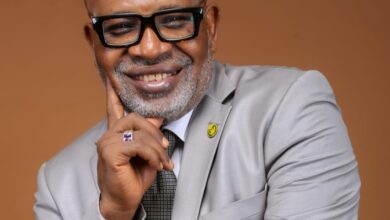
By Lemmy Ughegbe, Ph.D
Nigeria is already drifting into the politics of 2027. The signs are no longer subtle. Alignments are shifting. Ambitions are crystallising. Conversations that once belonged to backrooms are now out in the open. But this time, the road to the next election is being paved not just with political calculations, but with fear, uncertainty and blood.
Across several parts of the country, communities continue to grapple with violent attacks, abductions, banditry and insurgency. From the coordinated assault on a military base in Benisheikh, Borno State, where Brigadier General Oseni Omoh Braimah and other officers and soldiers were killed, to deadly attacks on communities such as Mbalom in Benue State, and violence in parts of Plateau, Kaduna and Niger states, the sense of vulnerability has become widespread. Even Maiduguri has again tasted the horror of coordinated attacks.
These are not isolated incidents. They are part of a pattern that has become too grim to dismiss as mere episodic events. The killing of Brigadier General Braimah was more than another grim statistic. It was a signal that cut through the language of routine security briefings.
When a senior military officer, commanding troops in an active conflict theatre, can be killed in an assault on a military formation, the incident sends a chilling message to ordinary citizens: if those trained and armed to defend the country are so exposed, what exactly is the condition of the rest of society? That question now hangs over the country like a dark cloud.
Compounding this anxiety is the recent release by the Federal Government of a list of 48 individuals and entities allegedly linked to terrorism financing. On the surface, this suggests that the state may now be ready to move beyond lamentation and begin confronting the deeper financial architecture of terror.
But it also raises the kind of question Nigerians have asked too many times before: what happens next? Will those named be investigated thoroughly? Will arrests follow? Will prosecutions be pursued with seriousness? Will convictions be secured where guilt is established? Or will this list simply join the growing archive of shocking disclosures that briefly stir public attention before disappearing into silence?
In a country where impunity has often outlived outrage, the credibility of such revelations lies not in their announcement, but in their consequences. Nigerians are not merely asking who funds terror. They are asking whether the state has the will to confront those who do. This is the point at which insecurity ceases to be merely a governance challenge. It becomes a political question.
Elections are about choice. But choice requires safety. Where insecurity thrives, participation shrinks. Campaigns become restricted. Voter turnout declines. Entire communities risk being effectively pushed out of the democratic process, not by formal exclusion, but by fear. In such a climate, the politics of 2027 cannot be business as usual.
Security is already emerging as the central issue around which political narratives will be built. The question of who can restore order, guarantee safety and reassert the authority of the state will define the electoral contest more than any slogan, coalition or carefully worded manifesto.
For the incumbent administration of President Bola Ahmed Tinubu, this is a burden that cannot be postponed. Governments are ultimately judged not by the promises they make, but by the outcomes they deliver. As 2027 approaches, the administration’s record on security will sit squarely at the centre of public judgment.
The opposition, understandably, will seize the moment. Insecurity provides fertile ground for criticism. It allows challengers to frame the next election as a referendum on governance failure. That is the natural logic of democratic contest.
But there is a deeper and more dangerous problem. When insecurity becomes the dominant feature of a political cycle, it distorts the nature of the contest itself. Elections begin to revolve around fear rather than ideas. Debate gives way to anxiety. Policy is overshadowed by survival. Public discourse narrows. Citizens begin to think less about governance choices and more about personal safety. That is not the foundation of a healthy democracy.
There is also the risk of politicising insecurity. In a highly charged atmosphere, every attack may be interpreted through partisan lenses. Every security lapse becomes a weapon. Every casualty becomes part of a political argument. In extreme cases, insecurity itself can be manipulated, directly or indirectly, to influence electoral outcomes or suppress participation in politically unfavourable areas.
History offers enough warnings about how fragile security environments can complicate elections, weaken mandates and damage legitimacy.
Another critical concern is logistics. The Independent National Electoral Commission’s ability to conduct free, fair and credible elections depends heavily on the security environment.
Deployment of personnel, transportation of materials, opening of polling units and protection of voters all require a reasonable degree of stability. Without that stability, credibility suffers.
Beyond logistics lies something deeper: trust. Citizens who do not feel safe are less likely to believe in the system. When the state struggles to protect lives, its moral authority weakens. Elections alone cannot repair that damage. Governance must. This is why the conversation about 2027 must begin now, not with campaign slogans and elite permutations, but with action.
Security is not just another campaign issue. It is the foundation of everything else. Without security, there is no economy. Without security, there is no development. Without security, democracy itself becomes fragile. The politics of 2027 will not be shaped only by speeches, alliances or defections. It will be shaped by what Nigerians see and experience between now and then. They are watching. They are measuring. And when the time comes, they will decide.
The real danger is that if insecurity continues to deepen, the election itself may take place under conditions that undermine its credibility before a single vote is cast. Nigeria cannot afford that.
The road to 2027 must not be built on fear. It must be anchored in deliberate, visible, and sustained efforts to restore security, punish those who finance terror, rebuild confidence in the state, and reassure citizens that their lives are not secondary to politics. Because in the end, democracy is not just about the right to vote. It is about the right to live. And no ballot can replace a life already lost.
Dr Lemmy Ughegbe, FIMC, CMC
Email: lemmyughegbeofficial@gmail.com
WhatsApp ONLY: +2348069716645