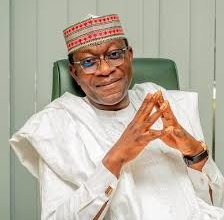
He was a senator of the Federal Republic of Nigeria between 2015 and 2019. He is also an author, playwright and human rights activist. He remains one of the most vocal contemporary voices in Nigeria. Although he lost the second term bid for a seat in the upper legislative chamber of the National Assembly, Sani has remained vocal on national issues.In this interview with Ruth Tene Natsa, he opens up on many issues concerning Nigeria as she clocks sixty years of independence.
How would you rate Nigeria’s performance as a nation, 60 years after independence?
First, in the 60 years of our expe- rience as a nation, there are achieve- ments, there are failures and there are challenges. So, the achievements have to do with the fact that despite all our problems, our crises, our turbulence, our storms, we remain a nation. There are countries in Africa and beyond that started like us and they don’t exist today. Sudan is now a divided country; Libya is a failed state, Somalia has been in perpetual war and Congo is also a failed state. So if you put into tally those states you can see that we have actually achieved. But also if you put Nigeria to tally with some African countries like Ghana, Senegal, Ethiopia, Botswana, Namibia, South Africa, you can see that we have a lot of work to do. We can also say that the problems we face today may not actually summarise our journey to nationhood, but also represent the challenges we face as a nation at this very time.
There is no doubt about it, Nigeria still remains a divided nation. When we say division, we are not talking of physical division, we are physically united but you can see Nigerians see themselves as either Muslims/Christians. First, they see themselves as Hausa, Yoruba or Igbo, Urhobo or Ijaw first before being Nigerians. They also see themselves as Northerners, South Westerners, South Easterners or South-South before they see themselves as Nigerians. We can comfortably say that our journey to genuine unity and nationhood is still a work in progress. And when you put into cognisance the amount of revenue accrued to the nation and put it in tally with the infrastructural and physical development you see, you know that we have failed woefully as a country. Over the years, we moved away from selfless leaders of the first republic to military rulers and new generations of rulers who think of themselves first before they think of the country and this has always been one of the reasons why we continue to lag behind.
How would you rate Nigerian democracy and what would you say we should do differently to entrench it?
Democracy is not a title, it is not also an honour, it is a system and when you say a system, you are talking about the ingredients of that system. Constitutional democracy comes with rights, with freedoms and with liberties. And you cannot categorise or identify yourself as a nation as being democratic until you are able to comply with those ingre- dients and principles. For example, the right to free, fair and credible elections. What have we seen in the last 20 years? We have seen the progressive decline in the quality and acceptability of our electoral forces. Using money to buy votes, godfather’s imposing candidates, us- ing the Army, the police to suppress the will of the people, manipulating electoral results using INEC officials and the courts to manipulate the will of the people. And we have reached a point where when people can use violence, thuggery, manipulation, force in the guise of democracy and find themselves in the positions of power, they call themselves elected, while they are actually not. Many people who are in the posi- tion of power are intolerant of criticism. They arrest, jail, frame and persecute people who criticise the government. Even the media practitioners are not free to express their opinions. So, how can you categorise yourself as a democracy when you are opposed to people expressing themselves?
It has even reached the point where laws are to be enacted or “promulgated” in the name of combating hate speech. Now if your election is rigged and citizens have no right to express their opinions, how do you categorise yourself as a democracy? And again, the principles of separation of powers, the Executives in this country feel that there should be no Judiciary and there should be no Legislature. They want to be the first and last authority unto themselves; they do not need a parliament. The kind of parliament they want is the rubber stamp one.
If Nigeria wants to be categorised as a democracy, there are rules that it has drafted for itself which it doesn’t respect; not rules from the United Nations or any other part of the world. You check the laws of the country, the manifestoes of Nigerian political parties, you will see it clearly that we’ve got to respect the Rule of Law but what becomes the end is just unfortunate.
Riding to power on the wings of integrity, would you say President Muhammadu Buhari has lived to expectation; how would you rate his performance and his administration?
Buhari is the product of a society that had become fed up with a corrupt exploiter of the ruling class that had mismanaged the economy for 16 years. So, people yearned for change; people fought for change and people got the change. But whether that change has been able to meet up with the expectations, the dreams, the demands, and the hopes remain to be seen. The ruling political elite at that time had misused the opportunity of power and nearly ran the country aground and bickering also within themselves created a vacuum for the opposition to come to office. So, he came into office because people wanted him to be there and people were full of hopes, big dreams, and big expectations about his tenure in office. But in the last five years, it is fair enough to categorise his achievements and also his failures. I think he has been able to achieve in terms of trying to complete the projects left behind by the previous administration; he has also been able to achieve in terms of changing the global perception of Nigeria in the first instance. He has held the country together as a nation and his major priority in terms of recovering looted monies abroad is also to his credit as a leader.
Other than that, we have seen in the last five years, a nation increasingly polarised across religious, ethnic and regional lines. We have seen the collapse of security in Nigeria. In the North West, people are killed and kidnapped everyday by bandits and despite billions of Naira being pumped into our security and defence apparatus, nothing has been checked or contained. In the North Central part of Nigeria, in Benue, Plateau, Taraba the security situation is in bad shape and in the North East, despite all the attacks and blames on the Jonathan administration, we have seen Boko Haram still controlling territories, killing, kidnapping and unleashing mayhem on innocent citizens. Many of our country men today, thousands, in the North West and the North East have moved into our neighbouring countries like Niger, Chad and Cameroon as refugees. This is a failure on the side of the administration.
Another aspect of it is on the issue of fundamental human rights. Increasingly you can see the security apparatus of the state behaving as if this is a military administration. You arrest people for expressing their opinions; you arrest and frame critics. Even the anti-corruption agency under the last leadership of Magu had become a tool with which individuals were being hunted. The agency was used by politicians to settle scores with innocent Nigerians who simply ex- pressed their opinions.
Unfortunately, you can see the rising debt profile of Nigeria. We keep on borrowing for everything – roads, railways, housing projects, borrowing for almost everything. So, our debt profile has quadrupled in the last five years. That is not a good record for an administration that came in with the promise of tackling this issue. Inflation is high; many companies have closed. There is a general loss of interest and hope as far as I am concerned. So as a President, as a leader, he still has some two and a half years to get things right; but a lot of things would just be left as they are. Power generation is poor; there is no serious improvement there. The reforms in the oil industry have not taken any serious shape.
The relationship between the Executive and Legislature has become that of brother and sister and the idea of holding government to account seems to have been eroded. So for the Buhari administration and Buhari as a President, he should be concerned about his stewardship and legacy in office because those are what will speak out for him and not any spokesperson of the President. Once he is out of power, his ministers, loyalists, and party loyalists, advisers, assistants will all go their ways and pitch their camps with those in power or decide to stay on their own. So, it is his achievements that would speak for him. So the President will need to understand that he would be rated and scored on issues which he campaigned to be voted into power. Security, anti-corruption, restoration of 24 hours security infrastructure, these are issues.
This is a President who ought to have implemented painful economic reforms in the first few months of his administration when there is so much goodwill, hope and support, but you find out that those things which ought to have been done five years ago, they are doing now. So, you may be doing the right thing at the wrong time and that comes with a lot of consequences. If you want to remove subsidy, you could have, have done that the very first week you found yourself in power; if you want to unleash any painful economic reforms, all you need do is lay out your programmes and the palliatives to address the pain and also assure the people these economic reforms could either take a year or two and from there you start seeing the dividends. But all these things were not put in place and just some two years for the government to go and then they start thinking
‘If Gani was around, he would spare nobody, he would not spare the government or the opposition’
In reference to the EFCC, you earlier mentioned, would you say you were a victim?
Of course, I was and there are so many others I met there. History has vindicated me with what happened to the agency after I had been there and the issues I had raised. They say they are fighting corruption, but the agency has turned into a tool in the hands of politicians to pursue enemies. Even the President had said it, some of the properties, the monies they expropriated and dispossessed others in the name of fighting corruption, they found themselves almost deep in it. That is why, when we were in the 8th Senate, we said that the EFCC, should not be an agency that will arrest, detain, prosecute, dispossess and then auction. It is too much for an agency. A new agency called Proceeds and Crime Commission is needed so that the EFCC would be left with the burden of tackling corruption not seizing properties and sharing it to themselves. Reforms need to be made if that agency is to work.
When I said it when I came out of their gulag, some people felt that it was because I was arrested. But just some few months after, the truth came to bear on what they usually do in the EFCC. The EFCC is not an anti-corruption agency; it is an agency that claims to be fight- ing corruption while it is a tool in the hands of politicians and many of the agents in that agency are simply there for themselves and not there for fighting any corruption. That is why the action taken against the Chairman and officials of that agency is in the best interest of the country if we are fighting corrup- tion. You cannot fight corruption if you don’t have clean hands as he who comes to equity. I believe that reform needs to be carried out for the agency to be effec- tive as an anti-corruption agency and not being an estate agent.
Sir could you give us a brief of your experience while in detention?
The point is that rather than personalising it, I will say the problems with the EFCC, is that they arrest, detain and prosecute people. In a normal police service, when the police arrest and are determined to prosecute you, they send your file to the Director of Public Prosecution to verify and cross-check whether your case is worthy of being prosecuted or not. The DPP is independent of the Police, but in the EFCC everything is within. Even if they have no case, they will decide to take you to court and try you in the Media. That’s why I was surprised when the Chairman was crying that the media were trying him.
They arrest people, scandalise them publicly to ensure they give a very badimpression of you. They will parade you and, in the process, destroy the lives of so many people. The actions of most University graduates arrested in the name of ‘Yahoo boys’ are indefensible, but how would you remedy the life of a young man whom you considered a suspect, gave him a laptop to hold, snapped and published it? Even if he gets out, what becomes of him? In a general sense, the EFCC needs reforms for it to truly be an anti-corruption agency.
The Hausa/Fulani and Southern Kaduna crises is an issue you have been most vocal about. Recently you called for a conference, do you see that as a solution?
You see the North is supposed to have been a united region. It was united in the first republic be- cause the generation of leaders we had that time treated every citizen as one and we grew up in a society where we did not know the differ- ence between who was a Muslim or Christian. In Kaduna where I was born, 80 percent of the primary schools were constructed by Churches – from Assemblies to Baptist and even the Catholic. And these schools were constructed over 80 or 90 years ago even before Nigeria became independent. Over the years, we have seen fault lines expanding; Muslims and Christians especially in Kaduna in the last twenty years have decided to live apart from each other. River Kaduna became the dividing line where the northern part are predominantly Muslims and the southern part are largely Christians.
That was not the Kaduna that we were born to over half a century ago; it was not even the Kaduna that we grew up, it has become something else. The people of Southern and Northern Kaduna lived in peace with each other. We lived in the same neighborhood; grew and played together. But cri- ses upon crises have divided people into Muslims and Christians. As a Christian you know that there are parts of Kaduna that once it is 7pm or 8pm you must leave. Ditto for a Muslim. So, Southern Kaduna has been a theatre of religious violence. But what is happening in the last few years in southern Kaduna is not a war between Christians and Muslims but bandits and terrorists invading villages and towns, un- leashing mayhem on the people of Southern Kaduna, killing people, and burning Churches. So easy to define as that. It is not religious violence. That is the fact and that is why all these Muslims and Chris- tians signing Peace Accords be- tween themselves will not stop any- thing because the Muslims and the Christians do not represent the ban- dits who are attacking. You can sign a hundred accords but that will not stop the killings because the killers are not on the table. The killers are terrorists.
What do you think the late Gani Fawehinmi whom you admired so much would think about the current on-going in Nigeria if he were alive?
He is my friend; I am not just his admirer; we had been in the struggle together. If Gani was around, he would spare nobody, he would not spare the Government or the opposition. For you to see that petroleum prices had been increased in the last three weeks and nobody is on the street protesting, you should know that Gani had died. That is enough indication to show you that there is no Gani. Even if you are blind or deaf, the fact that prices of petroleum products were unilaterally jacked up and people are still going about their normal businesses, then there is no Gani.
Going forward, what office will you be running for in 2023?
Tomorrow belongs to God, we only have today to ourselves. If we do not reach tomorrow, people should keep us in prayers but if we reach tomorrow, we will do the needful and that is to continue to serve our people. I will offer myself if I am alive and all things being equal to serve my people in Kaduna State at either of the two capacities – as Senator or Governor. God willing, I will do that.