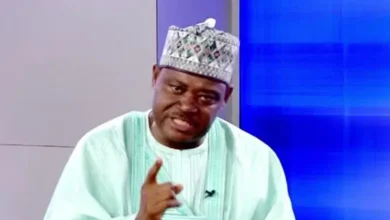
A former Special Adviser on Political Affairs and now a key member of the Movement for Credible Elections, Dr Usman Bugaje, has warned that attempts to muzzle opposition parties will fail. He accused the ruling party of infiltrating and dividing opposition groups while lamenting that Nigerians are yet to enjoy the fruits of good governance. Speaking on Arise Television, Bugaje criticised the new electoral law as a deliberate tool designed to stifle opposition and create space for criminals. David Lawani reports
Your movement has raised concerns about a shrinking democratic space, warning that elections could become mere formalities. What exactly do you consider problematic about the current electoral rules?
I think Nigerians and viewers generally have been following the political drama unfolding in recent times. To properly understand the situation, we need to go back to the amendment of the Electoral Act. The new electoral law appears to have been deliberately designed first to weaken opposition parties and then create wider openings for criminal elements. You will recall the controversial aspect of the law that effectively decriminalised certificate forgery. Beyond that, several other provisions have been introduced that were previously inconceivable until this administration compelled the National Assembly to push through these amendments. In fact, even some lawmakers openly revolted. Nigerians witnessed scenes at the National Assembly where legislators openly protested and shouted in anger, as we had never seen before. That should tell you the kind of leadership and political culture we are dealing with in the ruling party today. Since then, several actions have followed, including the release of INEC timetables that appear carefully designed to ambush opposition parties and leave them with extremely limited time to prepare for elections. This is unprecedented in Nigeria’s democratic history.
Why do you think opposition parties have not aggressively challenged these developments in court, and why does it appear as though little resistance is taking place?
The reality is that sufficient time should ordinarily be given to all parties to organise properly. But what has happened is that the ruling establishment prepared in advance and then designed both the law and the election timetable in ways that leave opposition parties at a disadvantage. You can also see how they have quietly infiltrated major opposition parties such as the PDP and the ADC, and now even the SDP. They appear to be using political mercenaries to create confusion, suspicion and internal crises within these parties, both inside and outside the courts. In such an atmosphere, parties are left uncertain about whether they will even be allowed to contest elections freely. All these moves are clearly aimed at shutting out opposition voices. What surprises me most is that those behind these actions seem not to have learnt anything from Nigeria’s history. During the era of General Sani Abacha, despite the military government’s enormous powers, similar attempts were made to suppress opposition. Yet it failed. People were detained, others were killed, but the project still did not succeed. It is therefore astonishing that some people believe Nigerians are not watching or cannot see through what is happening. The entire strategy is so transparent that it is unbelievable.
Are you optimistic that Nigeria can still conduct elections that will be broadly accepted as free, fair and credible, or are you warning that the country may be drifting into a deeper democratic crisis?
Would you say this administration has delivered the basic dividends of democracy to Nigerians, contrary to what the government claims?
Your Movement for Credible Elections says it plans to bring together the INEC Chairman, commissioners, presidential aspirants, civil society groups and other stakeholders to restore confidence ahead of 2027. How exactly do you intend to achieve this, and what outcomes are you hoping for?
Our goal is to salvage the situation before it deteriorates further. I believe this is the most responsible and patriotic course of action at this moment. We want to bring all critical actors and stakeholders together in one room to collectively examine the state of the country and discuss how to rescue our democracy. Nigeria is a country we all have a responsibility to build. Millions of citizens are struggling daily to survive. Many cannot even afford basic food. As leaders and stakeholders, we owe them solutions. Nigeria aspires to be the giant of Africa and a leading force on the continent in the 21st century. If those currently in power have forgotten why leadership exists, then it becomes necessary to remind them. We want to engage INEC directly on what it must do differently. We want all political actors under one roof, asking difficult but necessary questions: Why are things unfolding this way? Why are democratic institutions being undermined? What exactly is happening to our political system? The objective is to give those in authority one final opportunity to reflect, regain perspective and confront the realities facing Nigerians today.
What is your reaction to the recent court judgement nullifying INEC’s election timetable?