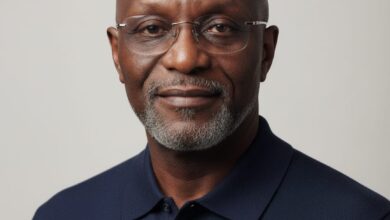
By Lemmy Ughegbe, Ph.D
President Bola Ahmed Tinubu made perhaps the most consequential declaration of his presidency in his Independence Day address on October 1.
After three years of asking Nigerians to endure the pains of economic reform, he announced that the country had reached a turning point. The age of reform, he said, had done its work. What begins now is the “age of prosperity”.
It is a bold declaration. It is also a promise Nigerians will remember.
In our intensely partisan environment, there is a temptation to respond to everything government says from predetermined positions.
Tinubu’s supporters will point to improving macroeconomic indicators as evidence that the reforms are working.
His opponents may dismiss the declaration as political rhetoric disconnected from everyday hardship. Neither response adequately confronts the more important question: what should prosperity mean to Nigerians who have endured the reforms?
To his credit, Tinubu attempted to answer that question himself. He said prosperity should not merely mean a larger economy, abstract numbers or better statistics.
He defined it in terms of farmers producing profitably, factories enjoying reliable power, businesses obtaining credit, young people finding productive work, affordable food and transportation, accessible education and families facing tomorrow with confidence.
That definition may ultimately prove more important than the declaration because the President has effectively provided Nigerians with the yardstick by which his reforms should henceforth be judged.
There are encouraging signs. Nigeria’s economy grew by 4.2 per cent in the first half of 2026, compared with 3.9 per cent a year earlier.
Foreign reserves reached $51.9 billion by the end of July, while inflation has fallen substantially from its earlier highs. The World Bank acknowledges that Nigeria’s macroeconomic performance has improved as reforms have strengthened external and fiscal positions.
These are not insignificant achievements, and pretending otherwise would sacrifice analysis on the altar of politics.
But the World Bank also provides the necessary caution: growth remains insufficient to generate enough productive jobs and materially reduce poverty.
Household incomes have yet to recover fully, and millions of Nigerians continue to struggle with high living costs. Therein lies the paradox of the Nigerian economy today: the numbers can be improving while the people are still hurting.
That is not necessarily contradictory. Foreign reserves can improve long before the price of garri falls. The government revenue can rise without immediately increasing a worker’s purchasing power.
Inflation can decline while prices remain painfully high. GDP can grow while millions remain poor.
The challenge for the Tinubu administration, therefore, is no longer simply to prove that the reforms were necessary. Nor can government indefinitely ask citizens to judge success by what might have happened had the reforms not been undertaken.
Having declared that the age of prosperity has begun, government has moved the conversation onto different terrain.
The question now is: when will Nigerians feel it?
That question became even more urgent barely a day after the President’s declaration, when public servants commenced a three-day warning strike over the cost of living.
Their demands include a reduction in petrol prices to N500 per litre, a wage award and negotiations towards a new national minimum wage, reflecting their contention that present incomes have been severely eroded by economic hardship.
The timing could hardly have been more instructive. On October 1, the President pointed to economic growth above four per cent, falling inflation and stronger reserves as evidence that Nigeria had emerged from the most painful phase of reform.
By October 2, public servants were withdrawing their labour because, from their perspective, the cost of living remained unbearable.
Neither reality necessarily cancels the other. Indeed, their coexistence captures perhaps the central economic challenge confronting Nigeria today.
The macro-economy may genuinely be stabilising while millions of households remain financially distressed. Reserves can rise while purchasing power falls. Inflation can moderate while prices remain high. GDP can expand without the worker’s salary buying more.
This is precisely why the next phase of reform must be judged not simply by whether the numbers improve, but by whether the improvement travels from government spreadsheets into Nigerian homes.
If inflation is falling, Nigerians should eventually encounter that decline in the market. If government revenue has increased, citizens should experience it through better roads, schools, hospitals, security and public transportation.
If foreign exchange has stabilised, businesses should enjoy greater certainty and consumers should ultimately benefit from reduced pricing pressures. If economic growth has returned, it must create jobs. And if subsidy removal was necessary to rescue public finances, the fiscal space created must become visible in the lives of those who bore its consequences.
Otherwise, reform risks becoming an economic success story ordinary citizens can read about but cannot recognise.
There is another responsibility accompanying the promise of prosperity: government itself must demonstrate restraint.
Citizens repeatedly asked to sacrifice are entitled to evidence that those governing them understand sacrifice too. Prosperity cannot be preached convincingly from a political system perceived as excessively expensive.
The legitimacy of difficult reforms depends partly on a sense that burdens and benefits are fairly distributed.
This is why Tinubu’s Independence Day declaration should not merely be treated as political rhetoric. It should be preserved as a social contract.
The President has defined the destination: affordable food and transportation, reliable electricity, accessible education, productive employment, profitable farming, thriving businesses and families confident about tomorrow. These are practical benchmarks. Nigerians are entitled to measure the administration’s record against them.
Nigeria could not indefinitely sustain every economic distortion inherited from the past, and postponing difficult decisions had itself become a national habit.
But acknowledging the necessity of reform does not require citizens to romanticise suffering, nor does recognising economic stability mean accepting hardship without an end date.
Reform is a means, never the destination. Prosperity is the destination.
And prosperity ultimately has a simple test. It is not what government says Nigerians have achieved. It is what Nigerians discover when they enter the market, pay electricity bills, board a bus, send their children to school, seek medical treatment, look for employment or calculate what remains of their salaries at month’s end.
Tinubu has declared that Nigeria has passed through its Red Sea and that the Promised Land is within sight. It is a powerful metaphor. But announcing the Promised Land is different from arriving there.
Nigeria may indeed have survived the surgery. The next task is ensuring that the patient can finally live.
*Lemmy Ughegbe, Ph.D, FIMC, CMC
Email: lemmyughegbeofficial@gmail.com
WhatsApp ONLY: +2348069716645