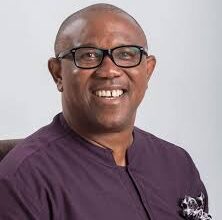
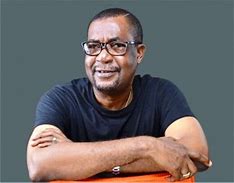
President Bola Ahmed Tinubu has forwarded the names of two nominees to the Senate for confirmation as chief executives of the Nigerian Midstream and Downstream Petroleum Regulatory Authority (NMDPRA) and the Nigerian Upstream Petroleum Regulatory Commission (NUPRC).
The nominations follow the resignation of Engineer Farouk Ahmed, former Chief Executive Officer of the NMDPRA, and Gbenga Komolafe, who resigned as Chief Executive of the NUPRC. Both officials were appointed in 2021 by former President Muhammadu Buhari to head the two petroleum regulatory agencies established under the Petroleum Industry Act (PIA).
In separate letters to the Senate, President Tinubu requested the expedited consideration and approval of Oritsemeyiwa Amanorisewo Eyesan as Chief Executive Officer of the NUPRC and Engineer Saidu Aliyu Mohammed as Chief Executive Officer of the NMDPRA.
The nominees are described as seasoned professionals with decades of experience in Nigeria’s oil and gas industry.
Eyesan is an Economics graduate of the University of Benin and spent nearly 33 years with the Nigerian National Petroleum Company Limited (NNPC Ltd) and its subsidiaries. She retired as Executive Vice President, Upstream, in 2024, and previously served as Group General Manager, Corporate Planning and Strategy, from 2019 to 2023.
Engineer Saidu Aliyu Mohammed, born in 1957 in Gombe State, holds a Bachelor’s degree in Chemical Engineering from Ahmadu Bello University, Zaria, obtained in 1981. He was also announced on Tuesday as an independent non-executive director of Seplat Energy.
His career spans key leadership roles, including Managing Director of the Kaduna Refining and Petrochemical Company and the Nigerian Gas Company. He has chaired the boards of the West African Gas Pipeline Company, Nigeria LNG subsidiaries, and NNPC Retail.
Mohammed also served as Group Executive Director and Chief Operating Officer of the Gas and Power Directorate, where he provided strategic leadership for major gas infrastructure projects and policy frameworks, including the Gas Masterplan, the Gas Network Code, and contributions to the Petroleum Industry Act.
He played prominent roles in the delivery of landmark projects such as the Escravos–Lagos Pipeline Expansion, the Ajaokuta–Kaduna–Kano (AKK) Gas Pipeline, and Nigeria LNG Train projects.
The President urged the Senate to consider and confirm the nominees in the interest of continuity and effective regulation of the oil and gas sector.