We enrolled over two million out-of-school pupils in six months – Mamman, Education Minister

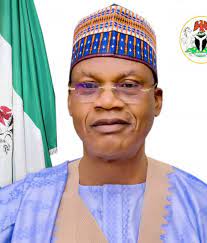
The Minister of Education, Prof Tahir Mamman (SAN), said that Federal Government has enrolled over two million out-of-school children in the past six months. He also spoke about the government’s plan to integrate the Almajiri school system in the North, in this interview with Channel TV ‘Politics Today’, monitored by Linus Aleke
The latest UNESCO report reveals that Nigeria has 10.5 million out-of-school children, how many of this number have you been able to take out of the street?
Well, I don’t want to go into the issue of figures, whether it is 10.5 or less or more but the fact is that we have millions of Nigerians who are supposed to be in school, who are not in school at the moment. We are addressing first of all the problem of figures and I will tell you how. It is one of the four anchor pillars that we have come up with for us to know how many people we have out of school. We need to settle the issue of data in the education system if not the whole country but what we have been able to do in the last six months that we came on board is to enrol up to two million plus out-of-school children through some of our agencies in the ministry. We have an agency set up specifically for that purpose, but it is yet to take off fully because we are still waiting for waivers from the head of service. But we have not been resting. We plan to ensure that we address the issue of out-of-school and at the same time close that tap that is breeding out-of-school children. I liken out of school to a pool of water, and if you clear that pool of water and are unable to close the tap that is feeding the pool then you have not solved the problem. We are working on a track policy, addressing out-of-school and then trying to close that gap.
Is the threat by some northern governors to scrap the Almajiri schools built by Goodluck Jonathan’s administration going to affect your plan to reduce the number of out-of-school children in the North?
I am again not going to comment on what the governors do or not do, because that is their terrain and they are entitled to adopt policies within their states. But one thing is certain, if my view is anything to go by, I think it is possible to have the two systems integrated and that is the best way to go. We are having conversations with the governors and immediately after this holiday, we are going to engage them again. Almost 90 per cent of secondary education in Nigeria is within the domain of the states and local government. The Federal Government has only the unity schools and some of the technical colleges- that is all the Federal Government is directly in charge of and of course the tertiary education. Because of this acknowledged problem in the basic education level, the problem has come back to the Federal Government. Secondly, which is also right, the existing legal instrument confers on the Federal Government through the Ministry of Education the powers to set minimum standards for all levels of education in Nigeria. So, through that window, the Federal Government has a responsibility to ensure that minimum standards are met in the delivery of education at all levels. Through this window, the Federal Government has to come in. We have a crisis at hand and it is a national crisis. The Federal Government cannot just wash off its hands and say that it is a state matter.
Will you be proposing a scrap of the Almajiri school system?
I would not propose that. What I am focusing on is education. The system can be reformed. You could see the value of it in areas where it has successfully been integrated. It comes with good and sound moral values that are embedded in it. There is no conflict between the Western style of education and the Islamic style, if they are properly implemented and integrated. Where we have successful integration, there would be no form of conflict or exploitation that you mentioned earlier. This is because the children would be fed, and there would be provision for water and sanitation. And even those who teach them, the teachers and the mallams will benefit from the system. The issue of standardization will also be looked into when the process of integration is completed.
Is the policy of the Almajiri school system as conceptualized by Jonathan’s administration still in force or it was jettisoned by Buhari’s administration?
I did not see any documents relating to that when I took over as Minister. What we have now are the physical structures put in place by Jonathan’s administration and that is what we are using. But I know that there are some states where they are fully operational. States like Borno and two others had been able to institutionalise the system in a more refined and integrated manner.
Is the school feeding programme still active?
It is not active, the President has suspended it together with those policies that came with it. We are still waiting for the final decision on it but I remembered that the President talked about reverting it to the Ministry of Education, where it should have been domiciled from inception. A committee will recommend for the policy to be formalized and that is what we are waiting for. It is a fantastic programme, it has worked elsewhere in the world.
What do the statistics on the school feeding programme in Nigeria reveal?
It is fantastic. Where it worked, it motivated students to come back to school or remain in school. It was a very laudable policy and the President has said that he wants the policy in place. It serves a huge purpose of keeping the students in school. Even if it is to get one mill in a day, for a lot of parents, it makes a lot of economic sense and for the country, it is a major driver for enrolment and for them to stay and continue with their education.
To what extent has the federal government resolved the ASUU crisis that often results in strike action?
The issue is settled about academic staff but there are still outstanding issues about non-academic and technical staff, but the government is looking into that.
The unions have blamed you for that, how valid is that?
SSANU and NASU know that I am one of them and I have their sympathy in terms of getting what is due to them and they know. We are doing everything possible to get relief for them.
What is delaying their emoluments even when it has been approved by the president?
No, it is not approved. If we can stop.at the level of communication problem, I will agree with that. But remember the foundation for this crisis. There was a court judgement on no work no pay. So for ASUU to get four months’ pay was a discretion on the part of the President. It doesn’t automatically transfer, but the matter is already under consideration. We are on a positive progression on this matter.
Can you put a specific timeline to this, I mean when the government can seek out the payment?
I don’t think it is safe to put a time on it. It is safer to say that we are on it and we are pushing. In any case, the non-academic staff were not on strike for the same period as the academic staff. Theirs were just four months or so. If they are getting payment, it is going to be half of that if the president follows his actions about the academic staff.
Is it true that the government of the day rates the academic staff higher than the non-academic staff?
That cannot be right, there is no rating. They are in the same environment working independently to achieve a set goal. I believe that what is happening is a communication problem.
What the government had done was not deliberately aimed at favouring one against the other.
Can we authoritatively say that the era of strikes in our university is over under your watch?
That is our hope and we are working on it. That is our hope with the unions and that is also our understanding with them. The president has expressly stated that one of his desires in the education sector is for teachers and students to be in school. We can have an order in the education sector where people can come to Nigeria on sabbatical and planning is stable. Any time there is a strike and instability, there is no planning in that system, and you have students that ought to spend four years, spending six or seven years. So, the President is very serious about the desire to have stability. We have had a lot of interactions with the unions and we share with them the aspirations for the education sector, particularly tertiary education. They understand too that we share the same aspirations. We have committed ourselves to doing everything possible to support the system. You can see that the budget for education in the 2024 budget went up significantly.