By David Lawani
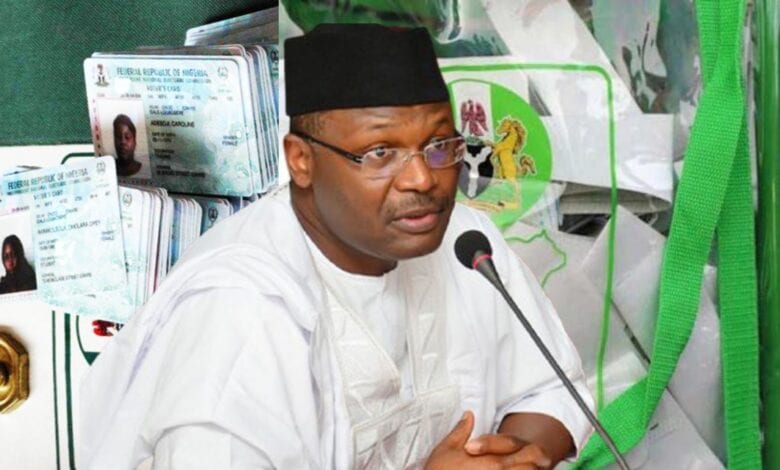
The Chairman of the Independent National Electoral Commission, INEC, Professor Mahmood Yakubu has disclosed that the Commission is prepared and willing to convert the lessons it learnt from the outcome of the Ekiti and Osun governorship elections saying such will assist it in charting a roadmap for the 2023 General Election which is just 164 days away.
This was part of the submission made by the Commission chairman in a retreat held in Lagos delivered by Prof. Bolade Eyinla, Chief Technical Adviser to Hon. Chairman, INEC, noted that the main objective of the retreat is to evaluate the conduct of the poll in both states so as to enable it to have a better grasp of the issues to come as it relates to next year’s election.
Eyinla explained that there is no doubt that the Commission had some difficulties coupled with challenges that will help to shape a better appreciation of election activities since every election season comes with its own unique features.
He said: ” The main objective of this retreat is to evaluate the conduct of the Ekiti and Osun Governorship elections from the initial state of preparedness to its execution. While it is unusual to undertake such a review outside of the context of a General Election, the significance of the two Governorship elections cannot be underestimated within the context of the new electoral legal framework and the number of new measures and innovations that were introduced by the Commission in the conduct of the elections.
” In doing so, it is important to undertake a comprehensive review and analysis of the application of the new and progressive provisions in the Electoral Act 2022, the new measures and innovations in the INEC Regulations and Guidelines for the Conduct of Elections, 2022 and the Training Manual for Electoral Officials and the effectiveness of the optimisation of the BVAS functionality for quick and seamless voter accreditation process.
” Therefore, in the course of the retreat, it is necessary to acknowledge the successes achieved, identify the challenges encountered and learn vital lessons in the preparation and implementation of activities for the 2023 General Election. It is for this reason that in this room the Commission and its officials, including some of the Supporting Resident Electoral Commissions, were responsible for the planning and conduct of the election.
” We also have with us leaders of Civil Society Organisations that not only directly witness the election but also gained useful insight from the report of the array of observers deployed to the field by the Organisations during the election. So also, are our Development Partners whose support will be required in addressing some of the identified challenges. We look forward to hearing their critical assessment of the election.
DSS gets court approval to detain terrorists’ negotiator for 60 days
” The expectation is that at the end of this retreat, based on a proper understanding and analyses of the issues and incidences associated with the two elections, we should be able to develop a concrete and comprehensive roadmap for improving the quality of elections and the electoral process. Novel ideas will be required to deal with various latent and emergent issues including the impact of insecurity on elections, rising costs occasioned by inflation, fluctuations in the exchange rate and increased prices of petroleum products, equitable voter distribution to Polling Units, vote buying, sourcing of ad-hoc staff, improved PVC collection strategy, hate speech, misinformation and disinformation, judicial interventions as well as the conduct and behaviour of the political class
“Based on the honest discussions and critical appraisals of the elections, it is expected that we will be able to build upon and reinforce the successes achieved, identify and address the encountered challenges and make concerted efforts to apply the lessons learnt in strengthening our administrative, operational and logistical arrangements for successful conduct and delivery of the 2023 General Election which is just 164 days away”, he submitted.
It will be noted that the Ekiti and Osun Off-cycle governorship elections were conducted on 18 June and 16 July 2022 respectively. Both elections were governed by the Electoral Act 2022 and the INEC Regulations and Guidelines for the Conduct of Elections, 2022 which contained several new provisions and innovations with a significant impact on the electoral processes.
The elections were not only adjudged by all stakeholders to be free, fair, transparent and credible but the outcome of the electoral contests was seen to be a true reflection of the wishes of the electorate adding that this perception not only elevated public trust in INEC it imbued the Commission with confidence on its systems, processes and procedures towards the 2023 General Election.
Tems, Burna Boy bag nominations for BET Hip-Hop awards
” The acclaimed outcome of the Ekiti and Osun Governorship election was not a fluke. It was as a result of the amount of time, energy, hard work, resources and dedication that the Commission and its Officials expended in conducting the elections. These include the release of the calendar and schedule of activities more than a year to the elections, rigorous planning and procurement processes, early release of adequate funds, and direct deployment of sensitive election materials without recourse to usual channels involving the Central Bank of Nigeria.
” Extensive consultations with all stakeholders, especially traditional rulers and religious leaders, effective recruitment and training of election duty officials, decongestion of overcrowded Polling Units, field testing of electoral technologies, especially the BVAS, an extension of the period for PVC collection and innovative methods to improve collection as well as deployment of National and Resident Electoral Commissioners to support the Resident Electoral Commissioners. These efforts were led by the Chairman who visited the two State twice, first to undertake a readiness assessment and meet with critical stakeholders and thereafter to undertake the usual joint INEC/NPF engagement with stakeholders”, he noted.