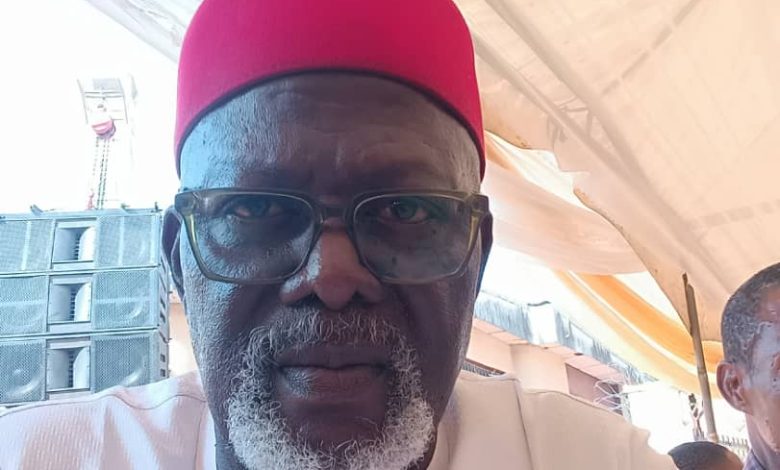
A chieftain of the Labour Party in Anambra State, Okey Chukwuogor, who is the Director-General of the Dr George Moghalu Governorship Campaign Organisation for the November 8 election, speaks on the LP’s readiness for the polls and the vote-buying menace. In this interview with CAJETAN MMUTA, Chukwuogor also talked about Peter Obi’s political base and his party’s agenda for security, education, and agriculture in Anambra.
The much-awaited November 8 Anambra governorship election is here. What is the level of preparedness of the LP and its candidate, Dr George Moghalu, especially amid alleged alignments and realignments? How do the remaining two weeks affect your candidate’s fortunes?
These final days are for consolidation and mopping up. We are, frankly, the candidate to beat, despite Professor Charles Soludo being the incumbent. Others have been copying our playbook. When we began intense market sensitisation and one-on-one engagements, they followed. We launched our state-wide campaign first; others followed suit afterwards. We then deepened the tempo—community to community, town to town, including places with just a single ward. Everywhere we go, we hold town-hall meetings with stakeholders. In every community, we first pay courtesy calls on the traditional ruler and the President-General. That tells us who is sincere and who might be acting out of fear of the governor. We have visited virtually every traditional ruler available. Our chances are bright. My single worry—and I throw this challenge to journalists—is the sharing of funds and vote-buying on Election Day. In the last by-elections in Onitsha North I and Anambra South Senatorial District, votes reportedly sold for ₦20,000 to ₦30,000. Who was buying? APGA—the party in government—is using common resources to open the vault of Anambra State and buy votes. We tell voters: if you sell your vote for ₦20,000, that’s ₦5,000 per year for a four-year mandate. You’ve prepaid your future, and the office-holder feels no obligation to you. That’s the rot.
Peter Obi, your 2023 presidential candidate, is rumoured to have two platforms—the ADC and LP. Where exactly does he stand?
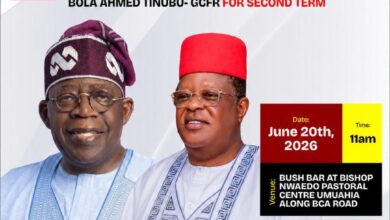
Anyone claiming Obi is in two places is being deceptive. Just days ago, he campaigned with us in Ogbunike; the week before, he was at Achalla, Okpuno, Nibo, and parts of Awka. Everywhere we went, he spoke as a leader of the Labour Party. He doesn’t campaign for ADC. ADC cannot lay claim to someone who isn’t in their party. At Nimo, Obi was present; leaders from Awka North, Awka South, Njikoka, Dunukofia, Idemili North and South attended our zonal rally. On our flag-off day, Obi spoke. He acknowledges that coalition talks exist, but everyone remains within their own parties. There is no guarantee that any coalition will use ADC, and, from all indications, Peter will not run on ADC. If ADC offered him a consensus ticket and prominent figures—say, Amaechi, Atiku, and others—publicly stepped down for him, that’s different. But he won’t be dragged into a money-driven delegate game only to be undermined. Obi wants to deliver in four years—what you can’t do in four, you can’t do in eight. He is LP and will continue to campaign with us. We speak frequently; often, he calls for updates. He’ll be around this week. Let ADC produce him at a rally if he’s theirs. During the by-election, Labour had no candidate; Obi supported Amamgbo—the wife of our late member in the State Assembly—because national issues in LP, now resolved, kept INEC from recognising our ticket at that time. Today, Abure attends national meetings and INEC functions; recognition is restored. Even then, the governor showed little sympathy and handled that candidacy politically.
Ndi Anambra have high expectations. What core agenda are you offering?
Security first, and fast. Give us three months, about 100 days, and Anambra will be safe. We’ll professionalise and integrate vigilantes in all 179 communities: document, train, equip, pay, and dignify them. Retired senior officers exist in every community, including the Army, Police, Air Force, Navy, and Civil Defence; let them help train and supervise. We’ll provide insurance coverage for all federal security personnel serving in Anambra—police, DSS, Army, etc.—so that their families are protected in the event of tragedy. People fight harder when they know their families won’t be abandoned. We’ll deploy a command-and-control centre and cameras across major entry points—Enugu/Amansea axis, Oba-Ofemmili/Nsukka, Asaba, Owerri/Orlu, Umunze/Uga—so we know who enters and exits. Facial matches will track movement patterns across Onitsha and other hubs. With drones to monitor forests and strong inter-agency collaboration, safety becomes achievable. Enugu once used a drone to locate a kidnapped priest; Anambra is smaller by land mass than about half of Enugu—this is not rocket science. Under Peter Obi, Anambra led nationally in institutional competitions.
How?
Recent indices reveal slippage: infrastructure in education ranked 33rd out of 38; NECO 26th out of 36; safety 34th out of 36; foreign investment attraction at near zero under Soludo. Without safety, nothing else moves. Agriculture will be scaled up to create jobs—encompassing land access, crop and livestock production, and support for household food gardens, spurred by the current hunger crisis. Education will be re-tooled for employability and entrepreneurship—from early childhood through tertiary—so graduates can create work, not just seek it. Functional education means graduates can support their parents with dignity, even if they cannot afford to buy them cars.
Religion often shapes Anambra politics. Are you worried about denominational divides?
I’m not. Sentiments exist, yes—just as ethnic hometown sentiments do. This cycle, four leading candidates—George Moghalu, Chukwuma Soludo, John Nwosu, and Paul Chukwuma—are Catholics, each with Anglican running mates. Nicholas Ukachukwu is a Pentecostal evangelist, as far as I know. Prof Soludo isn’t in the best books of any church now, nor with Ndi Omenala (traditionalists). His revenue enforcement—men wielding “aka-odo” (pestles) reportedly injuring traders—and aspects of burial laws have angered many. Laws that affect communities should be informed by input from markets and stakeholders, rather than being imposed upon them. When I lost my wife, I complied with the one-day burial rule, but parts of that law are naturally objectionable to people. Church sentiments will undoubtedly influence voting. Catholics listen to their priests. I’m Anglican—and, ironically, all Anglicans in the race are running as deputies, the so-called “spare tyre.”