Cross Udo, Abuja
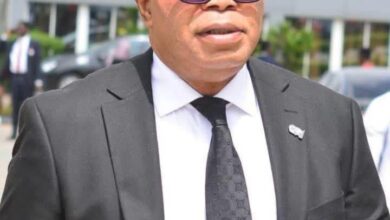
The Minister of Finance, Budget and National Planning, Mrs Zainab Ahmed, yesterday said President Muhammadu Buhari was worried about the hardship the redesign of the naira was causing the people.
The Minister said the harsh realities faced by citizens due to the introduction of the new naira notes by the Central Bank of Nigeria (CBN) was a necessary price to pay for the long-term health of the economy.
Fielding questions from State House correspondents when she featured at the 65th session of the State House Ministerial Briefing organised by the Presidential Communications Team at the Presidential Villa, Abuja, Mrs. Ahmed said President Buhari is not happy that the citizens are suffering because of the implementation of the naira redesign but was convinced that the policy will at the long run be beneficial to the economy.
According to her, the current hardships, though temporal, are required to stifle corruption and gradually transition into a cashless economy.
The Minister who likened the current situation being experienced by Nigerians to a “patient having a wound or deep sore” stated that “the patient must submit to an excruciating pain while undergoing treatments.”
‘You should have kept your mouth shut’
She said the government was, however, pleased that a sizeable quantum of old funds has been mopped back into the banking system, which will in turn give the regulatory agencies control over the nation’s currencies.
She said, “Of course we are worried, we are not happy that citizens have to queue and struggle to get their cash but this is a temporary situation.
“Let me give you an analogy, this situation can be compared to a patient having a sore and while treating the sore, you must apply some iodine or spirit which is usually very painful.
“It is something that needs to be done at this time. But the Central Bank has been responsive in terms of providing some extension and also some explanation that before the closing date, it is not all over. There are still opportunities for citizens as provided for under Section 20(3) of the CBN Act, for people to take their old currency to the CBN for redemption”
“Mr President is not happy that citizens are suffering but come to the closing date which the Central Bank of Nigeria has given, it will not all be over as a window still exist for people to return their old notes.
“There is also the positive side to it, which is that a lot of currency has been mopped up back into the system but has achieved a big level of success, the only thing is the pain, which is regrettable and which is transient and temporary.”
The Minister also expressed surprise over the latest Moody’s report on Nigeria, which downgraded the long-term issuer rating of the Government of Nigeria to Caa1 from B3, and a change in the outlook to stable, on January 27th, 2023.
“I want to also say that Moody’s report or downgrade came as a surprise to us. Because we had presented all of the work that we have been doing in stabilizing the economy.
“But they are external rating agencies that don’t have the real understanding of what has happened in the domestic environment”
The international rating agency, Moody’s Investors Service, also downgraded nine Nigerian banks, following its downward review of Nigeria’s rating last week.
The downgraded banks include Access Bank Plc, Zenith Bank Plc, First Bank of Nigeria Limited, United Bank for Africa Plc, Guaranty Trust Bank Limited, Union Bank of Nigeria Plc, Fidelity Bank Plc, First City Monument Bank Limited, and Sterling Bank Plc.
She, however, urged Nigerians to look forward to the S&P rating due for release in a few days, adding that “it is expected to present a better outlook for Nigeria.”
Recall that in November last year, the CBN announced that it will redesign the N200, N500, and N1000 notes of the naira.
The nation’s apex bank gave January 31, 2023, as the deadline for the populace to return all old notes to commercial banks after which they will cease to be Legal Tender.
The decision generated a lot of controversies which necessitated the meeting between President Buhari and the CBN Governor, Godwin Emefiele in Daura on Sunday, January 29 where the later after the meeting announced a 10-day extension from January 31 to February 10, 2023.
The new dates also include a grace period of seven days (February 10-February 17, 2023) when Nigerians could return old notes to the CBN.
Speaking in Daura on Saturday, January 28, the President had argued that the FG’s currency swap is not meant to target innocent citizens but corrupt persons and terror financiers hoarding illicit monies.
He also assured Nigerians that the government will ensure that they and their businesses will face no harm from disruptions caused to the entire supply chain arising from the currency swap.
However, the scarcity of the new naira notes has become a thing of concern to many Nigerians, who cannot lay their hands on either the new notes or the old ones.