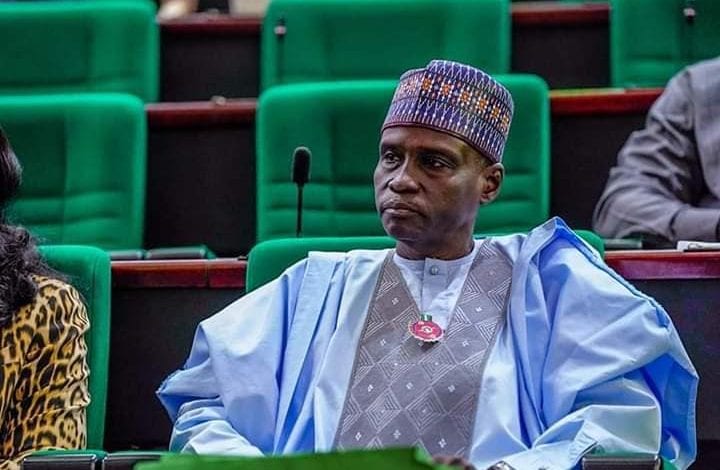
Mohammed Tahir Monguno, Chief Whip of the House of Representatives and Chairman Ad-Hoc Committee in charge of the Petroleum Industry Bill, which is about the oldest bill in the National Assembly speaks to Kassim Omomia on far-reaching national issues. Excerpts:
The Petroleum Industry Governance Bill, PIB is about the oldest Bill in the National Assembly. What has happened to it all this while and what is the difference between previous PIBs and the 2020 version?
I think the only difference now is that there have been series of stakeholders’ engagements across the nooks and crannies of the industry to make sure that there is consensus with regards to the nitty-gritty and modus operandi of the bill before it was formally presented to the National Assembly as an executive bill.
So, because of the robust engagements of the stakeholders in the industry and equally the engagement of the National Assembly, it is our hope and prayers that the bill will have a smooth passage this time around. We are not saying that the bill will go back the same way it was presented to us, definitely, there has to be some changes here and there in tandem with the outcome of our public hearing.
We are not going to rubber-stamp the bill, definitely, there has to be another series of stakeholders’ engagement by way of a public hearing to make sure that at the end of the day, the bill is a replica of the wishes and aspirations of the people and not only the stakeholders in the industry. And it is our commitment to pass the bill before the end of the first quarter of next year.
So what is the real difference between this 2020 and the previous ones? Has any part of it, whether the governance aspect or any other section been passed or what you are doing now is to pass the whole gamut of the PIB 2020?
What we are doing now is the whole gamut of the PIB that is brought back. You know in the initial bill, there are a lot of disagreements with regards not only about the good governance and the fiscal aspect of it but the host community aspect of the bill of which there was no consensus then. But now we are dealing with concerns of the governance, fiscal and the host community issues. We are looking at the whole gamut this second time.
We are told that the host community input into the bill has always been the challenge because most members of the National Assembly are not too disposed to agreeing with that aspect because they believe that the Niger Delta region has received too much attention and interventions from the federal government. This time around, how are you going to navigate such contours and ensure that every aspect of the bill currently before you are addressed and passed accordingly?
I don’t want to preempt the outcome of the public hearing we are going to conduct. It is the outcome of the public hearing that will determine the direction which the National Assembly will go. And as the chairman of the committee, I don’t want to sit down here and preempt anything than to assure Nigerians that the bill right now is a product of engagements with all the stakeholders including the host communities and we will do the needful arising from opinions, views gathered from the public hearing.
There is this other critical issue and fears that in the proposed bill, the minister is wielding enormous powers. Are you going to reduce such powers or railroad that section into the final draft the same way it was brought to you by the executive?
If it is in the opinion of the stakeholders and Nigerians in the course of the conduct of the public hearing that the bill as it is presented now has ceded enormous powers to the minister, then we go by the opinion of the public and the stakeholders.
But if the opinion of stakeholders and Nigerians in the course of the public hearing is to the effect that the minister deserves enormous powers, we leave it. We‘re always working in tandem with the wishes and aspirations of the stakeholders in the industry and generality of Nigerians.
What will be the benefits of the new bill to Nigerians one, and then to the industry that has been bedevilled with so many challenges over time, from the up, mid and the down streams?
The bill will be in tandem with international best practices, that will attract foreign direct investments to the industry thereby increasing our foreign reserves. So I assure you that if the Bill is passed it is capable of attracting more investments to the sector.
To that extent, are we saying that the bill will be capable of reducing prices of petroleum products, especially petrol?
As per the Bill, the industry will be deregulated; the prices, particularly of PMS is going to be determined by market forces rather than paying huge subsidies by the government of which few persons are benefiting. So it is going to be a deregulated industry and the PMS prices will be determined by market forces.
Another round of constitution review is ongoing. Is it that the current document is not meeting the wishes and aspirations of the people or we are just engaging in annual rituals by inaugurating another constitution review committee? Are Nigerians really benefiting from these processes?
A constitution is supposed to be an organic document that changes, taking into considerations the objective and subjective realities of the time. A constitution is not supposed to be static.
There are a lot of lacuna in the constitution which the initial drafters have not envisaged at the time it was drafted that have now reared their head that requires amendments and bring it in consonance with existing realities in the society. Issues of devolution of powers, state police, true federalism. Issues that were not envisaged, like mainstreaming gender inclusion. These are issues that were not germane at the time the constitution was drafted but have now occupied public discourse and have become necessary for our body polity. Thus, our constitution needs to be amended to take into cognizance the existing realities of the society.
Will fiscal federalism be the same thing as restructuring the entire country?
Whichever way you call it. This is my own personal opinion. For example, when it comes to issues that are in the exclusive and concurrent legislative list, there are some issues that need not be in the exclusive legislative list. That should be shifted to the concurrent list, like railways, power. If state governments say they can come together and build railways across their region, then let them be. If a group of governors or states feel that they can come together and generate power and sell among themselves, then why not.
Even issues bothering on the exploitation of mineral resources, these are issues that are supposed to be in the concurrent list but at the time the constitution was drafted it was not germane then but has become germane now and for which the constitution needs to be amended.
And in the issue of gender mainstreaming, women constitute the bulk of our population but in terms of participating in governance and politics, they were marginalised. So we have to take deliberate and conscious steps to make sure they are now part and parcel of our governance and participation. So these are issues that have gained currency not even in Nigeria alone but in the world for which Nigeria is not supposed to be an exception.
What exactly are you trying to do for women, increase participation or give them 50- 50 equal slots?
It depends on the outcome of the exercise. At least, there should be a deliberate policy of making sure they participate, whether it is 50-50 or 60-40. What I mean is that their participation should not be at the whims and caprices of anybody or an institution but it is in the constitution for which it shall be implemented.
So what about the issues bothering local government and state creation? Will this exercise be able to create new local governments and states should there be any request?
If it will not torpedo anything. You know states and local government, particularly states creation are sensitive issues, processes, so if they are not going to disrupt the entire exercise, like throwing away the baby with the bathwater. I think it is good for the committee to attempt to doing it but if in the wisdom of the committee or the National Assembly, indulging in such exercise as creating states and local governments will create more problems, then I think there is no need of going on with such exercise.
What will you do differently to make the Independent National Electoral Commission, INEC, work in this round of constitution review, bearing in mind the perceived shortcomings of the election management body in past elections, vis-a-vis stopping thuggery, state actors from using state apparatuses like the military, security operatives against opposition and political opponents?
One is guaranteeing the independence of the Independent National Electoral Commission, INEC. Two, most of these issues are electoral offences and electoral misdemeanours. The best way to tackle it is by creating an independent electoral offence commission and tribunal. I think that’s the way to go.
So why is it not in place, why is it not functioning?
We will attempt to do it now.
How would you react to the EndSARS protests and the general state of the nation now, especially as it is perceived in some quarters that the protest now attempts to pull the administration of President Muhammadu Buhari down?
With regards to EndSARS protests, the young Nigerians engaged in it have the right to do so because we have the freedom of expression and freedom of movements enshrined in the constitution.
They have the right to ventilate their opinions in a peaceful, lawful manner. But when it degenerates into violence and burning of public buildings and causes chaos and anarchy, that does not tantamount to peaceful protests any longer, and the government must take steps to nip it in the bud.
Generally, I support any peaceful protest that calls for an end to police brutality but when it degenerates into violence, chaos and anarchy I will not be in support and therefore there is need for the government to nip it in the bud.
But personally, I am from Borno State and we are against the disbandment of SARS because they have been of tremendous assistance to us in the fight against Boko Haram.
Even far above the military?
We are not saying far above the military because they are complementing the efforts of the military in the fight against Boko Haram. In some instances, they led the onslaught and dislodged Boko Haram. So they have been of tremendous assistance to my state, so they are useful to us.
So what will you tell the government concerning the demands of the youths?
This government is a democratic, responsive and responsible government and therefore it has to listen to the yearnings and aspirations of Nigerians and because of that as a democratic government they have already listened to the yearnings, concerns and aspiration and have already disbanded SARS in tandem with their wishes and aspirations.
I learnt that there are other demands of good governance, etc. A responsible government must heed to their demands but the problem is that the protesters don’t have a leadership which the government can engage. Government has already heard what they are saying with regard to bad governance, corruption and I believe the government will take steps to ameliorate the situation just like it did in ending SARS.
So what will you tell Nigerians now, especially the EndSARS protesters and those who are in despair because of the bad state of our economy, given position as the number four man in the House of Representatives?
Nigerians should not despair; the coronavirus has brought so much economic hardship with so many countries still in recession. Nigeria is also passing through these difficult phases; mind you we are a mono-economy that depends solely on oil.
But let us persevere and be patient with the government. For EndSARS protesters, let them sheathe their sword and await government’s intervention, especially as it has heeded their call by disbanding SARS.
Here we are in another budget cycle. Few weeks ago, the president presented a N13 trillion 2021 budget. Do our budgets make impacts in the socio-economic life of the people?
There are impacts from our budgets. For instance, I have succeeded in taking solar power to my constituency that is worth N300m. The project is ongoing now and I have brought the Monguno water scheme. As a result of the influx of internally displaced persons, IDPs, to Monguno, the water facilities are overstretched.
Therefore, I attracted a N500million Monguno water scheme, where a series of boreholes will be drilled around the town with a water treatment plant.
The work has been funded 50 per cent. So, if anyone says that Nigerians have not seen the benefits of the outgoing 2020 budget, I beg to disagree because this is what is going on right now in my constituency and I have trained and empowered about 1000 youths and women in various aspect of agriculture whereby start-up packs and some cash were given to them to go and pick the pieces of their lives that was destroyed as a result of Boko Haram insurgency.
But these are your initiatives?
Yes, but I put them in the budget.
But people say that the budget is not making an impact when you look at the deplorable roads; that you can no longer predict travel time from one state to another?
The Works Ministry takes so much from the budget with a view to fixing our roads. But it takes years for these roads to come into fruition. The Kano – Maiduguri, Lagos – Ibadan roads are ongoing like many other roads projects in the country. But the time of completion takes two or three years. Nigerians have to be patient to see these benefits which will definitely come.