By Cross Udo, Abuja
The International Labour Organisation (ILO) on Monday urged policymakers and practitioners to strengthen Nigeria’s social protection systems through evidence-based policies and coordinated implementation strategies.
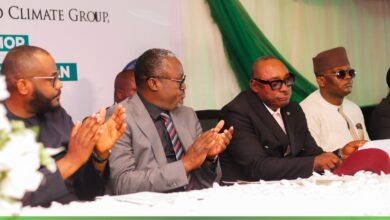
The ILO Country Director to Nigeria, Dr Vanessa Phala, made the call at the opening of an eight-day capacity-building workshop for policymakers on Monday in Abuja.
The programme, organised by ILO and UNICEF with funding from the European Union (EU, aims to deepen Nigeria’s social protection framework through the Transform Training of Trainers (TOT) initiative.
Phala said the training was designed to empower policymakers and practitioners to take ownership of social protection delivery sustainably and inclusively.
“We have done a lot in supporting the development and revision of Nigeria’s social protection policy. But now, we are focusing on building people who will drive the process,” she said.
She further stated that the ILO and UNICEF were implementing social protection projects in Abia, Sokoto, Oyo and Benue to ensure systems are context-driven and responsive to citizens’ needs.
“Our collaboration with UNICEF ensures that interventions are locally relevant. We want every policy and programme to reflect the realities of Nigerians,” Phala said.
She noted that the training would help close capacity gaps among practitioners and enable them to translate policies into practical actions that improve social welfare outcomes.
“This initiative is about turning policy from paper to practice. It’s about giving Nigerians the competence to implement social protection that truly changes lives,” she said.
Also speaking, the ILO Africa Coordinator for Transform, Mr Felix Mwenge, explained that the training would create a network of skilled trainers to sustain and replicate learning across the country.
“We are building a system that trains its own trainers. This is how we deepen knowledge, ownership and long-term sustainability of social protection in Nigeria,” he said.
Mwenge said the initiative was part of an African effort to institutionalise social protection capacity and ensure countries build resilient, knowledge-based systems.
“Our goal is to strengthen local expertise so that every country, including Nigeria, can sustain social protection without relying solely on external support,” he said.
He further said, “And the capacity we are building here also involves what we call management information systems, which has a lot to do with the social register. So you come with a lot of capacity and experience. What policy direction would you advise for the government? We need to spend more on social protection.
“We need more resources for social protection. The governments of Nigeria and other African countries need to create fiscal space to fund social protection. All of us should consider the cost of not investing in social security, which is a significant factor.
“When you support everyone, when you give somebody, you lift them out of poverty, people are happy. Harmony is restored and all that. But also these inequalities that exist in Africa, we know Nigeria is not exempt from.
“Inequality is high. The gap between the rich and the poor is just so huge. Social protection comes in as an intervention that closes that gap.”
Mr Emmanuel Danjuma, Project Manager for the ILO-UNICEF initiative, said the training was part of the Supporting Sustainable Social Protection Systems (SUSI) project, funded by the European Union.
“The SUSI project builds the capacity of policy makers and implementers in Abia, Benue, Oyo, Sokoto, and at the federal level in Abuja to manage social protection effectively,” he said.