Nigerian political elites collectively committed acts of mass suicide
‘Nigeria will operate better under parliamentary system of government’


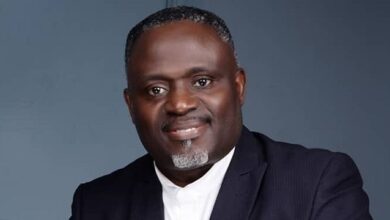
A former governor of Bayelsa State and member representing Bayelsa West Senatorial District in the National Assembly, Senator Seriake Dickson, speaks on the state of the nation, the presidential system of government, and other sundry issues in this interview on Channels TV ‘Inside Sources’, monitored by Deborah Onyofufeke
When you look at where Nigeria has been coming from and where Nigeria is today, would you say that the country is on course to the great Nigeria that many of us believe in?
Well, that is a very weighty question but it’s an appropriate inquiry. Let’s start with the foundational political work that the founding fathers of our country did. When they started forming the first political parties; talking about political contributions and grooming leadership in Nigeria, the NCNC, the Action Group, NPC, and down South, most people don’t talk about it, possibly many people don’t even know we had the Niger Delta Congress, formed and led by Harold Dappa-Biriye on whose platform Chief Melford Okilo got elected to the parliament before independence. Then you look at the second Republic, the Unity Party of Nigeria, NPN, and then the PRP, the GNPP, the NPP, it was quite an interesting time; I mean we’re growing up and for the First Republic, we read about it and then, of course, we all know it collapsed in 1966 in the coup. In Benin, 1983 as a young boy in secondary school where I was living, I had to trek for almost two hours to listen to Chief (Obafemi) Awolowo speak. I trekked from Lagos Road to a very prominent square, Urhokpota Hall, it’s still there in Benin City just to hear him speak. So, I think they had a very clear idea of the Nigeria they were fighting for, they had their differences no doubt and we shouldn’t be afraid of our differences. I mean as Sardauna, rightly put it, let’s recognise our differences and then see how we can forge consensus based on that, great approach, so they did well. But if you ask me, is Nigeria of today meeting up with the aspirations of the Nigeria of Nnamdi Azikiwe, the great Zik of Africa, is Nigeria meeting up with the aspirations and ideals that Chief Awolowo spent his life fighting for, or what Aminu Kano against all odds in the North stood up to fight for the interest of the common people or the Nigeria of Balewa and Sir Ahmadu Bello and all of that. Even the Nigerian of Harold Dappa-Biriye. The current Nigerian situation, does it measure up to the ideals and aspirations? I will say no, flatly no.
I like the fact that you are quite blunt as to what has happened when you compare the current set of political leaders and those of pre-independence posting and possible post-independence years. How do we get our present crop of political leaders to know that it is in their interest to make things work for the masses?
First, that’s a very important issue, and the Nigerian political class (elites), unknown to themselves have all collectively committed acts of mass suicide. Mass collective suicide and national destruction. The reason is that political service has been bastardised. It is not seen as a service; is seen as a very fast means to an end. An end that doesn’t serve the national agenda, an end that is about self. It’s not about shared values, it’s not about values and there’s not enough realisation in my view of the fact that our political leadership and service should be about ideals; ideals that are bigger than oneself, ideals that are far more fundamental than even one’s political party, ideals that are about improving the human condition.
There is an ongoing move to amend the Constitution, we hope that we get it right this time, and besides do you think that a parliamentary system will serve Nigeria better?
First, I am a believer in the Westminster Parliamentary System. I believe that in a nation that is as plural as we are, as diverse as we are; I mean cultural, religious, and social diversities in all these forms, the system of government that best suits our purpose should have been the Westminster Parliamentary System and with all due respect to our military leaders at the time, we are free to disagree with them, but we don’t give them enough accolades. Take for example, General (Yakubu) Gowon, who is also a father to me, who became saddled with the task of fighting the civil war to unite this country at a very trying moment, how old was he? 32. What were the degrees that he had; Sandhurst Military Training and other career training along the way and did a good job, so for all of them. So, I think they tried their best but I disagree with that decisive move they made, to change from the parliamentary that we started with, that we were already getting used to, it wasn’t perfect, yes, and the process meant to have been perfect, but they now took us to the presidential system. Away from India, away from Canada, away from several other countries, even the UK, especially, India, the same size, diversity, and so on. When you have a diverse nation, you preserve its diversities and you create a national ideal that protects everybody, that everybody is comfortable with, an ideal and national value that all can subscribe to and aspire to, that all can own up and defend and protect, which was why the first national anthem, the one some of us started singing in the primary schools – Nigeria we hail thee, our dear native land, though tribes and tongues may differ one brotherhood. That was a national ideal, okay, now we went to the presidential system, and in the presidential system what you are saying? You are saying that in a nation of 200 and something million people, in a nation of about 100 million registered voters, you are saying that all of us should come and queue and select one person. You haven’t invested much in the education of the people, you haven’t done a lot of work in the economic sense to lift the living standards of the majority of our people, we haven’t done enough urbanisation, and most of our people are living in rural communities and so on. Yes, we’ve made some strides and you now assume that all of these people will be nationalistic enough, will understand the national aspiration enough to realise that a man from Lagos represents their interests, to realise that a man from Adamawa, a man from Sokoto, a man from Bayelsa, so in 2015 you saw it, all they needed to do was not to interrogate the quality of policies, their only campaign was religion- He is not one of us, they may have meant well and I must say in the last 10 years, since 2015, in the APC led government, I’m not here talking about political differences but facts are facts. In 2015, this country went steps decades backward. All the gains, that had been made in the area of national integration as a way of addressing the crisis of national identity which must form the basis for a new nation, which was why Yugoslavia couldn’t last, yes, which was why so many nations, the USSR had to disintegrate. Human beings don’t just live on bread and butter and water, the human body also consumes respect and a sense of belonging. So, if you want the best from your Armed Forces for example; people who are wearing the same colours to go and fight and die, you must let them have the feeling that they can be the best they can and get to as high as their capacities and abilities go, and they should be proud to wear the Nigerian colours. I think the government before, managed it far better than the APC – from the Buhari government and even in this. You’re not asking about that but I must say it that the national integration appears to have suffered a retreat. What we have now is hegemonies.
During Goodluck Jonathan’s regime, some said people from the South-East, and South-South have dominated government. Also during Buhari’s time, we saw a lot of people from the North and now in Tinubu’s era, a lot of South-West people are holding sensitive positions, how do we get out of that conundrum that if I am in a position then the people I must put in trusted sensitive positions must be people from my ethnic stock?
You see leadership must show examples no matter how powerful those centrifugal forces are. The force of leadership and President Obasanjo demonstrated a lot of that and I take you back, most people don’t give enough credit because we don’t study history enough. You know that it was Sir Tafawa Balewa, our first Prime Minister, gentleman, who appointed Gen Aguyi Ironsi as head of the army, over and above Gen Zakariya Maimalari, a Sandhurst trained officer and one of the best at the time over other officers, such as Gen Samuel Ademulegun, who were even supported by the party system and even by the expatriate general wellbeing and others who were making their recommendations. It was to show an example they did the right thing, unfortunately, that government and that era ended in a very terrible way, not good for our country at all. You talked about Jonathan’s government in the South-West. Some of us know the little efforts that we try to make, I think it wasn’t intentional, it wasn’t an exclusion but the South-West in a way felt they didn’t get enough. For example, we tried to make someone from the South-West to be the Speaker but eventually, there was a change of mind, and I was in the House coordinating a number of these activities or one of the coordinators at least. The decision was taken to give it to Mulikat Akande, another of our colleagues, also from the West, so there was an effort made and when there was a rebellion, again fuelled by a lot of people, from within and without, I’m talking of the South-West, so, we ended up with a situation, an unintended situation where someone other than South-Western emerged as Speaker. Things could have been done differently, no doubt. Where there were errors of judgments, political judgments would there have been a greater push and maybe things rejigged a little bit more to actualise that, yes I saw the gaps, but you know the South-West was supportive in 2011, and we have not seized to thank and appreciated them for the first time someone from a so-called minority – South-South and specifically from Bayelsa and my boss, my leader, got elected. The South-West was behind us and we appreciate that and so I know that there could have been greater interaction politically and some of us have been the pillar, pushing for closer interaction – Niger Delta – South-West from AD to the Ijaw Movements and all the Fredrick Fasheun. All of them. I studied under all of them- the late Bola Ige, the late Pa Abraham Adesanya, Pa Ayo Adebanjo, and Oba Olu Falae, are still alive. They are all my fathers, we learnt under them and the idea was collaboration. I was Chairman of AD in Bayelsa and later became the National Legal Advisor of AD, but then I left because we disagreed. I disagreed with the leaders of our party, particularly, when Uncle Bola Ige, our leader now went on to become the Minister of Justice and Attorney-General of the Federation, and not only that the Federal Government under him instituted a lawsuit, the onshore/offshore dichotomy. Some of us felt that that was not keeping faith with the ideals upon which we came to do AD or which I delivered under my chairman, several senators, my current seat was Senator Diffa, in 1999. My current seat was won by AD, my party then. The House of Reps seat that I later came to win twice was also AD and for three assembly seats, I had an alliance working with NSM led by our father Senator Melford Okilo. I was trying to do back a coalition to bring them to join the AD because I was enamoured by the philosophy of the AD – true federalism, derivation at that time there was not 13 per cent derivation, and constitutional conference and sovereign national conference we used to call it at the time so all those were the things that pulled me out of the Ijaw Niger Delta activism to the mainstream politics and from the movement for democracy and justice under the late MD Yusuf, a great man, he was our leader.
So, let’s take it to the issue of the role just like you said of the AD leaders, the progressives of which you were their legal adviser then, and the role of the then Governor Bola Tinubu of Lagos in trying to advocate for true federalism and then what the party stood for. Today, you are in the Senate, he is in the presidency, do you think that he and the National Assembly should do everything possible to sort out a true Nigerian constitution for the nation today?
Yes, the Bola Tinubu we knew at that time, you know many things appear to have changed, but I believe that the essence of his progressive commitment is intact and just a few days ago I chaired a technical committee of both chambers that worked to fine-tune the student loan law that is having some challenges. So, I’m seeing commitment to welfarism which is all that we stand for. I think the Nigerian students, Nigerians would appreciate what he has done when the student loan eventually comes on board. Still, fundamentally in the area of true federalism and constitutional reform, the president doesn’t have a direct role. Still, the president can use what the Americans call the bully pulpit, to use his influence and authority to galvanize office. Still, I think there’s already a consensus emerging in the country.