

By Nathaniel Zacchaeus, Abuja
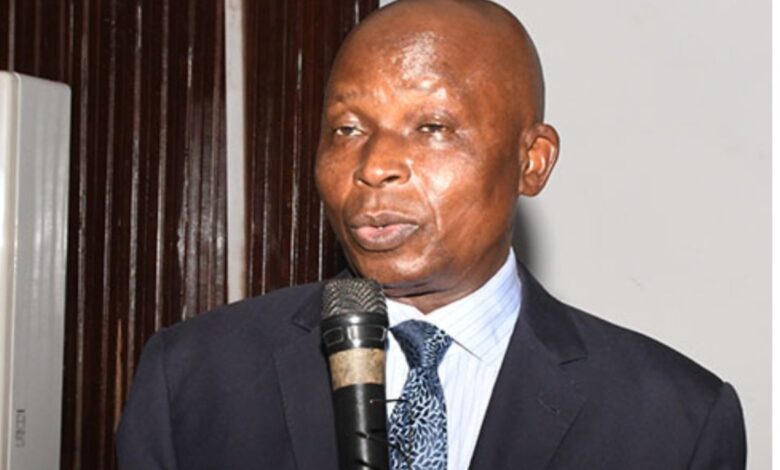
A ministerial nominee, Lateef Fagbemi (SAN), has described as wrong, the approach being taken by the Directorate of State Services to handle graft cases.
Fagbemi, who appeared before the Senate for his screening yesterday, explained how he would reform the activities of the DSS and other anti-corruption agencies if President Bola Tinubu appoint him as the Attorney General and Minister of Justice.
He said, “We fight corruption, but the way it’s being fought leaves much to be desired- that is the truth. The anti-graft agencies, the Economic and Financial Crimes Commission, and the Independent Corrupt Practices and other Financial Crimes Commission should be brought together and then unbundled.”
He said both bodies should be under the direct supervision of the AGF instead of carrying out independent investigations and prosecution without recourse to the minister of justice.
He said, “Investigation should not be handled by the same body. There must be a supervisory authority within the same system.
“If there is an investigation, another body should handle it while prosecution should be the business of another body. It does not augur well to ask the same authority to investigate and prosecute.
“We are also not patient enough. Investigation takes time, especially in serious corruption cases. The investigation should be thorough. You can take time to prosecute. The DSS should do its investigation before arrest instead of arresting before investigation.”
On disobedience to a court order, he said, “There is no government, especially the head who will want to joke with the judiciary.”
Fagbemi said, “Where we have disobedience to court orders is between security agencies.
“My advice will be, in matters of law, the attorney general should be involved. DSS cannot be an island in itself. EFCC cannot continue to behave as if there is no law. There is a law. If you want to do an investigation, you do an investigation before inviting the accused person,” he added.
READ ALSO:Five former govs, 14 others on Tinubu’s final ministerial list
*Alake explains how social media will be regulated
Another nominee, Mr Dele Alake while being screened by the senators, said the Federal Government needed to regulate the activities of the social media practitioners.
He said, “Social media has two sides, positives and negatives. The positive side is instant news, quick information dissemination, and faster communication. The downside is so detrimental to a good and decent society.
“What I will support is the strengthening of regulations. In my time as editor, I discover that there are laws that guide our conduct in every area of human endeavours but the application of these laws has been very short.
“Even victims of libel and defamation and all kinds of negative things hesitate to also apply the laws against the culprit.
“The most important thing for an editor is to avoid litigation. The victims don’t apply the full weight of these laws when there is an infraction by any medium, whether social or conventional media.
“So, I will recommend strengthening our regulations and their application. It is not just to enact laws; they must also be tested. It is from testing that we will know the efficacy and efficiency of those regulations.”
On Press freedom, he said, “I was a practitioner and I am still a practitioner and I subscribe to the aphorism in journalism that once a reporter, you are a reporter for life.
“So, the ideals, the tenets, the principles, I am one of those who uphold it and will uphold it seriously, assiduously with every sinew in my veins to make sure that press freedom is sustained in this country.
“However, to every privilege, there are responsibilities and I am not advocating for absolute press freedom without responsibility.
“I have the cause to say to some group of media men just a few days back that those of us who are gatekeepers: Editors, News Editors, and all that have an onus on them to regulate whatever comes out for the sanity of our society because information is power.
“When information is irresponsibly published, it can lead to cataclysmic effect, destruction, chaos, and social upheaval in the society. So, I am very, very vehement about the responsibility aspect of the Press and I will uphold it till the very last atom of my breath.
On tourism, he said security was sine-qua-non to development hence there was the need to have peace of mind before one can explore tourism to galvanise the nation’s revenues.
He said the security of lives of property must be guaranteed before one can go to the bush to watch animals and feel nature and other natural resources.
“If there is the right infrastructure like access roads, electricity, after addressing the issue of security, tourism would thrive,” Alake added.
*Akpabio, Bamidele, prevents Alake from reciting National Anthem
The Senate President, Godswill Akpabio, yesterday prevented Alake from reciting the second stanza of the National Anthem.
Alake was asked by the Minority leader, Senator Simon Mwadkwom, to recite the second stanza of the National anthem after taking the nominee up on his old social media post.
Mwadkwom said, “I read a statement where you labelled some particular party as wild dogs, selling blood online. Are you aware of that statement? Did you say that?
“As someone who will be the image maker if eventually appointed by Mr President as the Minister of Information of this country, we are supposed to be conversant with our National Anthem.”
The minority leader said, “Mr President, if you would allow me, I will like for the nominee to recite the second stanza of the national anthem.”
However, Akpabio and the Senate Leader, Opeyemi Bamidele shielded the nominee from answering any of the questions.
Bamidele said, “I have come under order 12 and it is important that this is stated. No senator shall stand up to talk to other senators unless to call attention to a point of order or privilege arising.
“(B) Order 55, section 12 makes a provision that a standing senator may be interrupted. The issue was raised because the Senate leader raised an order on campaigns.
“We are screening a ministerial nominee; we cannot be bringing an issue of a political party which was done under pressure months ago.”
The Senate President said campaigns were over-stressing that nominees were supposed to tell the Senate what they would bring to the table and not to sing songs.
Those who were also screened were Prof Ali Pate, Mohammed Idris, and Mrs Doris Uzoka.


