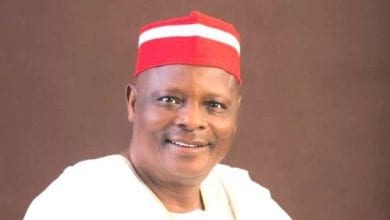
Nigeria must prioritise domestic crude supply now- Prof Ife, development economist

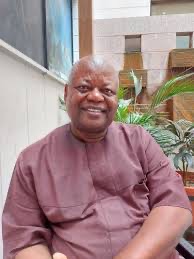
A London-based development economist, consultant and public policy expert with more than 30 years’ experience, Prof Ken Ife, has called on the Federal Government and the Nigerian National Petroleum Company Limited to declare “Force Majeure” in Nigeria’s oil and gas sector. Speaking with Anthony Otaru, he urged strict compliance with the Petroleum Industry Act (PIA), especially the Domestic Crude Obligation, to strengthen local refining and protect the economy, among others
The Federal Executive Council recently approved the payment of 100 per cent of a civil servant’s final annual salary as gratuity for retirees beginning January 1, 2026. Given the backlog of pension arrears and rising government debt, do you believe this policy is sustainable?
Civil servants’ entitlements are statutory obligations and therefore not open to debate. Once the law provides for those benefits, the government has a responsibility to honour them. In fact, the financial burden involved is relatively small compared with the enormous waste that often occurs in government spending, particularly the frequent and expensive official trips abroad. If such waste is reduced and resources are better managed, meeting these obligations should not pose a serious difficulty. In addition, global geopolitical tensions, especially the ongoing United States–Iran confrontation, have pushed crude oil and petroleum product prices significantly higher. For an oil-producing country like Nigeria, this should translate into higher revenues if properly managed. With prudent fiscal management and reduced leakages, the government should be able to sustain the gratuity policy while gradually addressing the backlog of pension payments. The real issue lies not in the policy itself but in the discipline applied to public spending.
What practical steps should the government take to protect Nigerians from the negative impact of rising energy prices?
The Nigerian government and the Nigerian National Petroleum Company Limited should declare Force Majeure in the oil and gas sector and move quickly to fully comply with the Petroleum Industry Act, which prioritises Domestic Crude Obligation. This means ensuring that local refineries, including the Dangote refinery and other domestic refiners, receive their full allocation of crude oil supply before exports are prioritised. Many countries are already taking protective measures. China, Russia, and Kazakhstan, for example, have restricted or banned the export of refined petroleum products, especially during crises such as the COVID-19 period, to protect their domestic markets. Nigeria, however, appears to be doing the opposite. While the Dangote refinery requires about 20 shiploads of crude oil, with around 13 shiploads needed to meet domestic demand, NNPCL has reportedly been supplying only five shiploads. At the same time, Dangote is charged a premium of about $3 per barrel for this supply. Yet, the company is forced to source additional Nigerian crude through third-party marketers at premiums as high as $6 per barrel. This situation is clearly counterproductive and frankly embarrassing. Nigeria should prioritise its own refining capacity rather than making it difficult for domestic refineries to access crude.
Nigeria allocated between ₦13 trillion and ₦16.3 trillion to debt servicing in the 2025 budget, while only about ₦3.10 trillion, roughly 17.7 per cent of the capital budget, has been released so far. Can such a fiscal structure support economic growth?
Without a doubt, it cannot. An economy cannot grow when a large share of government revenue is consumed by debt service rather than invested in productive activities. The spiralling debt burden and rising debt service costs are largely the result of fiscal rascality, unlawful borrowing, and loans taken for non-productive activities incapable of repaying themselves. This approach runs contrary to both the spirit and the provisions of the Fiscal Responsibility Act (FRA) 2007, which requires that borrowing should be tied to projects capable of generating economic returns. When borrowing is directed toward productive investments, such as infrastructure or industrial development, the resulting growth can eventually repay the loans. But when loans are used for uneconomic activities, they increase the country’s financial burden. Nigeria must therefore return to fiscal discipline and ensure that borrowing is tied strictly to economically viable projects.
Nigeria’s national electricity grid has collapsed several times this year. What reforms are necessary to ensure a stable power supply?
From the beginning of the power sector privatisation process, it was argued that the core investors needed both deep financial capacity and strong technical expertise. It was also expected that the capital contributed by the public-private partnership partners would be reinvested in expanding the electricity network. Unfortunately, rather than reinvesting those funds, they were shared. In the future, the federal government should collaborate with state governments and the private sector to establish Free Trade Zones (FTZs), Special Economic Zones (SEZs) and Special Agro-Processing Zones (SAPZs) in each state. Each of these zones should have dedicated electricity generation capacity of at least 10 megawatts, mainly to support export-oriented agro-processing and value addition to raw materials. Priority should also be given to gas-based power generation and renewable energy, especially solar power. If the government provides strong incentives for solar investment, the private sector will naturally move towards mini-grids and micro-grids rather than depending entirely on the national grid. Incentives drive private sector behaviour. When the right incentives are in place, investment will follow.
Graduate unemployment continues to rise, with about 1.7 million young Nigerians entering the labour market annually. What solutions would you recommend?
The government should begin by engaging directly with Nigeria’s 42 million micro, small and medium enterprises (MSMEs).
A simple question should be asked: What incentives would enable each of these businesses to create at least one additional job?
If each MSME creates just one job within five years, Nigeria would generate 42 million jobs. The rest would be history. This approach would significantly reduce unemployment while strengthening the economy’s productive base.
Nigeria’s public debt has exceeded ₦99 trillion despite reports that foreign reserves are approaching $50 billion. How can the government reduce the debt burden and free resources for development?
The federal government is borrowing large sums of money in the name of capital development, yet many of these funds are used for programmes that lack proper cost-benefit analysis. In some cases, borrowed funds are channelled into conditional cash transfers and social inclusion schemes outside the Fiscal Responsibility Act 2007 framework. Borrowing should be tied strictly to projects that generate economic returns. Without proper evaluation of costs and benefits, loans add to the country’s financial burden. The government must therefore ensure that borrowing is disciplined and aligned with the provisions of the fiscal law.
With the 2027 elections approaching, how can the government prevent public funds from being diverted to finance political campaigns?
The government should explain why it continues to spend hundreds of billions of naira fighting corruption while delaying the approval of the amendment to the Fiscal Responsibility Act 2007. The amendment would introduce stronger mechanisms to prevent the diversion of even a single naira of public funds. Rather than focusing solely on fighting corruption after it occurs, the priority should be establishing systems that prevent corruption in the first place.
Government officials frequently travel abroad to attract foreign investors, yet the results appear limited. Why is Nigeria struggling to attract investment?
The only foreign trips that have made real sense are those connected to bilateral trade and investment treaties with countries such as China, the United Kingdom, the United Arab Emirates, Saudi Arabia, Brazil, and Turkey. These engagements are sector-specific and usually involve investment protection arrangements as well as strategies for export-led growth, tariff liberalisation and value addition. Many other trips, however, have been a waste of time and public resources.
Nigeria is currently implementing overlapping budgets for 2024, 2025 and 2026 simultaneously. What does this mean for the economy?
Certainly nothing positive. That arrangement represents a gross violation of existing fiscal laws and undermines sound economic management. Running multiple budgets simultaneously creates confusion in fiscal planning and weakens accountability for public spending. Such practices are not consistent with disciplined economic governance.