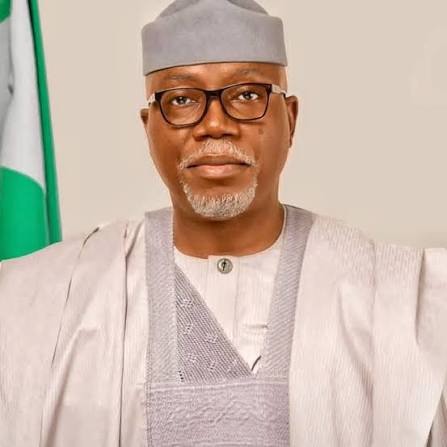
Ondo State Governor, Dr Lucky Aiyedatiwa, says ongoing legal challenges questioning the tenure of his administration will not distract him from governing. Speaking on Channels Television’s Politics Today, the governor addressed recent court rulings, internal political tensions within the APC, and questions about his eligibility to run in future elections. He insists his priority remains fulfilling the mandate given to him by the people of Ondo State. David Lawani monitored the interview
Two court rulings regarding your tenure have emerged in the past week. How do you personally react to these legal developments?
Let me begin by clarifying some facts so that the public can properly understand what is happening. A lot has been said on social media and across different platforms. There have been insinuations, opinions, and interpretations, many of which, unfortunately, are not entirely accurate. The truth is simple. I was sworn in as governor barely a year ago. At the moment, there is no timetable for another governorship election in Ondo State. The next election cycle is still several years away. Therefore, there is currently no cause of action. I have never publicly declared any intention to contest another election, nor have I approached any court seeking clarification of my eligibility to contest a future election. Rather, some individuals, apparently for political reasons, decided to approach the court seeking an interpretation regarding an election that may occur around 2028 or 2029. Those are the facts that the public needs to understand. As I stated during my previous media interaction, the office of the governor enjoys constitutional immunity, except in election matters, whether pre-election or post-election. However, since the matter was filed with the court, my legal team had to respond appropriately. Judgment has now been delivered by the Federal High Court in Akure. As for how I feel, I remain calm and focused. My major concern was that these distractions be resolved quickly so I could concentrate on governance. Since assuming office, I have faced several challenges. I inherited the burden of distress calls across the state. I also survived an impeachment attempt, which I had to defend in court. I am grateful for President Bola Tinubu’s intervention, which helped stabilise the situation at the time. After that episode, I went through the party primaries and, subsequently, the governorship election. Even after the election, some issues were challenged in court. Frankly, these legal distractions are not new to me. What matters most is that I continue serving the people of Ondo State. My focus remains on fulfilling the promises I made during the campaign. That is the mandate given to me by the electorate, and that responsibility remains my priority.
Before this controversy emerged, had you ever considered contesting another election to secure your own mandate rather than merely completing your predecessor’s tenure?
Let me correct that impression. I did not merely complete my predecessor’s tenure. After completing the remaining period of the late Governor Chief Oluwarotimi Akeredolu—may his soul rest in peace—I participated in a fresh governorship election. That election took place on November 16, 2024, and I won it through a free, fair and credible process. Therefore, I already have a mandate of my own from the people of Ondo State. The election is still very recent. Because of that, my attention has not shifted toward any future political contest. My focus is entirely on delivering on the mandate I have just received. Of course, I am aware of the constitutional provisions governing succession and tenure limits. The Constitution provides that a deputy who completes the tenure of a governor may contest elections under certain circumstances, and it also stipulates that a Nigerian can serve a maximum of two terms in the same office. However, at this stage, those considerations are not part of my immediate thinking. My priority is governance. The debate about eligibility for a future election is premature. Elections are conducted according to a timetable released by the electoral body. That timetable does not yet exist. Perhaps when we get closer to the next election cycle—maybe around 2027, when preparations begin, or 2028, when the timetable may be released—questions about eligibility and constitutional interpretation may become relevant. At that point, if necessary, appropriate legal interpretation could be sought. But for now, raising those issues is too early.
Some political observers have accused your administration of political witch-hunting, particularly against the Minister of Interior, Olubunmi Tunji-Ojo. There are also claims that your supporters intimidate opponents. How do you respond?
It is important to correct that perception because it is inaccurate. Politics is fundamentally a game of numbers. As a political leader, my interest is to attract more people into our party, not to drive anyone away. The All Progressives Congress (APC) is a very large political platform with diverse interests and personalities. Naturally, individuals may hold different views or ambitions. That is part of politics. However, it is not correct to say that anyone is being chased out of the party. In fact, the opposite is happening. More people are joining the APC in Ondo State. For example, the candidate of the People’s Democratic Party (PDP) who contested against me in the last governorship election has now defected to the APC. That candidate secured about 150,000 votes, which historically would have been close to a winning margin in previous elections. In the same election, I secured 366,781 votes, the highest ever recorded in a governorship election in Ondo State. That clearly indicates that the people strongly supported our administration. If you conduct independent surveys or opinion polls today, you will still see that the people remain supportive. As for the Minister of Interior, Olubunmi Tunji-Ojo, I have absolutely no personal issue with him. If you ask him directly, he will confirm that. Politics often involves different interests, and sometimes those interests create tensions. But that does not mean there is hostility. We are members of the same political family.
There were violent incidents during party congresses in which lives were reportedly lost. Some of those affected claim they were targeted because they are aligned with the Minister or the late Governor Akeredolu’s political camp. What is your response?
First, I do not believe anyone can truthfully claim to have been chased out of the party. Nobody has been driven away. Regarding the unfortunate incident you mentioned, it is important to clarify the facts. The violence in Idanre was not directly linked to the party congress. That incident was related to an internal dispute within the National Union of Road Transport Workers (NURTW) over the leadership of a transport unit. Unfortunately, such disputes occur within the union. While some of the individuals involved may be APC members, the conflict itself was not a congress-related issue. It simply happened on the same day as the ward congress. As governor, I have also taken steps to make the party more inclusive. When I assumed office, the APC stakeholders’ meeting structure included 10 members per local government, totalling 180 leaders across 18 local governments in Ondo State. I expanded that number to 20 members per local government, then later increased it to 30, and eventually broadened participation further. Today, we have 60 stakeholders per local government participating in quarterly meetings. That translates to over 1,000 party members actively engaged in party consultations across the state. This expansion demonstrates our commitment to inclusiveness. So the claim that people are being excluded from the party is not accurate.
Would you consider publicly reassuring supporters of the Interior Minister that they are welcome in the party and that there is no hostility toward them?
There is no need for such reassurance because they have not left the party. They remain members of the APC. In fact, there is practically no alternative political platform in Ondo State today that rivals the APC in strength. We recently conducted our state congress, and all factions of the party participated. Supporters of different leaders are represented within the party structure. Politics naturally involves different levels of leadership. The Minister of Interior is a national leader occupying an important federal position. I am the governor of the state. Senators, members of the House of Representatives, and members of the State Assembly also have their followers. All these leaders operate within the same party. Interestingly, Ondo State now has a unique political situation: all 26 members of the State House of Assembly are APC members. There is therefore no minority party in the Assembly. Every member is part of the ruling party. Given this level of unity, the narrative that people are being pushed out of the party does not hold.
Some observers have suggested that a public meeting or photo opportunity with the Interior Minister could help ease political tensions. Is that something you would consider?
The issue is being exaggerated. I have no problem with the Minister. He resides primarily in Abuja because of his federal responsibilities, while I govern Ondo State. There is no conflict between us.
Are you considering appealing the Federal High Court judgment that questioned aspects of your tenure?
Let me say this clearly: the Constitution exists to serve the people. Every public office holder—whether in the executive, legislative, or judicial arm of government —takes an oath to uphold and defend the Constitution of the Federal Republic of Nigeria. The judgment delivered by the Federal High Court in Akure is a decision of a court of law. As a law-abiding citizen and governor, I respect the judiciary. However, I have not yet seen the full details of the judgment. I have only heard reports about it. My legal advisers will carefully study the judgment. If they believe that further interpretation is necessary or that there are legal grounds for an appeal, they will advise accordingly. Nigeria’s judicial system is structured in layers: the High Court, the Court of Appeal, and the Supreme Court. Ultimately, the Supreme Court serves as the final authority on constitutional interpretation. If further clarification becomes necessary, the legal process will determine the appropriate steps.
Reports indicate that your lawyers may have already filed a notice of appeal. Are you aware of that development?
Let me explain the situation. When the case was originally filed, my legal team had to respond in defence of my position. During the proceedings, certain preliminary issues arose, including amendments to the plaintiff’s filings and objections raised by my lawyers. Some of those procedural rulings were considered questionable by my legal team, and they decided to challenge them at the Court of Appeal. Therefore, the appeal that was filed earlier related to those preliminary issues—not the final judgment that was recently delivered. At one stage, the Court of Appeal directed that certain legal issues should be addressed before the High Court could proceed further. While those issues were still pending, the High Court eventually delivered its ruling on the substantive matter. Now that the judgment has been delivered, my lawyers will carefully review all aspects of it. If they identify any legal errors or grounds for appeal, they will advise appropriately.
Nigeria has witnessed several tenure disputes involving governors and deputy governors in the past. From your perspective, what role should the Constitution play in resolving such issues?
My position is simple. The Constitution is the supreme law of the land. Whatever it states should guide our actions. However, interpreting the Constitution is the responsibility of the judiciary. Whenever disputes arise, the courts are the institutions empowered to interpret the law and clarify its meaning. As a political leader, my responsibility is to respect those institutions and follow the legal process. I am not a lawyer, so I rely on the advice of legal experts regarding constitutional interpretation. Their duty is to examine the relevant sections of the Constitution and provide guidance on what actions are permissible.
If the case eventually reaches the Supreme Court and the ruling is in your favour, would you consider running for another term in 2028?
Let me put it this way. If the people of Ondo State believe that our administration is performing well and they ask us to continue, and if the law permits it, then it would certainly be something to consider. Public service is about responding to the needs and wishes of the people. However, that is a decision for the future. Right now, the people should evaluate the performance of this administration, my deputy and me, and assess what we have achieved. If, after that assessment, they believe we deserve to continue, and the law allows it, then we will cross that bridge when we get there. For now, my focus is governance. These court cases were unexpected. I did not prepare for them because my attention was entirely on delivering results. But since the legal challenges arose, we must respond through the proper legal channels. Nevertheless, they remain distractions. My commitment remains unchanged—to serve the people of Ondo State faithfully and deliver the promises we made during the election campaign.