Regulation of tech transfer in oil and gas industry imperative – Ibrahim, NOTAP DG

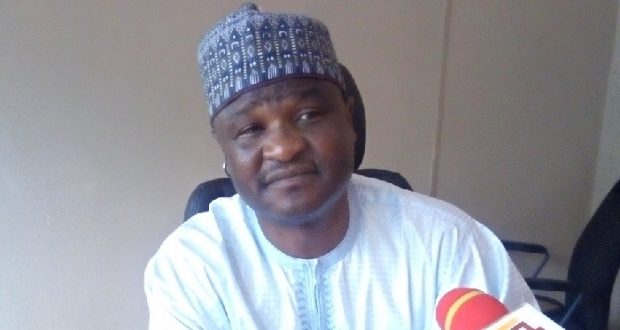
Director-General of the National Office for Technology Acquisition and Promotion (NOTAP), Dr. Danazumi Ibrahim, speaks on science and technology transfer, among other sundry issues, in this interview with DENNIS MERNYI
What has NOTAP been able to achieve under its mandate in about nearly 30 years of existence?
Before the establishment of NOTAP, the scenario was that the developed countries do come to developing nations and established technology outfits either in partnership with Nigeria or solely on their own. And they do it with impunity. Even if they are in partnership with Nigerians, they come in with some tight rope policies to strangulate the growth of the system in Nigeria. They establish a manufacturing outfit and they insist that some of those raw materials must be sourced from outside the country despite numerous raw materials in the country. By doing this, they were continuously milking the system. This was common in the 70s before NOTAP was established. It was very common in most African countries so, the issue or the problem was tabled before the United Nations general assembly. And you know, because of their influence at the UN, the only decision that was taken on the matter by the UN was that every affected country should go back and establish an institutional framework that would help them regulate the activities of those multinationals. So, that is what gave birth to NOTAP. Now, if any agreement, like the establishment of a manufacturing company where the technical services of the foreigner are needed, that is the agreement that is brought in here for registration. But we don’t just register the agreement, we have to subject it to evaluation under three major perspectives. First, is the legal aspect, the economic perspective, and more importantly the technical perspective. Under the legal perspective, we ensure that all the clauses in the agreements are in line with the laws of the federal republic of Nigeria. What normally happens is, they drafted the agreement from outside the country, and throw them on Nigeria to take them the way they are with little or no regard to the laws establishing the operations of such organizations in our country. So, where there is any clause in any agreement that is not in tandem with the laws of Nigeria, we advised them to renegotiate with their technical partners so that all the clauses are looked into to either modify or expunged so that they are in line with the laws of the federal republic of Nigeria. The second perspective is the economic perspective. Yes, because, you have to go outside to go and look for that technical partner, he has his terms and he is here to make money, so we look at how much he is charging you. Is it in line with the complexity of the technology he is bringing in? Because we are strictly guided by the Central Bank of Nigeria guidelines. So we have a guideline and we strictly adhere to it. Where you feel that you are cheated, we advise you. When this second perspective is met, then we proceed to the third one which is the technical perspective. From that technical perspective, the issue is, we have to go outside the country because we don’t have competencies in the system.
So, can we just sit and fold our hands and allow business as usual to continue?
No. We need to be strategic. So within the tenure of the agreement, there is a level of capacity we also built in Nigeria and the eventual domestication of some of this knowledge. So, we ensure that within the scope, there must be an area of capacity building. The strategy is to train Nigerians in that particular area they adopt the technology which is fully domesticated and once it is fully domesticated, we no longer allow such similar technology into the country again because we already have it. So, if these three major perspectives are met, and you are coming for the first time to do registration, we will take what we call, a pre-registration visit which enables us to determine the capacity of those companies. Sometimes most of their claims don’t exist. And if they are not there, then it amounts to capital fiat. So if the three major perspectives are met and we go there and find them physically on the ground, we register the agreement and issue the certificate. That certificate is one of the documents you will require at the bank to pay your technical partner. So any company that wants to settle its technical partner, must have a NOTAP certificate. So it is compliance.
What has been the level of compliance generally by these multinationals as you enforce regulations using these perspectives?
Yes. They have to comply because as I said earlier, it was the directive by the UN. So far, according to our law guiding it, we have nothing less than 70 percent compliance. But there are still areas where there is no compliance, particularly in the oil and gas sector. They don’t come to us because most of them have their escrow accounts outside the country. So our law does not give us the teeth to prosecute them. So we are in the process of proposing the amendment of the law to give us the bite. So in terms of compliance, we have achieved at least 70 percent compliance.
What are those specific aspects of the law you are proposing for the amendment? Are you targeting the oil and gas industry?
You see, the law spelled out the activities and functions of NOTAP and other stated areas. But the oil and gas in particular because we need their technology to explore our oil. So, they don’t bring their agreements here. And there is no way within the clauses of our law to prosecute them whenever there’s an issue there. Since now, the law says any technology coming into Nigeria must have to be registered with NOTAP but if you go down, you won’t see any clause that will give us the teeth to bite in case somebody doesn’t do it right. In my own opinion, most of them will come maybe because they want to get the certificate and to enable them to pay their technical partners. So, as far as compliance is concerned, these are areas that in terms of punishment maybe we don’t do. The system is dynamic. Some of the clauses may be relevant in those days from the beginning but may not be relevant nowadays. So, we are in the process but it is a long process in amending our law.
What are those key services NOTAP offers apart from the ones you mentioned here that other agencies in science and technology don’t offer?
We are expected to regulate. We are regulating the process of technology registration. But this allows us to see the other areas where the country is losing a lot of money in terms of the acquisition of other people’s technology. Because we are dealing with the intangible aspects of technology. If we give ten approvals today, between seven and eight of them are on software. And we see the quantum amount of money that leaves this country in that process and there is no patriotic Nigeria that will be happy about it. We now decided to sit with all the relevant stakeholders and asked how we can salvage the situation. We decided that we must have a policy that would Nigeria a better share of this technology. So we came out with what we call a vendor policy. It is the policy which entails that any registerable software agreement before we register it here, there must be a Nigerian IT company that will be invoked in the deployment of that software, must be involved in the maintenance of that software, strategically intelligent Nigerians will be involved in anything that has to with the deployment of that software whether the owners of the software have gone back to their land we should have access to that software. Since the license of software is normally one of the payments. They have another caveat that they continuously make the system to get between 12 and 13 of the licensing fees. We insist that when the Nigerian company is involved in the deployment, it is involved in the maintenance, 40 percent of that maintainable should be paid to Nigerian IT companies. It is the, out difficult thing but the regulator will remain firm. There is no option. Sometimes we will be blackmailed, sometimes we suffer intimidation but if you remain firm, they have no option but to comply and pay. Now, this local vendor policy is fully institutionalized. The other advantage, apart from the 40 percent the Nigerian IT companies are getting, is they are getting experience. The owners of the software are forced to train Nigerians so that their production work and their services are acceptable to Nigerians. If the product doesn’t work then there will be no market then for the products to work they have to train the Nigerians so that they remain in the market. So this the g is a double-edged sword. We develop competencies and provide some financial muscles for these Nigerians. After serving years of this policy, we took a survey to see the impact, I am telling you that we are happy to see the number of intelligent young talented Nigerians whose capacities in terms of software development are sharpened you will be amazed. And the 40 percent they are getting they will be able to acquire some infrastructure.
Now, I am happy to tell you that Nigerians have started exporting software across the African region. His is the strategy. So you can see that if you come up with a policy and remain firm on it, the impact is significant. I am glad now, Nigerians are developing software and even our automation here. We are riding on locally developed software. In one of our visits to Lagos, whenever we approve, we monitor how it is done. We met a company that is giving services to one of the electricity distribution company. They have never had any hour-down turn and they are riding on Nigerian efforts. I said if we can good examples like this, and Distribution Company will come to us and say they are bringing something they want to get from us we will direct them to such companies who have perfected on the system for the solution.
NNPC weekly: Expert lauds NNPC Management for 2021 performance
The process of technology transfer and registration carried by NOTAP is done on a commercial basis. How much does the agency generate from the process?
NOTAP evolve over some time. And through this registration exercise, as far as I am concerned right from our first tenure, between 2015 and 2019, we served N79.63 billion. This amount would have gone outside the country through capital flight.
That is impressive. How do you save such a huge sum within that period?
If an agreement comes, as you agree with your technical partner, let’s say you are going to pay $1 million, then after our assessment, also within the CBN guidelines, we find out that what your technology partner should get should not be more than $500,000. We then approve 1 million dollars but approve $500,000 and that $500,000 is what we saved. Sometimes we go and found out that those entities don’t exist. If we hadn’t visited or gone for monitoring, we sit down in the comfort of our offices and give approval, that money would have gone outside the country but when going there and discover that you are not honest with us and the entity doesn’t exist, we cancel the agreement so we saved that money that would have gone outside the country.
Aside from these, what are the other sources of income the agency pulls together that amounts to such huge revenue generated?
We also generate revenue through other sources. Our sources of the revenue registration fee. Companies have to pay registration fees. That is the base at which we start processing the agreement to find out whether it is registerable or not. And the law says any agreement that is registered, within the first one month of signing the agreement that company must write to NOTAP for registration. Some would exceed one month. If you exceed one month, you will pay a penalty then if we finish the registration process, and everything is fine, we charge a registration fee. So these are three major sources of revenue generation. When I took over in 2015, the revenue generation of NOTAP was between N250,000 million and N300,000 million at the end of the year. But our revenue generation stood at over 50 percent. We are hitting N400 to over N450 million in a year now. So now with this automation process, am assuring Nigerians that the revenue generation will surpass the amount that we are currently doing.
What are the major challenges faced by NOTAP as a revenue generation agency of government in terms of policy implementation?
You see, once you are focused, you don’t look back. We have challenges but have been able to overcome some of those challenges. You can hear agencies lamenting about funding. To me, funding should not be a challenge. And if you have a strong policy, you will be able to make an impact with the little amount of money you are getting. But we needed an atmosphere or a conducive environment where staff will be able to discharge their responsibility comfortably. In the past 15 years, NOTAP past chief executives have been trying to have this before they left. But am happy that we have succeeded in bringing the project to the level of about 70 to percent completion. We hope that, with this year’s allocation, we should be able to get for ourselves, a befitting office accommodation. Another issue is you have to think about the welfare of the staff because you cannot do it alone. And happy that we have been having a harmonious relationship with our staff because their welfare is paramount to us. Even at midnight if we call some of them on, they will come. That is to tell you how we work as a family in this system. I pray that with the structure we have put in place, even when I leave the agency at the end of my second tenure, the system will be able to continue in this manner. So, funding which would have been our major challenge has significantly improved with this government for science and technology generally, there is an improvement. There was a time NOTAP was not having a kobo in the capital budget in those days. But now, there is improvement and we are making an impact. But there are still areas where we need some kind of policy assistance. When we look at it critically, research and development are key, it is not something that you depend on imported technology. Technology is a product of research and development. We are expecting our research institutions, universities, polytechnics to come out with research and development initiatives that will be improved upon.