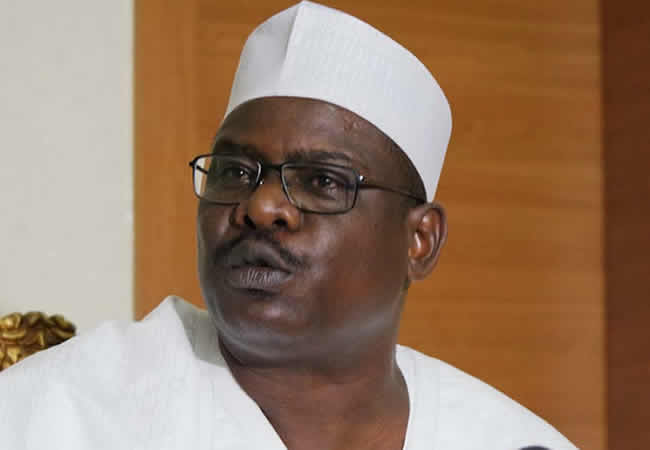
Senator representing Borno South, Ali Ndume, has called for extraordinary national measures to confront Nigeria’s deepening insecurity, warning that the country risks sliding further into chaos if decisive action is not taken. Speaking on Politics Today on Channels Television, Ndume argued that the Federal Government must be prepared to take drastic steps, including temporarily shutting down non-essential government activities, to prioritise security and safeguard lives. The former Chairman of the Senate Committee on Army maintained that insurgents are not invincible, describing them as “ragtag elements” who continue to thrive due to gaps in intelligence, inadequate military support, and lack of sustained operational strategy. Ndume also raised concerns about intelligence failures, the growing sophistication of insurgent networks, and what he described as insufficient urgency within the system, despite repeated assurances from the government. David Lawani monitored the interview
The Vice President recently carried out an on-the-spot assessment in Maiduguri. As a representative of the affected region, how do you interpret this resurgence of attacks, and how deeply does it concern you?
The resurgence of terrorist activities in Borno is not just worrisome—it is deeply disturbing and painful. It affects not only those of us from the region but every Nigerian who understands the implications of insecurity on national stability. What makes it even more troubling is the timing. When we were beginning to feel that we were approaching the tail end of this crisis, the insurgents regrouped, reorganised, and returned with renewed brutality. We have witnessed horrific attacks on our troops, resulting in the loss of gallant soldiers who are risking their lives to protect the country. More recently, the bomb blasts in Maiduguri have added a tragic dimension. Over 100 innocent civilians lost their lives. I personally visited victims at the hospital, and the situation was heartbreaking. Even as I was leaving, another victim died. The casualty figures continue to rise, and many are still receiving treatment. However, amid this grim reality, there is a silver lining. The government appears to be responding more decisively. The operation in Malam Fatori is a clear example of what can be achieved when air and ground forces coordinate. Over 80 insurgents were neutralised, including key commanders. The lesson here is simple: consistency is key. One-off successes will not end this war. What we need is sustained pressure—continuous, coordinated military action backed by strong political will. The President has declared a state of emergency on security; now he must fully assume the role of Commander-in-Chief and ensure that this declaration translates into measurable results.
From your engagement with people on the ground, are there any evolving patterns in the operations, tactics, or behaviour of insurgents that Nigerians may not fully understand?
In terms of operational style, the insurgents have largely maintained their traditional approach—hit-and-run tactics. They avoid prolonged confrontation because they know they cannot withstand the full force of the Nigerian military in a direct engagement. However, what is evolving—and this is very dangerous—is their intelligence network. They are becoming more embedded within communities, relying on informants and collaborators to execute their operations. This makes detection much more difficult. For example, the recent bombings involved improvised explosive devices transported through seemingly harmless means like tricycles. This indicates a high level of planning and local infiltration. There are individuals in society—either willingly or under duress—who aid these operations. Another disturbing trend is their use of digital platforms. These groups now record and share their activities openly, sometimes even boasting about their attacks. This raises serious questions about our intelligence capabilities. If these individuals can operate and communicate so openly, then why are they not being effectively tracked and neutralised? The core issue here is intelligence failure. Without accurate, timely intelligence, even the best-equipped military will struggle. We must invest heavily in intelligence gathering, surveillance systems, and community-based information networks.
You made a striking remark about your phone being monitored. Are you suggesting that state surveillance is active? If so, what concerns does that raise?
Yes, I believe surveillance exists, and frankly, I do not have a problem with it. In a country facing serious security challenges, some level of monitoring is expected. Nigeria has been designated a country of concern in global security discussions, so it is not unusual for surveillance systems to be active. Other countries, such as Saudi Arabia and China, have similar classifications, yet they continue to function effectively and maintain strong international relations. My concern is not the existence of surveillance—it is its application. If these systems can monitor individuals like me, then they should certainly be capable of tracking terrorists who openly communicate and coordinate attacks. The question we must ask is: are we deploying our technological capabilities in the right direction? Surveillance should be targeted at those who pose real threats to national security, not just political or civilian figures.
Is there a disconnect between what Nigerians are told and the actual security situation on the ground?
There is no deliberate attempt to hide the truth. However, there is a clear gap between rhetoric and reality. The situation is serious, and it has persisted for far too long. While the government has made efforts, those efforts have not been sufficient to bring the crisis to a decisive end. What Nigerians need now is not reassurance, but results. The government must move beyond statements and demonstrate tangible progress.
Would it be accurate to say that the government is not doing enough to address insecurity?
Yes, that would be accurate. Efforts are being made, but they fall short of what is required given the scale of the problem. Our security agencies lack critical resources—training, modern equipment, adequate ammunition, and most importantly, motivation. These are fundamental requirements for any military operation, especially one as complex as counterinsurgency. The President appears committed, but commitment alone is not enough. There must be urgency and prioritisation. Security and the welfare of citizens must come before everything else. I have said it before, and I will repeat it: if addressing insecurity requires shutting down certain aspects of government to concentrate resources and attention, then so be it. This is a matter of national survival.
The frequency and boldness of attacks on military formations have raised concerns. Why are insurgents able to operate at this level?
It is not because they are stronger than our military—it is because they exploit our weaknesses. Their strategy is based on guerrilla warfare. They strike when troops are unprepared, when surveillance is weak, or when ground support is inadequate. A properly structured military operation should include continuous surveillance, night-vision capabilities, and immediate air support. For instance, a battalion operating in a volatile area should have access to standby helicopters that can be deployed within minutes. If insurgents know that such capabilities exist, they will think twice before launching attacks. Air power alone can significantly change the dynamics of this conflict. The success recorded in places like Malam Fatori demonstrates what is possible when these elements are in place. We must replicate and sustain that model across all hotspots.
Reflecting on past efforts, do you believe Nigeria has learnt from its previous mistakes in combating insurgency?
To some extent, yes. President Tinubu has shown seriousness and willingness to address the problem. I have had direct discussions with him, and I can attest to his commitment. However, leadership requires more than intent—it requires execution. The President cannot do it alone. Those around him must share the same level of commitment. Unfortunately, some individuals in the system are more focused on personal interests than national security. That is a major problem. The President must take full control. He needs a situation room, constant briefings, and direct engagement with security chiefs. He must hold people accountable and ensure that directives are implemented promptly.
You mentioned funding challenges and welfare issues affecting soldiers. How serious is this situation?
It is very serious. There are instances when funds are delayed, and even soldiers’ salaries are not paid on time. That is unacceptable in a country at war. Morale is a critical factor in military success. You cannot expect soldiers to perform optimally when their welfare is neglected. We must ensure timely funding, proper equipment, and adequate support. If necessary, we should explore alternative options, including private military assistance, as is done in other parts of the world. This is not about pride—it is about results.
As a member of the ruling party, do you think your party has failed Nigerians on security?
The issue is not about political parties. In Nigeria, political actors often move between parties. The same individuals exist across different platforms. The real issue is leadership and accountability. Those in positions of authority must take responsibility for their actions and decisions. Nigerians entrusted us with leadership, and we must deliver on that trust. That is what truly matters.