Nigeria’s security fight demands collective action- Musa, Defence Minister

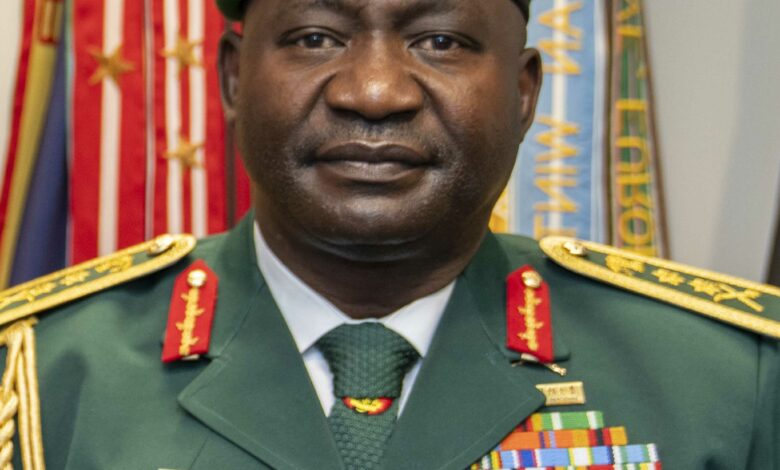
Minister of Defence, Gen Christopher Musa (retd), says Nigeria’s war against terrorism remains a complex battle that requires collective national effort to overcome. According to him, while terrorist attacks have reduced significantly under President Bola Tinubu’s administration, rising cases of kidnapping, porous borders and weak local government structures continue to fuel insecurity across the country. Speaking on ARISE Television to mark the administration’s third anniversary, Musa urged Nigerians, state governments and the media to support security agencies in tackling the crisis. David Lawani monitored the interview
President Bola Tinubu’s administration marks three years in office on May 29. You served as Chief of Defence Staff for the first two years and are now Minister of Defence. How would you assess the country’s security situation after three years of this administration?
No country has 100 per cent security. There will always be challenges. Unfortunately, some of the measures that ought to have been taken long ago were not. We are now addressing these issues head-on. Terrorist attacks are no longer as rampant as they used to be. What we are seeing more now are issues of kidnapping rather than terrorism. Why is that so? It is because of the collapse of family values and law and order. Society has become very materialistic. People believe that once they make money, society will applaud them regardless of how they made it. Those are the social problems we must confront. This challenge is a Nigerian challenge, and all Nigerians must come together to fight it. The President is doing so much and remains committed to ensuring peace in the country. The Armed Forces and other security agencies are also doing their best. We are appealing to Nigerians not to get discouraged. Every country goes through difficult moments. As we say, it is part of the desert of life — the ups and downs that every nation experiences. Nobody thought 20 years ago that Nigeria would face this kind of challenge, but now we are here. This is the time for all of us to stand together and defeat these enemies of the state.
Many Nigerians believe insecurity has worsened rather than improved under this administration. In just one week, 13 people were kidnapped in Kebbi, worshippers were attacked in Kwara, and students fled schools in Ekiti over fears of bandit attacks. What do you say to Nigerians who believe insecurity has escalated under your watch?
As I said earlier, Nigeria is going through a difficult period, as are many other countries. What matters is how you respond to those challenges, and I believe we are addressing them holistically. The Armed Forces and other security agencies cannot cover the entire length and breadth of Nigeria. Nigeria is a very large country, and criminals deliberately target soft spots where security presence is limited to create fear and give the impression that insecurity is everywhere. Criminality usually starts with a breakdown of law and order. It progresses into kidnapping, banditry and eventually terrorism. Once terrorism is confronted effectively, it begins to fall back into banditry and petty crimes. That is what we are going through now. You will notice that we now have more kidnapping cases than outright acts of terrorism, and that shows that terrorism itself is reducing. But we still need to come together to tackle these problems. Security forces cannot be everywhere. Even developed countries face kidnapping and violent crimes. All I am saying is that Nigerians must come together. Rather than throwing blame around, we should recognise that the security forces are doing their utmost best considering the situation we are facing. Border security is another issue we must address seriously. States also need to partner with the Federal Government. The Federal Government is making efforts, and states are receiving more funds than ever before. One major issue is that local governments must be allowed to function properly because crime is local. If local governments work effectively, they can address many of these issues within their communities before they escalate to the state and federal levels. Security must therefore become a whole-of-society effort.
You commanded Operation Hadin Kai in the North-East from 2021 to 2023, so you understand the terrain and tactics of insurgents. Why are we still seeing midnight raids and mass abductions targeting schools, churches and markets? What exactly needs to be done to strengthen border security?
Border security requires cooperation with neighbouring countries. Nigeria shares about 1,500 kilometres of border with the Republic of Niger and about 1,650 kilometres with Cameroon. We also share borders with Benin, Chad, and the Atlantic coastline. What terrorists often do is move across borders once pressure is mounted on them. We therefore need neighbouring countries to secure their own sides of the borders so terrorists do not have safe havens. We are working together through the Multinational Joint Task Force to address these threats. We are also seeing threats emerging from the Benin-Niger axis into Nigeria. Through the Multinational Joint Task Force, we are establishing a new operational front to stop terrorists from infiltrating Nigeria through the Benin Republic from Burkina Faso. The challenge is that Africa’s borders are unique because communities, tribes, religions and cultures cut across different countries. Asymmetric warfare is difficult because the enemy is often within the civilian population. The same person you are protecting may sometimes become your enemy. Unlike conventional warfare, where the enemy is clearly identified, this type of conflict is much more complicated. Terrorists hide among civilians, and many times operations have to be suspended to avoid killing innocent people. We also appeal to the media to understand that we are partners in progress, not enemies. Some media organisations have unfortunately spread false information, reporting attacks and killings that never happened. We must all understand that this is our country. If the Armed Forces fail, nobody will be able to sit comfortably in their offices to write reports. The more we support one another and work together, the more successful we will be.
You transitioned from Chief of Defence Staff to Minister of Defence. What has changed in terms of strategy and execution?
As Minister of Defence, I am now more involved in policy formulation and administration to support the Armed Forces. As Chief of Defence Staff, I was directly involved in operations. I could move troops and make operational decisions directly. Now we use mission command. We identify areas that need to be secured and provide directives while the troops carry out the operations. The troops are doing their best considering the difficult situation we are facing. We want to ensure they have the required equipment. We also need to modernise and improve our military hardware. One of our greatest challenges is that we do not produce most of the equipment we need locally. That is why the President approved the DICON Bill, which now allows us to partner with countries such as Turkey, Brazil, South Africa, Egypt and China. These countries are supporting us, and some have already started producing military equipment. Nigerian youths have also started developing drones locally. If we do not produce what we need ourselves, it will always be difficult to get the right equipment, even when funds are available.
If you were to rate this administration on security from zero to 10 — where 10 represents complete security and zero represents total collapse, what score would you give, and do you think Nigerians would agree?
I would rate us between 65 and 70 per cent because no country is completely free from crime or insecurity. The level of terrorism has reduced significantly. Terrorism is also a social problem linked to the collapse of family values. We now see fathers kidnapping children, brothers kidnapping sisters and all kinds of disturbing situations. That tells you there is something fundamentally wrong within society. We must also address education and encourage people to work hard rather than seek shortcuts to wealth. Many people involved in kidnapping are simply looking for quick money. Politics also cannot be ruled out completely. Sometimes kidnappers abduct people who clearly cannot afford the huge ransom demands being made. It raises questions about sabotage and attempts to make the government appear weak or make the country look ungovernable. Regardless of the motives, the Armed Forces and security agencies are working tirelessly to address these issues. Nigerians supporting us should also be appreciated. The level of support we are receiving now is much better than before, and we are making progress. We are also working with international partners, including the Americans, the British, and the French — all friends of Nigeria who want us to succeed. They are providing platforms and support where we have gaps. The recent killing of ISWAP’s second-in-command, Abu-Bilal Al-minuki, was the result of a painstaking operation that started last year. Asymmetric warfare is very difficult. No country should allow terrorism to take root because once it does, it becomes extremely hard to eradicate. Turkey battled insurgency for about 40 years before making progress. We are learning from countries like Turkey, especially in developing drones and military equipment. We are partnering with Turkey, France and Brazil to strengthen our Special Forces and military capacity. Everyone is working together to ensure success.
You said terrorism has reduced in Nigeria. What exactly do you mean by that, and how should Nigerians understand the difference between terrorism and other forms of insecurity?
In the past, almost every day you heard reports of IED explosions in different locations, vehicles being destroyed and coordinated terrorist attacks. Those incidents have reduced significantly. Most of the recent incidents also have political undertones. The recent incident in Maiduguri, for example, was intended to disrupt President Tinubu’s planned visit to the United Kingdom. The timing and intent were deliberate. The aim was to embarrass the President and weaken his standing internationally. Some people deliberately plan these attacks to create instability, and that is unfortunate. We want to appeal to Nigerians not to allow themselves to be used against their own country. Your country remains your country. If your country is destroyed, you become a second-class citizen elsewhere. I have seen the consequences of war in places like Sierra Leone and other countries. War is not good for anyone. We must come together to stop these problems.
There are concerns about Operation Safe Corridor and the rehabilitation of repentant Boko Haram members. Critics argue that former terrorists are receiving support while victims and wounded security personnel are neglected. Is Nigeria rewarding perpetrators while abandoning its heroes?
Not at all. I had the privilege of serving as an operations officer in Sierra Leone when we disarmed terrorists there. One thing I observed was that too much emphasis was placed on the terrorists themselves while victims were neglected. We did not want to repeat that mistake in Nigeria. International law says that once enemy combatants surrender, they must be treated humanely. That is the reality of modern conflict management. Operation Safe Corridor is an internationally recognised rehabilitation programme. When I was Theatre Commander in the North-East, we cut off the terrorists’ supply routes, food sources, fuel and movement corridors. That pressure forced many of them to surrender. Working with the Borno State Government, we arranged transportation, accommodation and administration for those who surrendered. We discovered that there were different categories among them. Some were forcibly conscripted. Terrorists would invade villages, gather young men and force them to either join or be killed. Those who refused were often executed. Others were used as enslaved people or labourers, while another category consisted of the actual combatants and perpetrators of atrocities. Those who were enslaved or forcibly recruited were rehabilitated and given skills training before being reintegrated into society. We continue to monitor them closely, and many have not returned to violence. The hardened combatants and perpetrators were separated and handed over to the Attorney-General of the Federation for prosecution. Some have already been jailed. Legal processes take time because evidence and documentation must be properly assembled. Many people misunderstand the programme and believe everyone is rewarded with money and privileges. That is not true. Some individuals joined insurgent groups because they were deceived, manipulated with religion or lured with promises of money and a better life. Ultimately, lasting peace requires dialogue and reconciliation. South Africa had its Truth and Reconciliation process after apartheid, and Rwanda also pursued reconciliation after the genocide. Those found guilty must face justice, but there must also be room for rehabilitation and reintegration where necessary.
So, to be clear, are you saying Nigeria is not rewarding terrorists who committed crimes?
Absolutely not. Nigeria is not rewarding criminality. We understand the emotions involved, and many people naturally feel such individuals should simply be killed. But we must also operate within the law. The same people demanding harsh action today may tomorrow accuse security agencies of killing innocent civilians. There has to be a balance.
Are you saying the government is granting amnesty to terrorists who killed innocent Nigerians?
We are rehabilitating certain categories of individuals, not rewarding terrorists. We are not paying salaries to terrorists. The commanders and perpetrators directly responsible for killings are facing the law. Investigations and prosecutions are ongoing, and some have already been convicted and jailed.