

By Cross Udo, Abuja
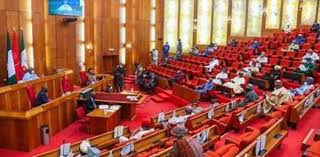
The National Assembly on Wednesday assured Nigerians that robust constitutional safeguards are being put in place to prevent state governors from abusing the proposed state police, as momentum builds for one of the country’s most significant security reforms.
Senate Leader, Opeyemi Bamidele, said lawmakers were already addressing widespread concerns that governors could deploy state police against political opponents, insisting that the proposed constitutional amendment would contain mechanisms to check possible abuse.
Bamidele spoke with State House correspondents after a meeting with President Bola Ahmed Tinubu at the Presidential Villa, Abuja.
He acknowledged that fears about governors’ misuse of state police were legitimate but stressed that the National Assembly was determined to ensure that the new policing structure operates within strict constitutional and legal limits.
“There will always be fears and concerns, but whether the concerns are well founded is another issue altogether. We are not unmindful of them. They are legitimate concerns,” Bamidele said.
The Senate Leader argued that the possibility of abuse was not peculiar to state police, noting that governors already wield considerable influence over federal police formations in their respective states.
“Even with the federal police, a governor who is the chief security officer in the state can still use the police in a way he deems possible, depending on how much the system allows manipulation,” he stated.
According to him, the ongoing constitutional amendment is designed to build institutional safeguards that would either prevent or significantly reduce political interference in the operations of the state police.
“Most importantly, we are putting mechanisms in the law as we amend the Constitution that would prevent or minimise instances of abuse by state governors,” he said.
Bamidele explained that while the Constitution would establish the broad legal framework for state policing, additional operational safeguards would be incorporated into amendments to the Police Act.
“In the amendment to the Police Act that will follow, we will spell out more details—details that cannot possibly go into the Constitution of the Federal Republic of Nigeria,” he added.
Describing the proposed establishment of a state police as inevitable, the Senate Leader said the country’s worsening security challenges had made decentralised policing a national necessity.
“State police is a child of necessity,” Bamidele declared.
He also dismissed suggestions that the proposal had become politically divisive, saying governors across party lines had largely reached a consensus on the need for state police.
“All of us are on the same page that there is a need for this,” he said.
Also speaking, Ekiti State Governor, Abiodun Oyebanji, disclosed that members of the National Economic Council (NEC), comprising the 36 state governors, had substantially agreed on the proposal and were awaiting the transmission of the constitutional amendment by the National Assembly.
“We are ready for the state police, and we are grateful to the National Assembly for the constitutional amendments. We are waiting for them to be transmitted to the state Houses of Assembly,” the governor said.
He expressed confidence that the legislation would enjoy swift passage across the country.
“The governors have made up their minds that they will give it speedy approval so we can start implementation,” Oyebanji added.
Beyond the security debate, the governor projected a resounding victory for President Tinubu in Ekiti State during the 2027 presidential election, saying the ruling All Progressives Congress (APC) had continued to expand its electoral support in the state.
“In 2022, we won with 187,000 votes. Six months later, during the presidential election, we increased it to 210,000. This governorship election produced 318,000 votes. You can extrapolate from that and see that a target of between 600,000 and 700,000 votes in 2027 is doable,” he said.
Oyebanji also disclosed that he had begun reaching out to opposition candidates following his re-election, saying governance should take precedence over political rivalry.
“The election ended when the winner was declared. Politics has ended, and we must return to governance. I have reached out to the opposition because I need their wisdom, suggestions and advice,” he said.
The proposed creation of a state police remains one of the most consequential constitutional reforms before the National Assembly, with proponents arguing that decentralised policing is critical to tackling Nigeria’s worsening insecurity, while critics continue to demand strong constitutional safeguards against political abuse.


